Wine · Grape variety · Reference page
Pinot Noir
Pronunciation: /pee-noh NWAHR/
An ancient, temperamental black grape from north-eastern France. Thin-skinned and quick to show where it was grown, it makes the red wines of Burgundy, is one of the three main Champagne grapes, and makes increasingly fine wines in cool places from Oregon to Central Otago.
A grape that shows its place
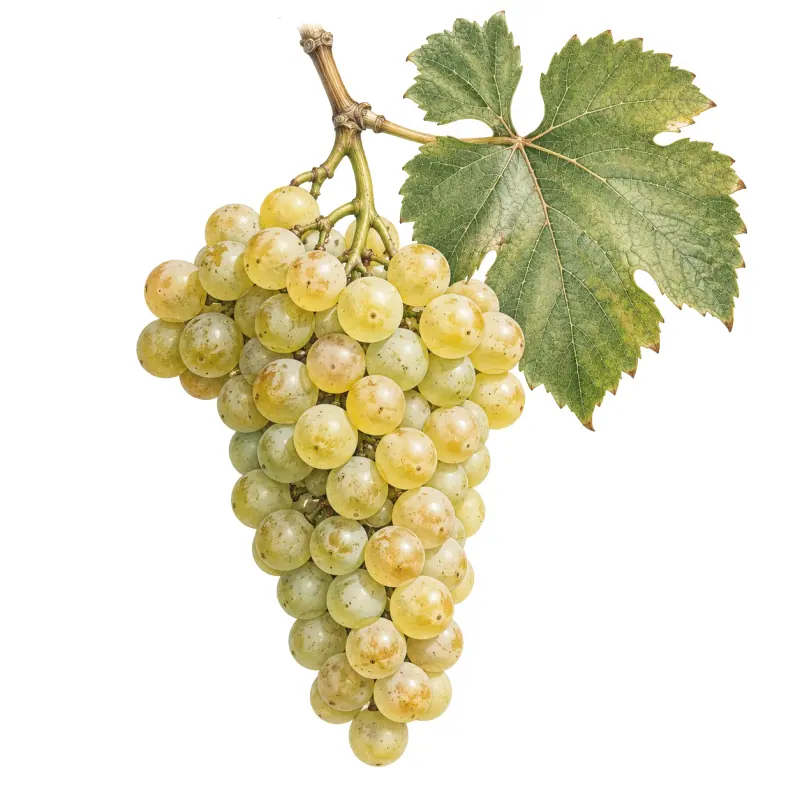
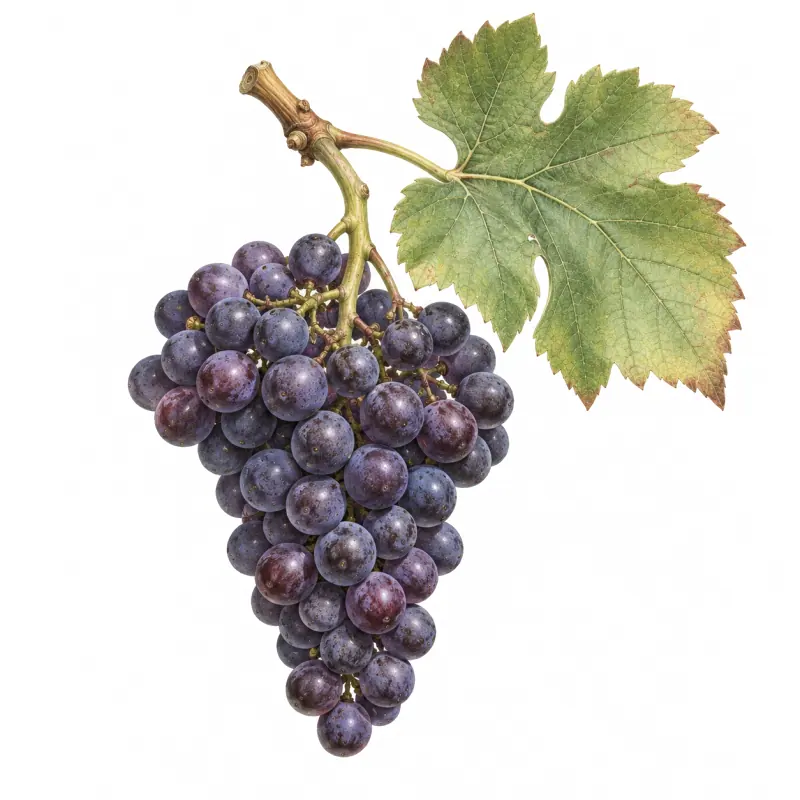
Pinot Noir clusters are small, tight and pine-cone shaped — the likely origin of the name, from French pin. The berries have thin skins, which give relatively pale wines with soft tannins and leave the grape vulnerable to rot in wet harvests. Those same thin skins are why it is prized: with little colour or tannin to mask it, the wine reflects differences in soil, slope and vintage with unusual clarity.
In the glass, young Pinot Noir typically shows fresh berry fruit — cherry, blackcurrant — over fresh acidity and a light-to-medium body. With time in bottle, the fruit recedes and more savoury notes emerge, such as wild mushroom, truffle and leather.
Parent of a family
Pinot is among the oldest varieties still widely planted and is genetically unstable: it mutates readily, and its colour variants Pinot Gris and Pinot Blanc are the same variety with altered skin pigmentation. Meunier, the third Champagne grape, is a chimeral mutant of Pinot.
DNA profiling published in 1999 showed that crosses between Pinot and Gouais Blanc — a prolific, long-despised peasant grape — produced Chardonnay, Aligoté, Gamay Noir, Melon and a dozen others (16 in all in the 1999 study; later work counts 21). In 2007 grapevine became the first fruit crop to have its genome sequenced, from PN40024, a highly inbred line long thought to be pure Pinot Noir (it descends from a Pinot Noir × Schiava Grossa cross); a Pinot Noir clone was sequenced the same year.
Where it grows
Burgundy — above all the Côte de Nuits — remains its reference. In Champagne it is blended with Chardonnay and Meunier, giving body and red-fruit depth; in Alsace and the Loire (Sancerre rouge) it makes lighter reds. Germany's Spätburgunder, from the Ahr to Baden, has grown into a serious style. Beyond Europe it succeeds where nights are cool: Oregon's Willamette Valley, the Sonoma Coast and Santa Barbara in California, Central Otago and Marlborough in New Zealand, Tasmania and the Yarra Valley in Australia, Casablanca in Chile and Hemel-en-Aarde in South Africa.
Why it works at table
Pinot Noir is often called the most food-friendly red, and the reasons are structural rather than mystical. Fresh acidity cuts through fat and refreshes the palate against rich, gelatinous braises such as bœuf bourguignon. Low to moderate tannin means it does not turn bitter or metallic with fish, mushrooms or poultry, where a heavily tannic wine can clash. Its savoury, earthy notes echo mushrooms, roast meat juices and aged cheese.
It is less happy with very spicy dishes, where alcohol and tannin amplify heat, or with strongly sweet sauces, which make dry wine taste thin.
How it connects
Wine region
- grown in Burgundy
- grown in Côte de Nuits
- grown in Champagne
- grown in Alsace
- grown in Central Otago
- grown in Ahr
- grows California
- grows Oregon
- grows Sonoma County
- grows Willamette Valley
- grows Finger Lakes
- grows British Columbia
- grows Ontario
- grows Okanagan Valley
- grows Niagara Peninsula
- grows Uco Valley
- grows Patagonia
- grows Casablanca Valley
- grows Serra Gaúcha
- grows Yarra Valley
- grows Tasmania
- grows New Zealand
- grows Marlborough
- grows Loire Valley
- grows Sancerre
- grows Alsace Grands Crus
- grows Crémant d'Alsace
- grows Jura
- grows Savoie
- grows Côte de Beaune
- grows Côte Chalonnaise
- grows Mâconnais
- grows Gevrey-Chambertin
- grows Morey-Saint-Denis
- grows Chambolle-Musigny
- grows Vosne-Romanée
- grows Nuits-Saint-Georges
- grows Beaune
- grows Pommard
- grows Volnay
- grows Meursault
- grows Puligny-Montrachet
- grows Chassagne-Montrachet
- grows Mercurey
- grows Rully
- grows Lombardy
- grows Franciacorta
- grows Trentino-Alto Adige
- grows Trento
- grows Alto Adige
- grows Rheingau
- grows Baden
- grows Württemberg
- grows Switzerland
- grows Valais
- grows Vaud
- grows Graubünden
- grows England
- grows Wales
Grape variety
- parent of Chardonnay
- parent of Gamay
- parent of Aligoté
- related Meunier
Recipe
- pairs with Bœuf bourguignon
- pairs with Coq au vin
- made with Œufs en meurette
- pairs with Baeckeoffe
Place
- grown in Willamette Valley In preparation
Story
Continue exploring
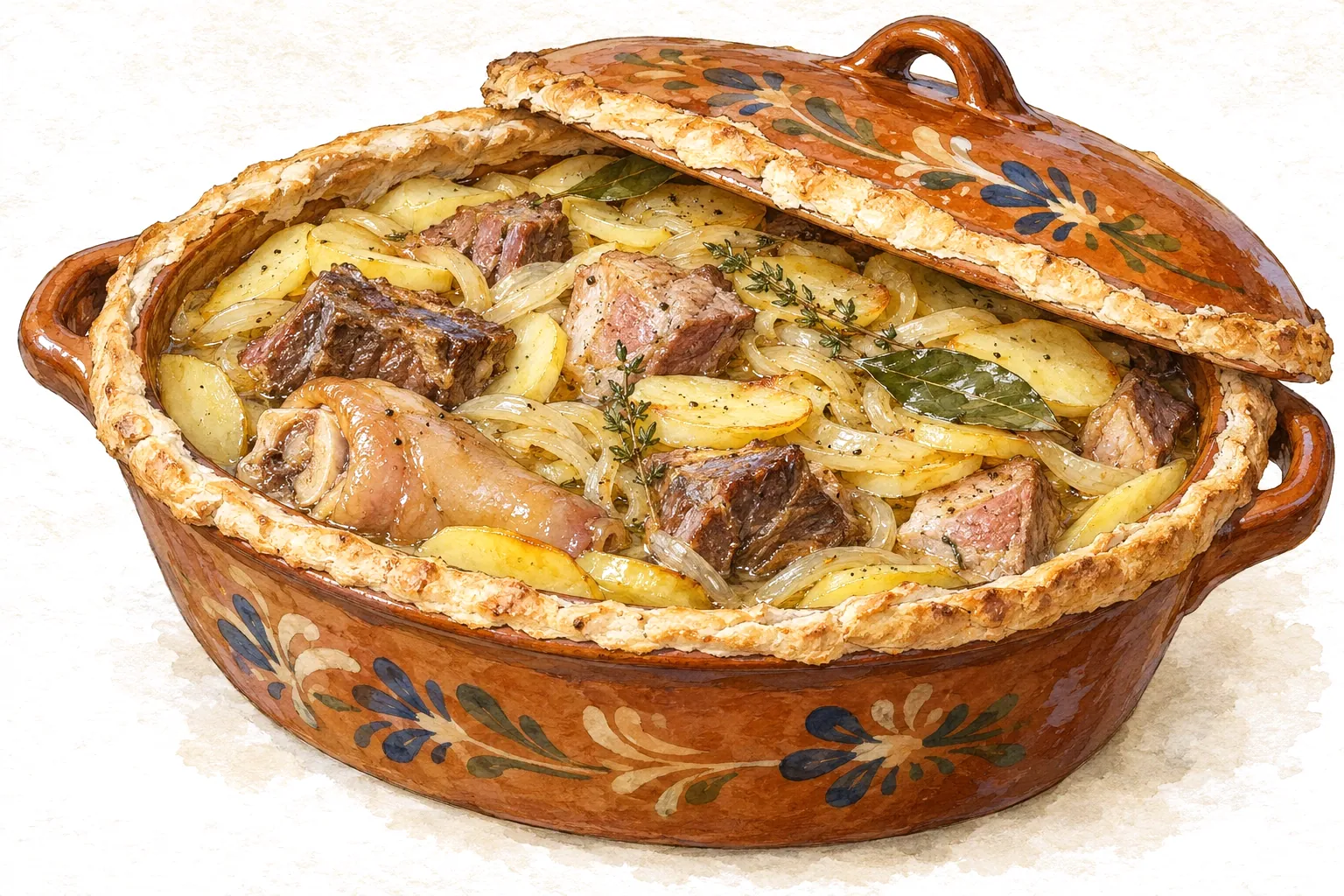 RecipeBaeckeoffeAlsace, France
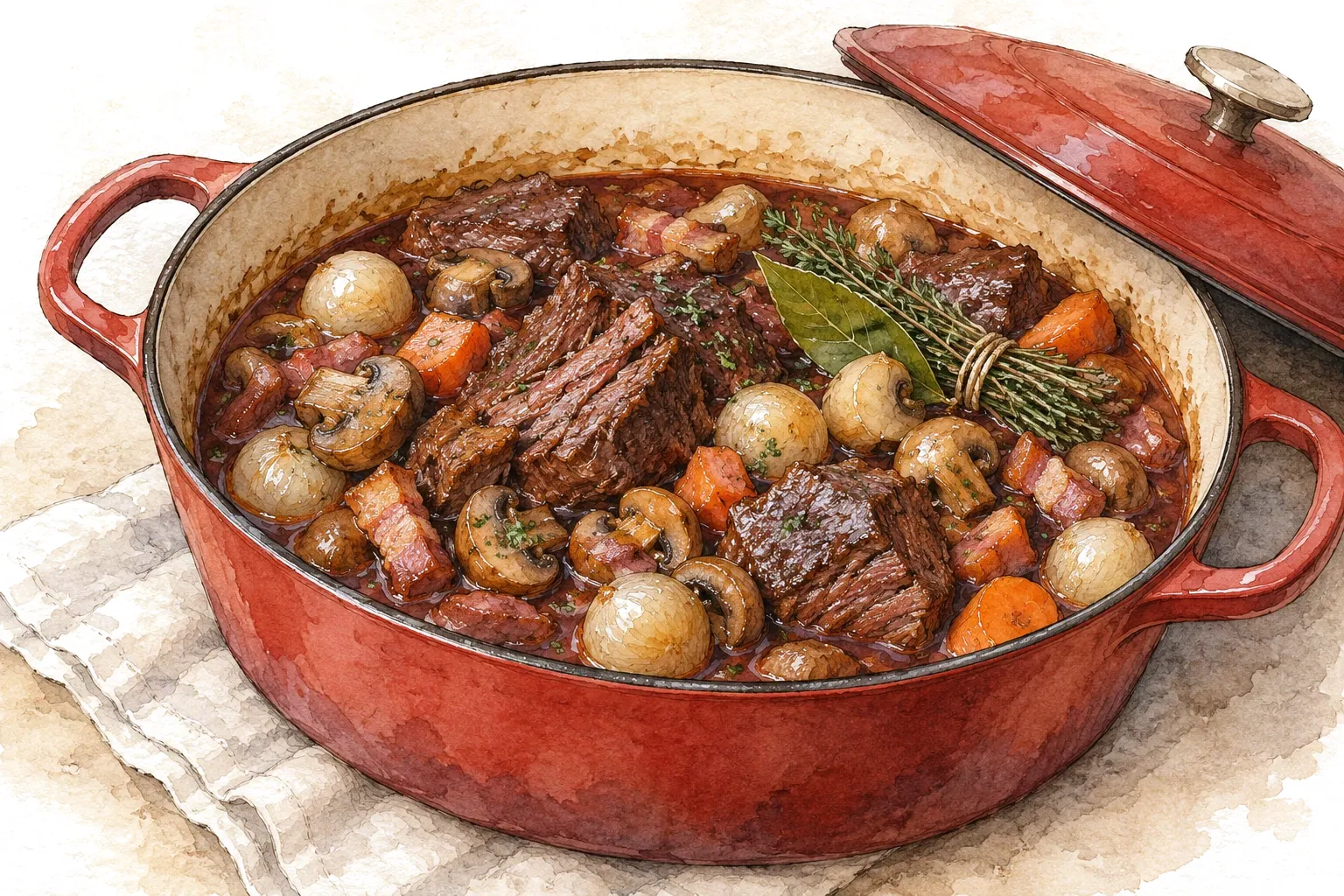 RecipeBœuf bourguignonDijon, France
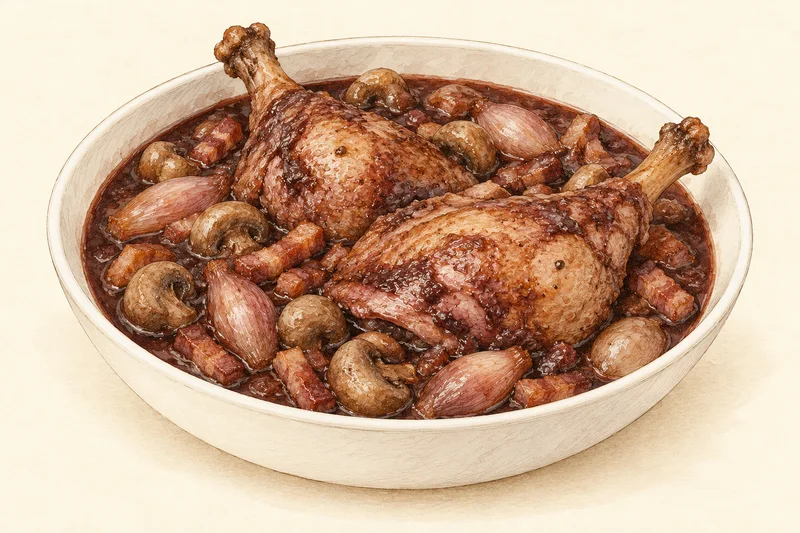 RecipeCoq au vinBurgundy, France
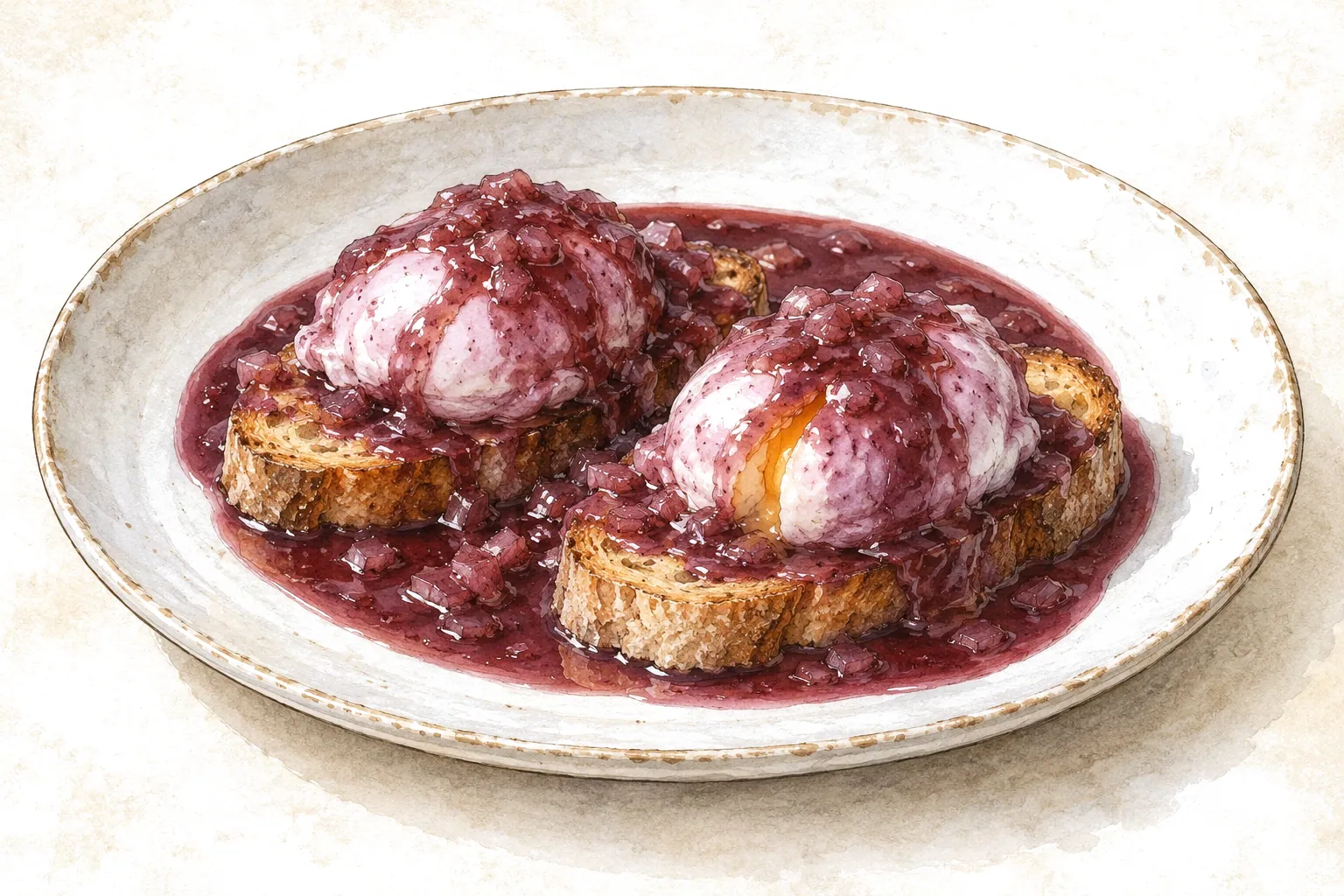 RecipeŒufs en meuretteBurgundy, France
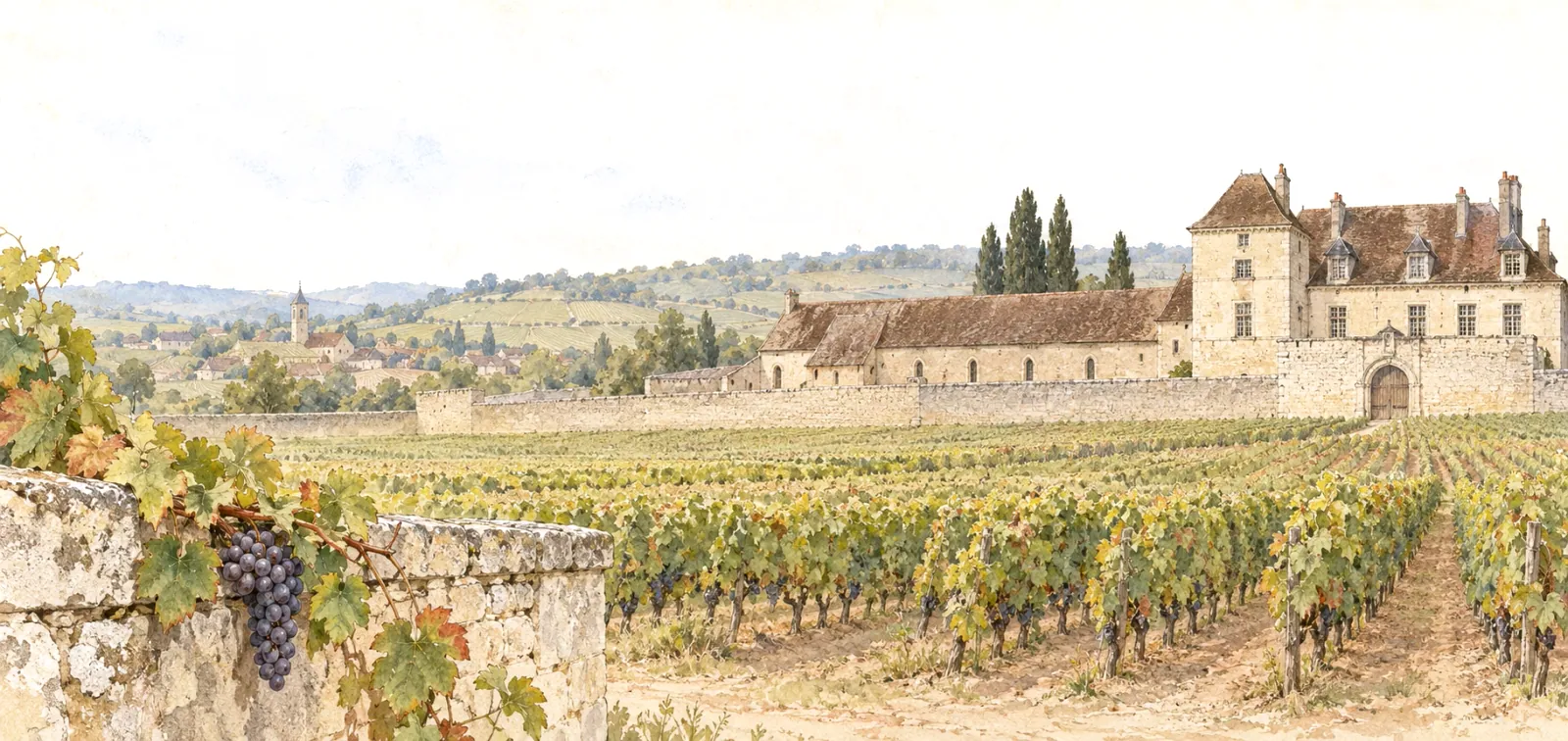 StoryThe Cistercians and the Clos de VougeotVougeot, France
 StoryDid Dom Pérignon invent Champagne?Hautvillers, France
- Wine regionAlto AdigeBolzano, Italy
- Wine regionBurgundyBeaune, France
- Wine regionCôte de NuitsNuits-Saint-Georges, France
- Wine regionFranciacortaErbusco, Italy