
Wine · Wine region · Short entry
Finger Lakes
Finger Lakes
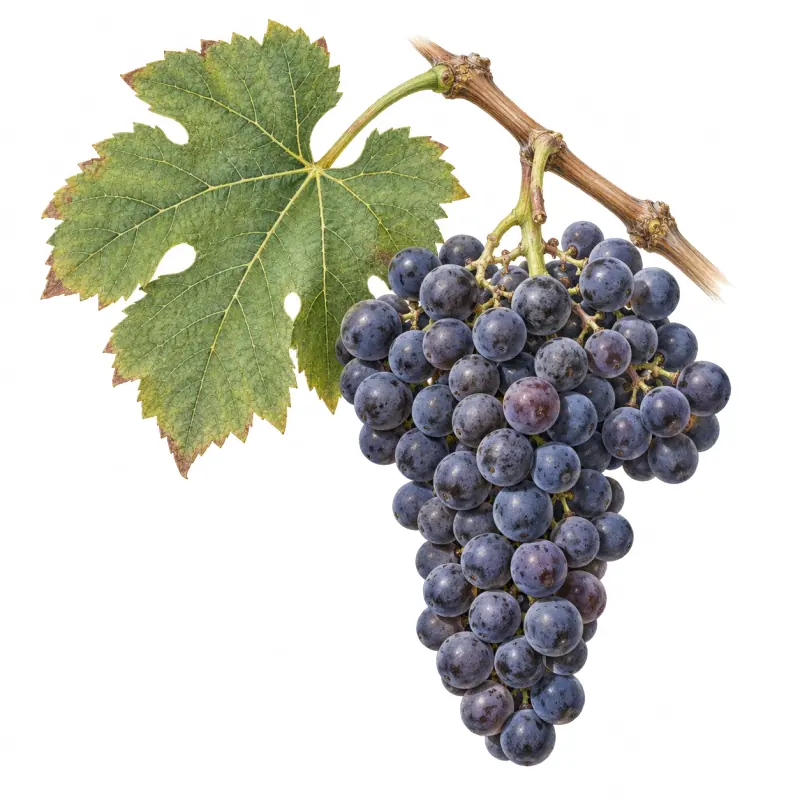
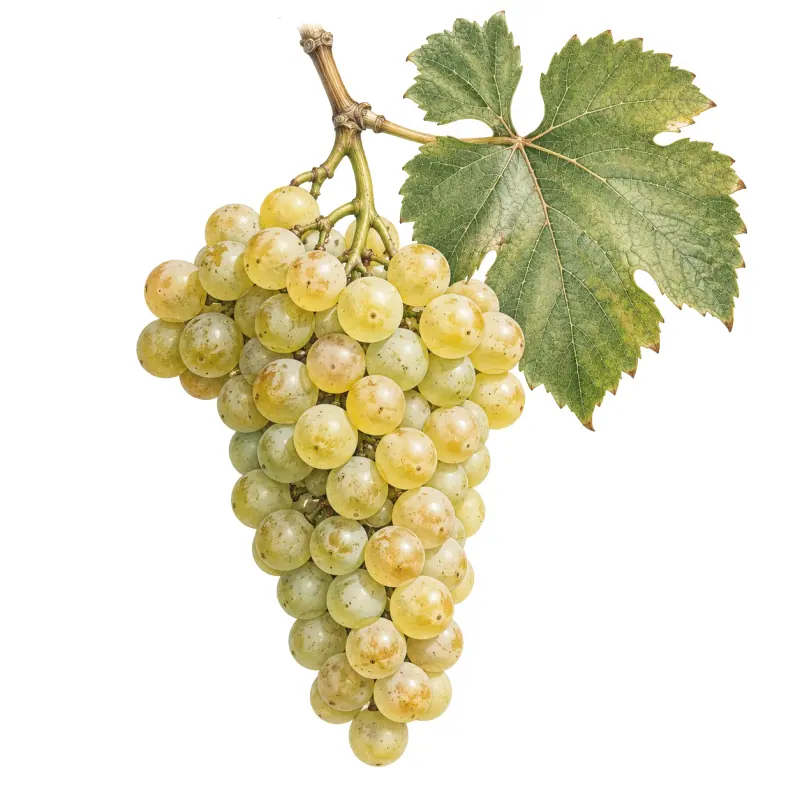
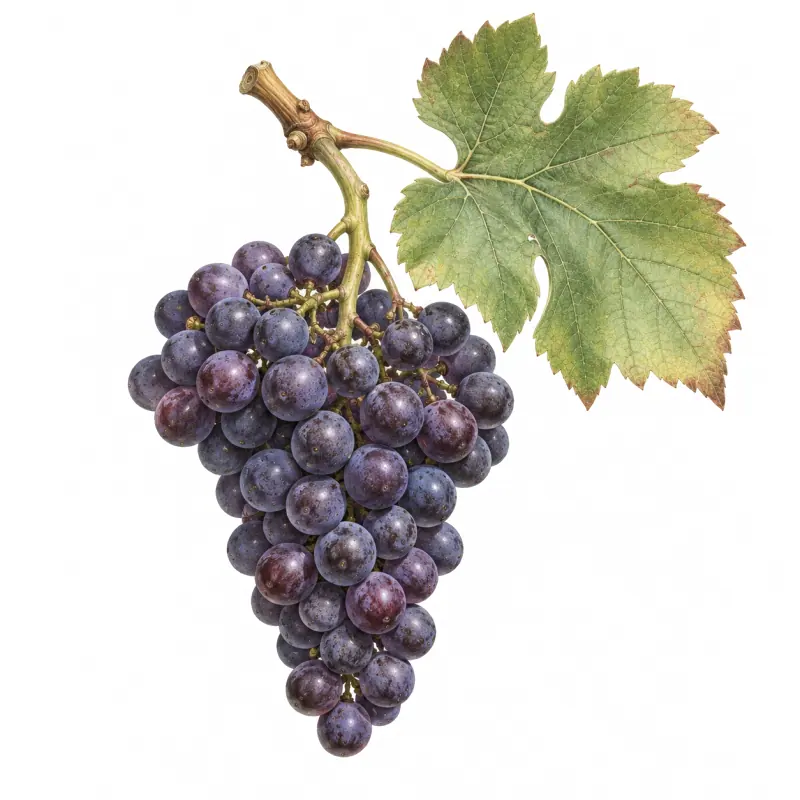
The Finger Lakes AVA, established on 1 September 1982, covers the hills around eleven narrow glacial lakes in central New York. Canandaigua, Keuka, Seneca and Cayuga are central to its vineyards; Seneca Lake and Cayuga Lake are nested AVAs. The deep lakes store heat and delay spring budbreak and autumn frost. Riesling is the grape most associated with the region, and Cabernet Franc is the most common red.
Catawba, sparkling wine and Konstantin Frank
The New York Wine & Grape Foundation dates the first Finger Lakes vines to 1829, when the Reverend William Bostwick planted Catawba and Isabella cuttings in his rectory garden. The Erie Canal, completed in 1825, opened trade, and by 1860 about 3,000 acres grew along Keuka, Canandaigua and Seneca lakes. The Pleasant Valley Wine Company won a gold medal in Vienna for a sparkling Catawba, and by the early 1900s about 50 wineries worked 20,000 acres. Prohibition closed most of them and halved the vineyard.
French-American hybrids arrived in the late 1930s and 1940s. Konstantin Frank, hired by Charles Fournier of Gold Seal in 1953, grafted vinifera onto suitable rootstocks; the first commercial New York vinifera wines were made in 1960, and his own winery released its first vintage in 1962. The Finger Lakes AVA was established on 1 September 1982, Cayuga Lake on 25 March 1988 and Seneca Lake on 3 July 2003.
Deep glacial lakes on Devonian shale
The Foundation's guide dates the bedrock to the Devonian, over 360 million years ago: grey shales and silty limestone, or shale, siltstone, sandstone and limestone. The present landscape was carved by glaciers 22,000–13,000 years ago, which left gorges, hanging deltas and shoreline terraces. Around Seneca Lake glacial till lies on shale, with sandstone to the south and limestone to the north; Cayuga Lake has lime-influenced soils.
Seneca Lake is 61 km long, covers about 17,540 ha and is 188 m deep in the guide, 193 m in TTB's 2003 rule; below 46 m its water stays at 4 °C all year. The lakes warm from March to August and release heat afterwards. TTB records a growing season of about 190 days at Seneca and 165–170 days at Cayuga. Growing degree days, base 10 °C, rose from about 1,330 in 1982 to 1,500 in 2020, according to the guide.
Lake effect and vintage variation
TTB's Seneca Lake rule explains how the lake protects the crop: cool breezes off the water in spring hold back budbreak until frost danger has passed, warm breezes in autumn delay the first frost, and moisture carried by westerly winds builds a deep snow cover that shields vines in winter. The Foundation adds that the region accumulates heat late and fast in a short season, so a warm, dry September and October matter. It describes Riesling as bold, full and slightly textured in warm years and sleek, fresh and vibrant in cool ones, and calls vintage variation characteristic of the region.
Riesling, Cabernet Franc and sparkling wine
The Finger Lakes AVA (27 CFR 9.34) contains the Cayuga Lake (9.127) and Seneca Lake (9.128) AVAs. Wines labelled with them need at least 85% of their grapes from inside the boundary.
The Foundation counts 423 farms with 10,709 acres (about 4,330 ha) under vine. In its 2024 survey, reported acreage was 38% vinifera, 38% hybrid and 24% American varieties, about half white and half red. Riesling is made dry, semi-dry and late harvest, and as sparkling wine; Chardonnay is often unoaked, and Gewürztraminer and Pinot Gris are growing. Cabernet Franc is the most common red and the main grape for dry rosé, with Pinot Noir and Blaufränkisch. Traditional-method sparkling wine uses Chardonnay and Pinot Noir; hybrids such as Vignoles, Seyval and Baco Noir and natives such as Catawba remain.
How it connects
Wine region
- in New York
Grape variety
- grows Cabernet Franc
- grows Chardonnay
- grows Pinot Noir
Continue exploring
- CountryUnited States of America33 entries in the atlas so far
- Grape varietyPinot Noir
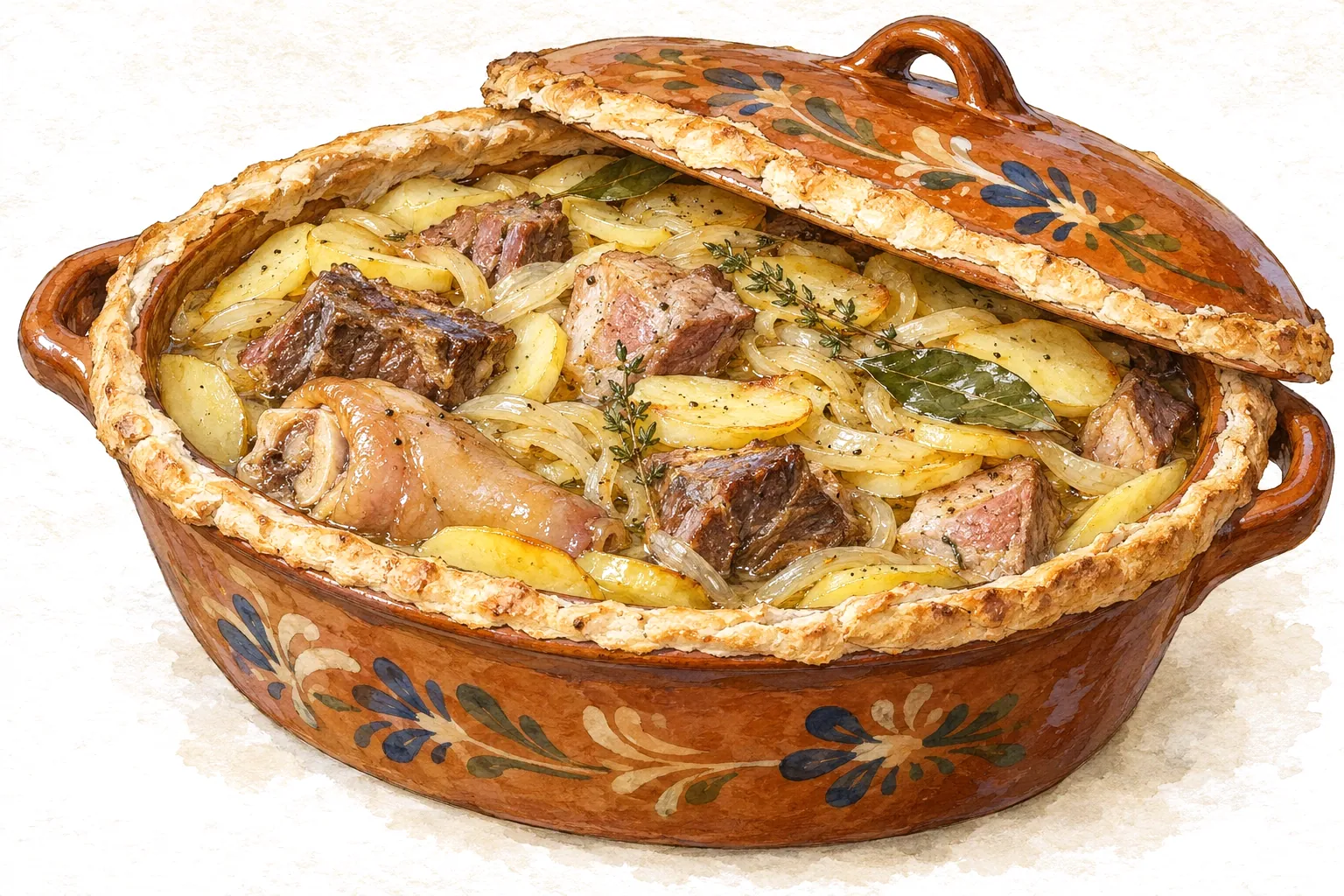 RecipeBaeckeoffeAlsace, France
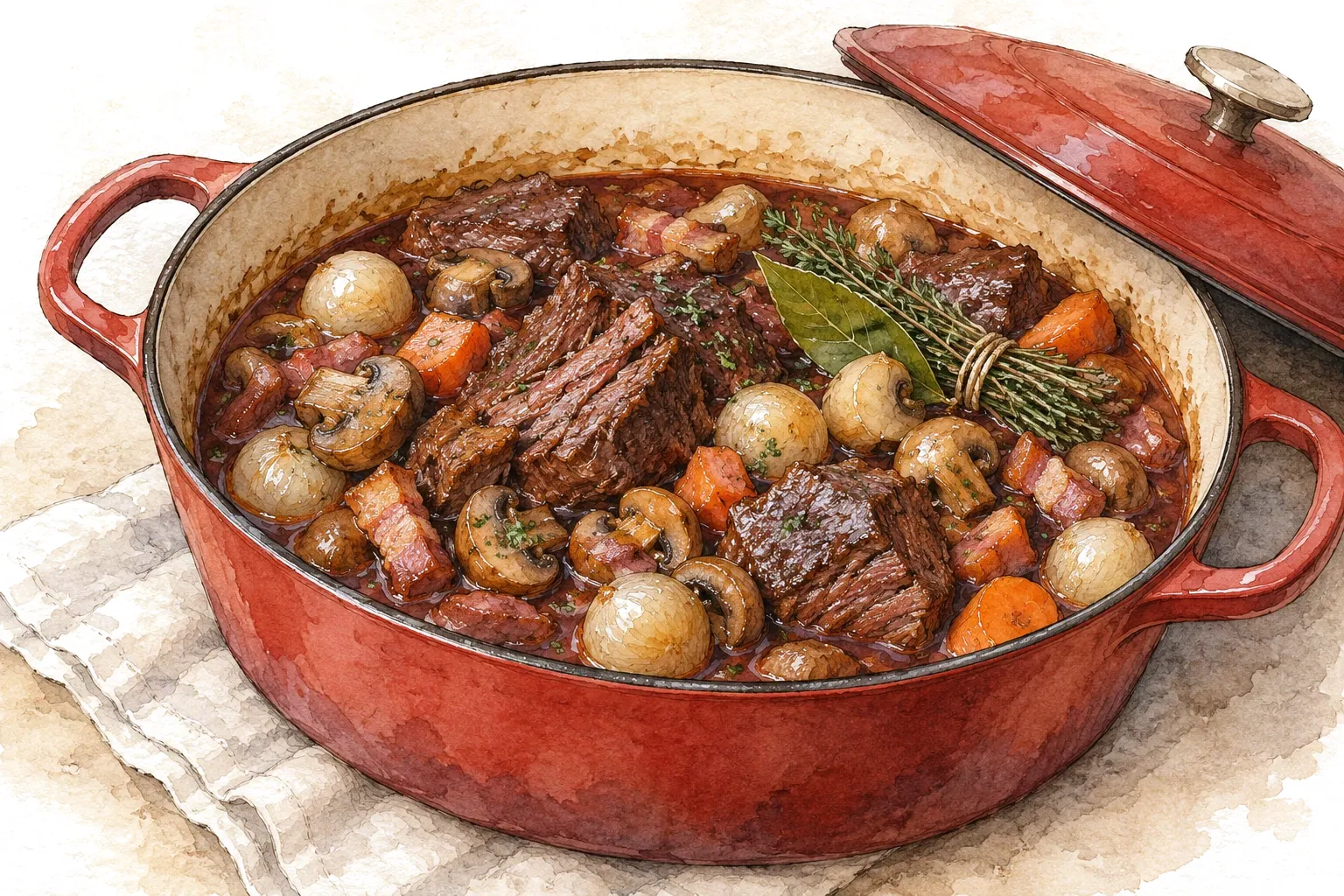 RecipeBœuf bourguignonDijon, France
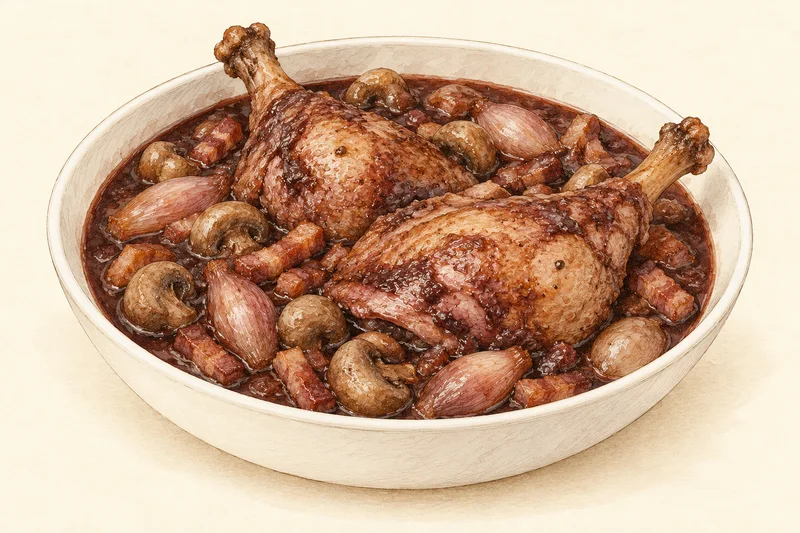 RecipeCoq au vinBurgundy, France
- Grape varietyCabernet Franc
- Grape varietyChardonnay
- Wine regionNew YorkUnited States of America
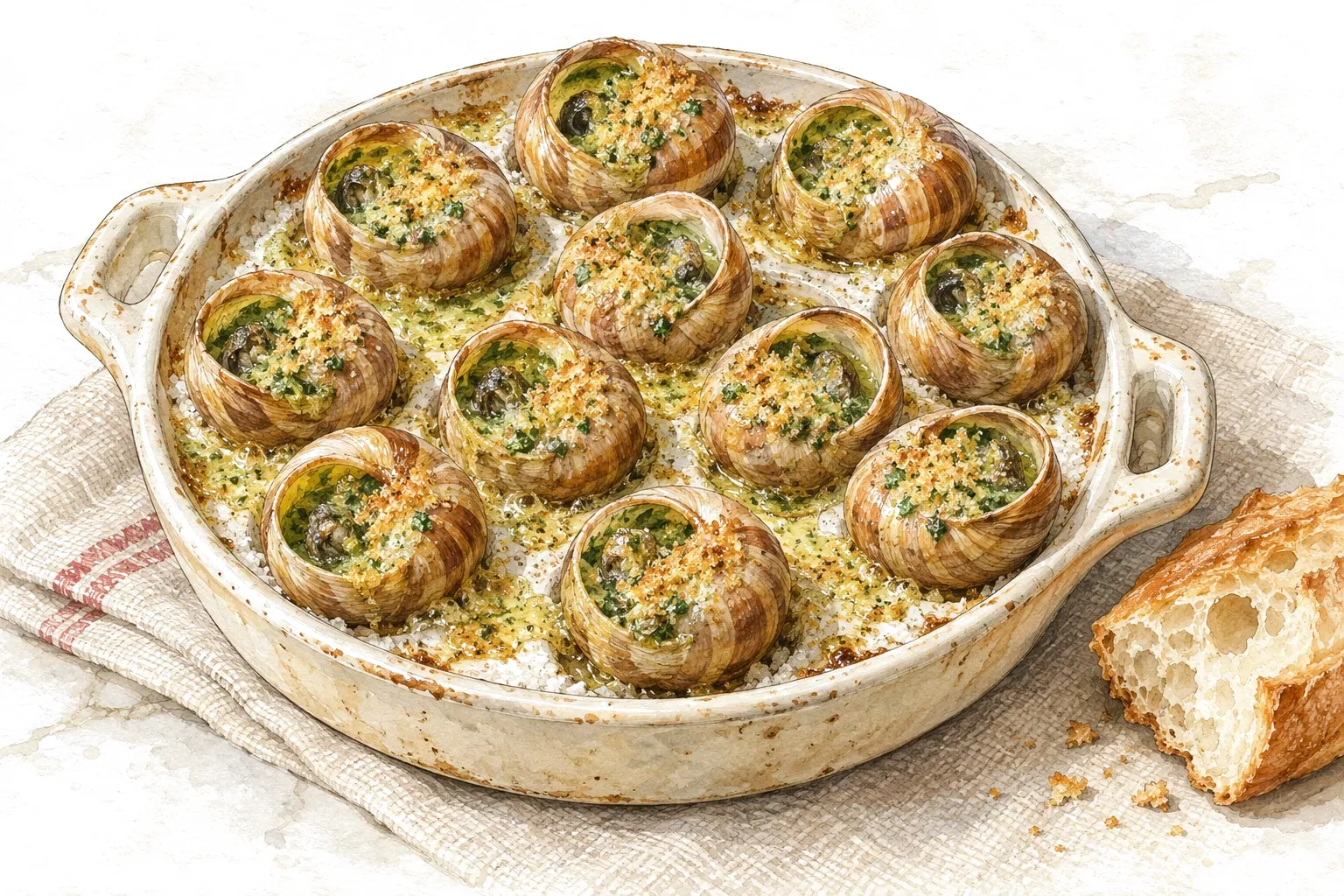 RecipeEscargots à la bourguignonneBurgundy, France
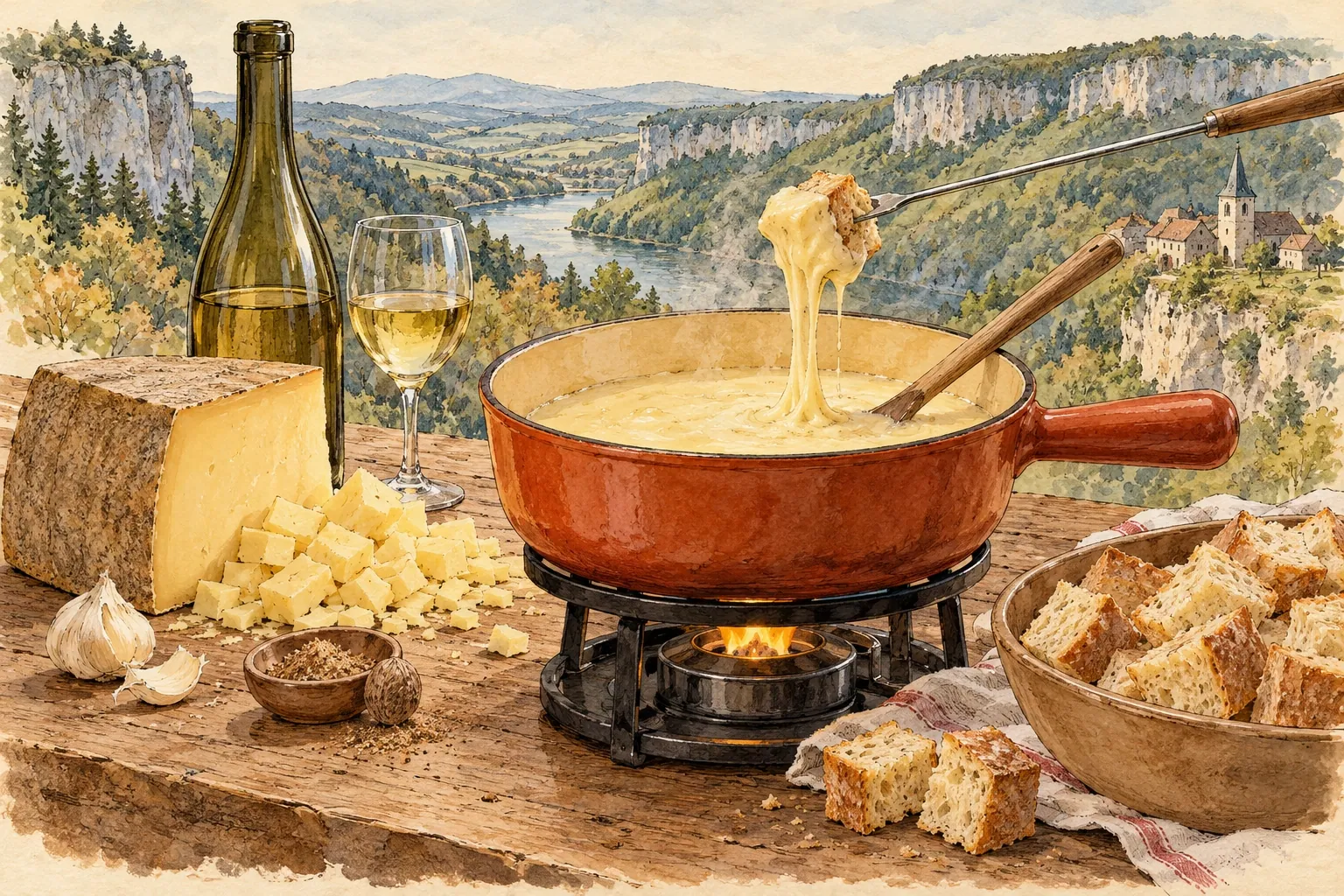 RecipeFondue au ComtéJura massif, Franche-Comté, France