
Wine · Wine region · Short entry
Graubünden
Graubünden / Grisons
Graubünden has a little over 400 ha of vines, most in the Rhine valley from Bonaduz to Fläsch, with smaller areas in the Misox and at Brusio. Pinot Noir, locally Blauburgunder, covers about two thirds of the vineyard, and the Bündner Herrschaft villages of Fläsch, Maienfeld, Jenins and Malans are its best-known area. The canton's wines carry AOC Graubünden, while Misox wines follow Ticino rules and may also carry DOC Ticino.
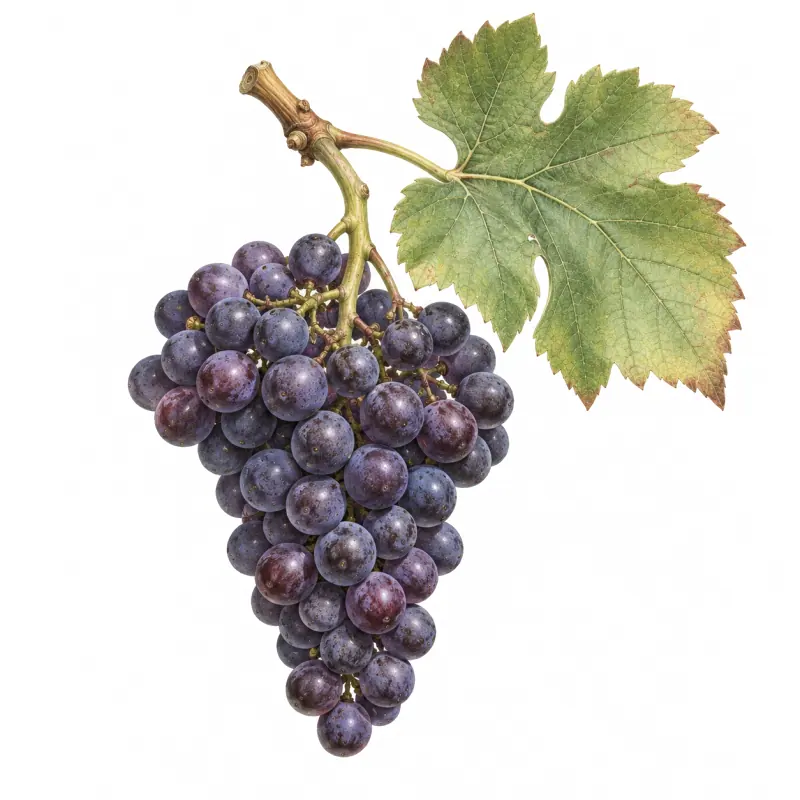
From Bishop Tello to the Herrschaft
graubündenWEIN dates the oldest evidence of vines in the canton to 765, when Bishop Tello of Chur left a vineyard near Ilanz to the abbey of Disentis in his will. Around 800 the church forbade vineyard work on Sundays, and vines then grew up to 1,200 m in the Bündner Oberland and the Lower Engadine. Until about 1600 mostly white grapes, chiefly Elbling, were grown; Blauburgunder is said to have been brought in around 1630 by young mercenaries who had served in Burgundy.
Swiss Wine Promotion cites a Completer vineyard at Malans named in a deed of 1321 and says Schloss Salenegg at Maienfeld made wine in 1068. The name Bündner Herrschaft recalls the time when the courts of Maienfeld and Malans were subject lands of the Three Leagues, and the Valtellina was under Graubünden rule from 1512 to 1797. The vineyard grew from 200 ha in 1970 to about 421 ha in 2023.
The Rhine valley and the foehn
The cantonal rules divide Graubünden into three wine regions: the Bündner Rheintal (Fläsch, Maienfeld, Jenins, Malans, Landquart, Zizers, Trimmis, Chur, Felsberg, Domat/Ems and Bonaduz), the Misox (six communes from Lostallo to San Vittore) and the Puschlav (Brusio). For new plantings in the Rheintal they require at most 600 m above sea level, at least 10 m above the valley floor, a slope of at least 6%, an aspect between 90° and 270°, mean August and September radiation of at least 174 W/m² and soils free of waterlogging.
Swiss Wine Promotion and graubündenWEIN describe a mild climate, calcareous soils, and mountains that shelter the vines from cold winds. The foehn, nicknamed the 'grape cooker', makes the Bündner Herrschaft the warmest wine area of German-speaking Switzerland.
Warm days, cool nights
Swiss Wine Promotion attributes the quality of Bündner Herrschaft wines to the foehn and to the large difference between day and night temperatures, and says growers bring out the demanding Blauburgunder through near-natural farming and small yields. It describes Completer as high in acidity and hard to vinify; its name is linked to the wine served to canons after Compline, the last office of the day. Churer Schiller is a pale red made from Pinot Noir with white grapes, in which the red grapes must predominate. graubündenWEIN says the best-known whites are made from Chardonnay, while Riesling-Silvaner is the most planted white.
AOC Graubünden
Wines from the canton, including sparkling, semi-sparkling and liqueur wines, may carry AOC Graubünden, also written KUB Graubünden or DOC Grigioni. A commune name requires 60% of the wine from that commune, 'Village' 70% and a vineyard name 100%. Minimum natural sugar is 19.4 °Brix (80 °Oe) for Blauburgunder, or 17.2 °Brix for sparkling base, and 17.2 °Brix for other varieties; maximum yields per variety are set each year by the growers' association graubündenWEIN. Spätlese grapes must be picked at least seven days after the usual date with 0.77 °Brix above the regional average; Beerenauslese needs noble rot and 26 °Brix; Reserve requires 18 months for reds and 12 for whites from 1 October. Misox wines follow Ticino law and may carry DOC Ticino or AOC Graubünden Misox. Pinot Noir covers 287 of about 421 ha.
Classification
- AOC Graubünden (KUB, DOC Grigioni)Minimum sugar 19.4 °Brix (80 °Oe) for Blauburgunder and 17.2 °Brix for other varieties; yields set yearly by graubündenWEIN; commune name 60%, Village 70%, vineyard name 100%.
- AOC Graubünden Misox / DOC TicinoMisox wines follow Ticino rules on sugar, yields and grapes.
How it connects
Wine region
- in Switzerland
Grape variety
- grows Pinot Noir
Continue exploring
- CountrySwitzerland7 entries in the atlas so far
- Grape varietyPinot Noir
 RecipeBaeckeoffeAlsace, France
 RecipeBœuf bourguignonDijon, France
 RecipeCoq au vinBurgundy, France
 RecipeRöstiSwitzerland
- Wine regionSwitzerlandSwitzerland
 RecipeŒufs en meuretteBurgundy, France
 StoryThe Cistercians and the Clos de VougeotVougeot, France
 StoryDid Dom Pérignon invent Champagne?Hautvillers, France