
Wine · Region
Burgundy
A narrow chain of limestone slopes in east-central France where two grapes — Pinot Noir and Chardonnay — are grown plot by plot, and where the idea that a single vineyard can taste of its place was codified more thoroughly than anywhere else.
The appellations of Burgundy
Every coloured shape is an official appellation area from INAO's open delimitation data. Zoom into the Côte de Nuits to read the Grand Crus one by one; tap any shape for its area.
Appellations: INAO, Délimitation parcellaire des AOC viticoles (Licence Ouverte). Terrain: produced using Copernicus WorldDEM-30 © DLR e.V. 2010-2014 and © Airbus Defence and Space GmbH 2014-2018 provided under COPERNICUS by the European Union and ESA; all rights reserved. Rivers: Sandre BD TOPAGE. Towns: INSEE via geo.api.gouv.fr.
A coast without a sea
The heart of Burgundy is the Côte d'Or, an escarpment running roughly fifty kilometres south-west from Dijon. It is the eroded edge of a geological fault: to the west rises a plateau of Jurassic limestone, to the east the land drops into the flat plain of the Saône (Bresse). Vines occupy the band in between, where centuries of erosion have mixed limestone scree with marl and clay.
The Côte divides into two halves. The northern Côte de Nuits is narrow and almost entirely red. The southern Côte de Beaune, with its rolling landscape, is home to the great white villages of Meursault, Puligny- and Chassagne-Montrachet as well as fine reds. Beyond them lie the Côte Chalonnaise and the Mâconnais, and, more than a hundred kilometres to the north-west, the isolated vineyards of Chablis.
Along the Côte, quality is often read across the slope: many of the most celebrated vineyards sit in the middle of it, though not all — the Grand Cru Clos de Vougeot reaches down to the foot of the slope.
Climats: the vineyard as a unit of meaning
In Burgundy a climat is not the weather but a precisely bounded, named vineyard site — sometimes only a few hectares, sometimes less. Many names have been recorded for centuries. In 2015 UNESCO inscribed the Climats, terroirs of Burgundy on the World Heritage List, together with the wine villages, the town of Beaune and the historic centre of Dijon, recognising this mosaic of 1,247 climats as a cultural landscape.
Ownership is famously fragmented. Centuries of sales and inheritance have divided the vineyards, so a single famous site can be shared among dozens of owners — the Clos de Vougeot among about eighty — each farming a few rows. Two bottles bearing the same vineyard name can therefore come from different growers with different methods — which is why Burgundy rewards knowing the producer as much as the place.
Classification
- Grand CruIndividual named vineyards (climats) with their own appellation; the label shows only the vineyard name, e.g. Chambertin. 33 appellations.
- Premier CruClassified climats within a village appellation; labelled with village and vineyard, e.g. Vosne-Romanée 1er Cru Les Suchots.
- VillageWine from a named commune, e.g. Gevrey-Chambertin. 44 appellations.
- RegionalWines that may come from across the region, e.g. Bourgogne, Bourgogne Aligoté, Crémant de Bourgogne. 7 appellations.
Nine centuries on the Côte
- 1098Cîteaux Abbey founded; Cistercian monks begin assembling vineyards such as the Clos de Vougeot.
- 1395Duke Philip the Bold orders Gamay uprooted from the best vineyards in favour of Pinot.
- 1443Nicolas Rolin founds the Hôtel-Dieu in Beaune; its vineyards later fund the Hospices.
- 1859The Hospices de Beaune hold their wine auction, a tradition that continues each November.
- 1934The Confrérie des Chevaliers du Tastevin is founded.
- 1987Marsannay receives its village appellation, for red, white and rosé.
- 2015UNESCO inscribes the Climats, terroirs of Burgundy on the World Heritage List.
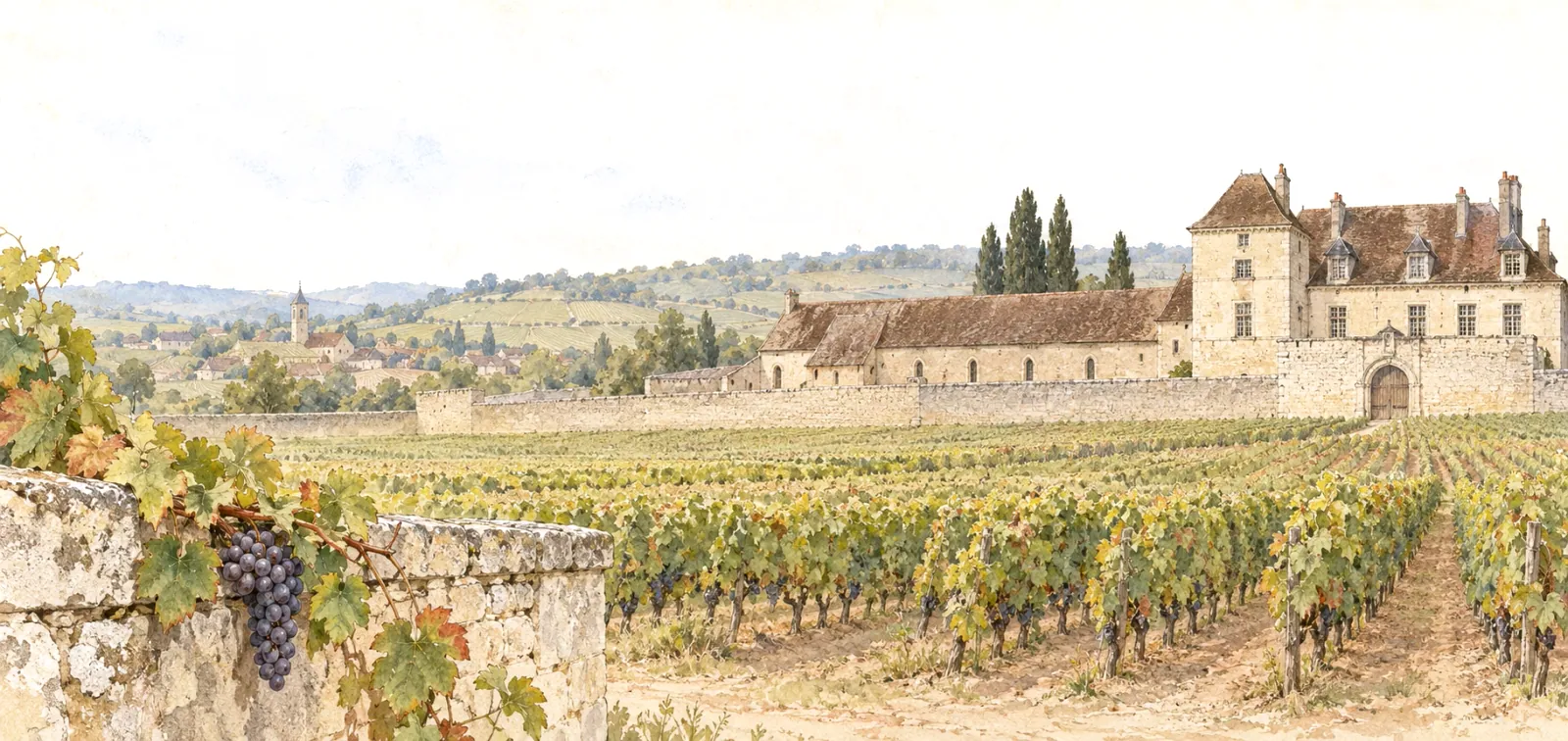
Vines were grown here in the Gallo-Roman period, but the shape of Burgundy's vineyards owes most to the medieval Church. The Benedictines of Cluny and, from 1098, the Cistercians of Cîteaux acquired, planted and walled vineyards, observing over generations which plots gave the best wine. The walled Clos de Vougeot in the Côte de Nuits is their most famous legacy.
In 1395 Duke Philip the Bold issued an edict banning the Gamay grape in favour of Pinot, an early example of a ruler legislating for wine quality — and one reason Gamay is today grown mainly further south, in the Mâconnais and Beaujolais. In 1443 Nicolas Rolin, chancellor to Duke Philip the Good, and his wife Guigone de Salins founded the Hôtel-Dieu in Beaune; the Hospices de Beaune still sell the wines of their donated vineyards at a charity auction on the third Sunday of November.
The nineteenth century brought merchants (négociants) in Beaune and Nuits, and then phylloxera, from 1875, which destroyed the old vineyards before replanting on American rootstocks. The appellation system introduced from 1935–36 laid down the hierarchy of regional, village and Grand Cru appellations that still shapes every label; Premier Cru vineyards sit within the village appellations.
Two grapes, many places
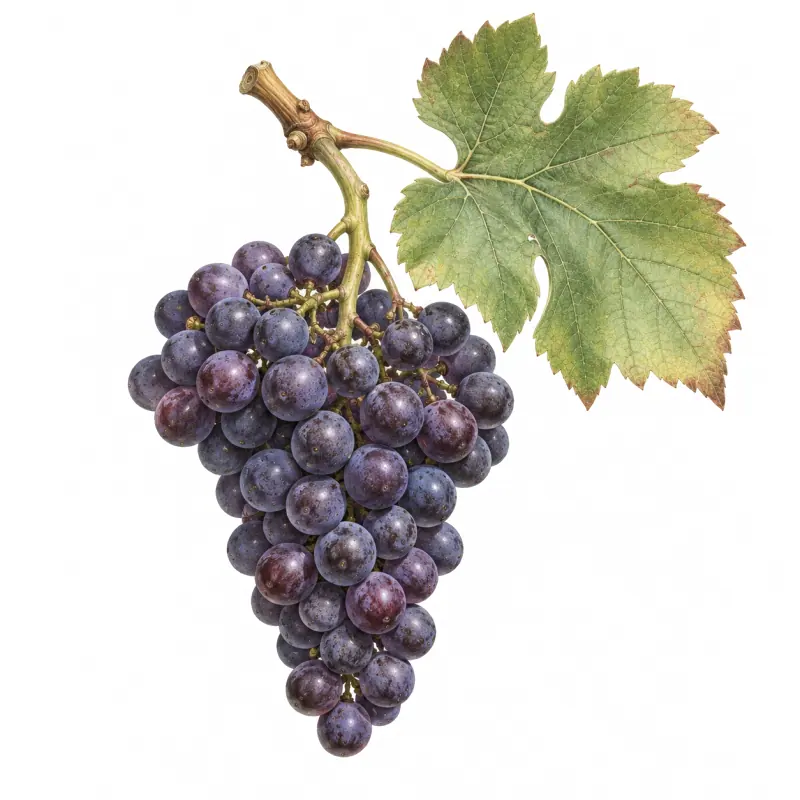
Almost all of Burgundy's fine wine comes from just two varieties. Pinot Noir makes the reds; Chardonnay makes the whites from Chablis to the Mâconnais. Because the grape is constant, differences between wines are attributed to site, vintage and grower — the core of the Burgundian idea of terroir.
Supporting roles go to Aligoté, a crisp white grape with its own village appellation at Bouzeron, and to Gamay, which appears in some regional blends. Sauvignon Blanc is grown at Saint-Bris near Chablis, and the rare César in Irancy.
At the Burgundian table
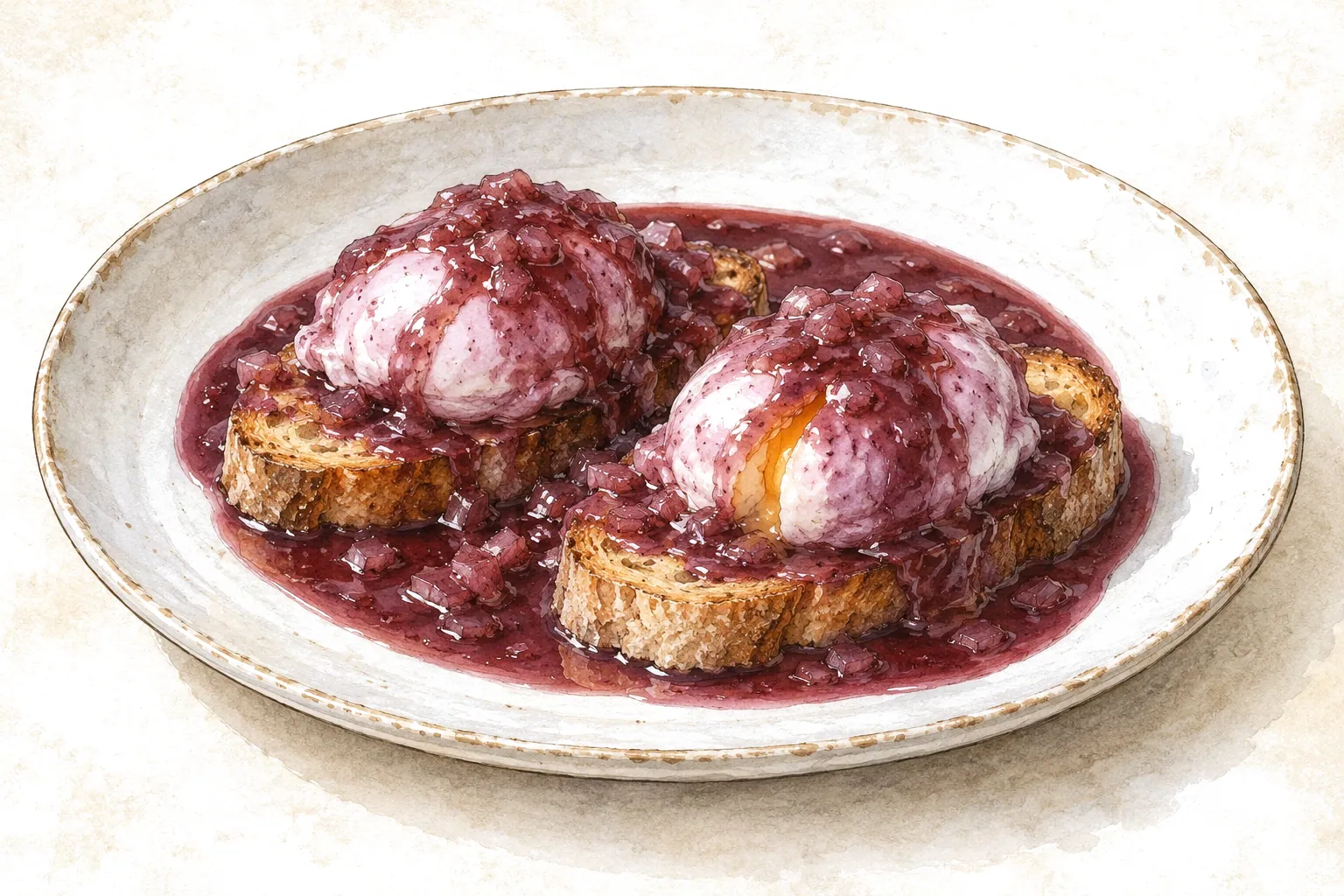
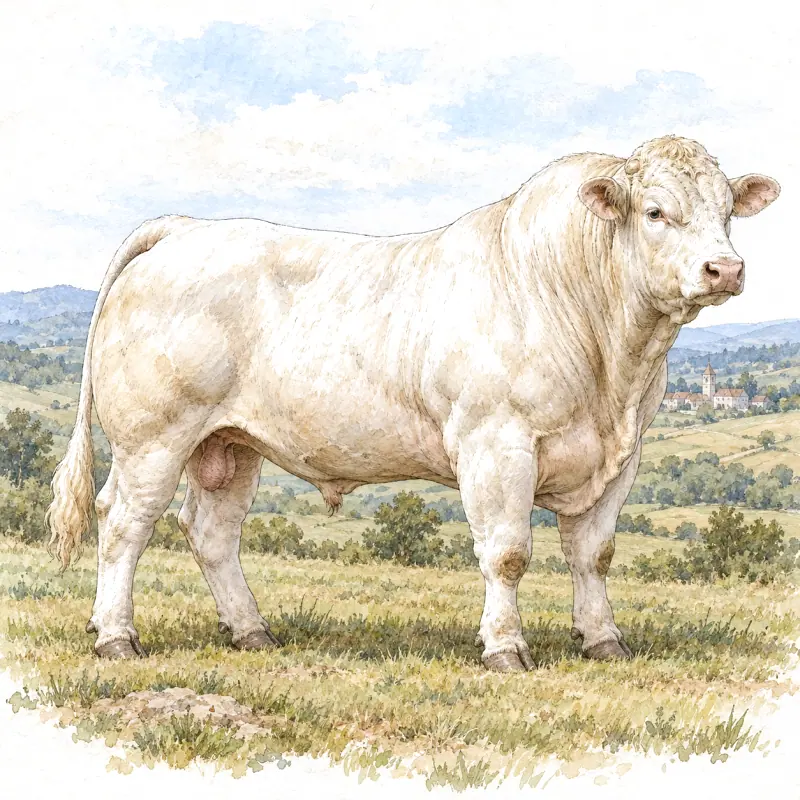
Burgundy's cooking is a wine-region cuisine: dishes braised or sauced in the local wine and made with local produce. Bœuf bourguignon simmers beef — classically from the white Charolais cattle of the south of the region — in red wine. Œufs en meurette poach eggs in a red-wine sauce; jambon persillé sets ham and parsley in aspic; snails are baked with garlic-parsley butter; and Dijon gives its name to a style of mustard.
Red Burgundy's fresh acidity and fine, moderate tannins make it unusually friendly to food: the acidity refreshes the palate against rich sauces, while the tannins do not clash with mushrooms or poultry.
How it connects
Wine region
- subregion Côte de Nuits
- subregion Chablis
- subregion Côte de Beaune
- subregion Côte Chalonnaise
- subregion Mâconnais
Grape variety
- grows Pinot Noir
- grows Chardonnay
- grows Aligoté
- grows Gamay
Recipe
- pairs with Bœuf bourguignon
- origin Coq au vin
- origin Œufs en meurette
- origin Escargots à la bourguignonne
- origin Gougères
Breed
- related Charolais
Story
Place
- in Chablis In preparation
- in Côte de Beaune In preparation
- in Côte Chalonnaise In preparation
- in Mâconnais In preparation
Continue exploring
- CountryFrance162 entries in the atlas so far
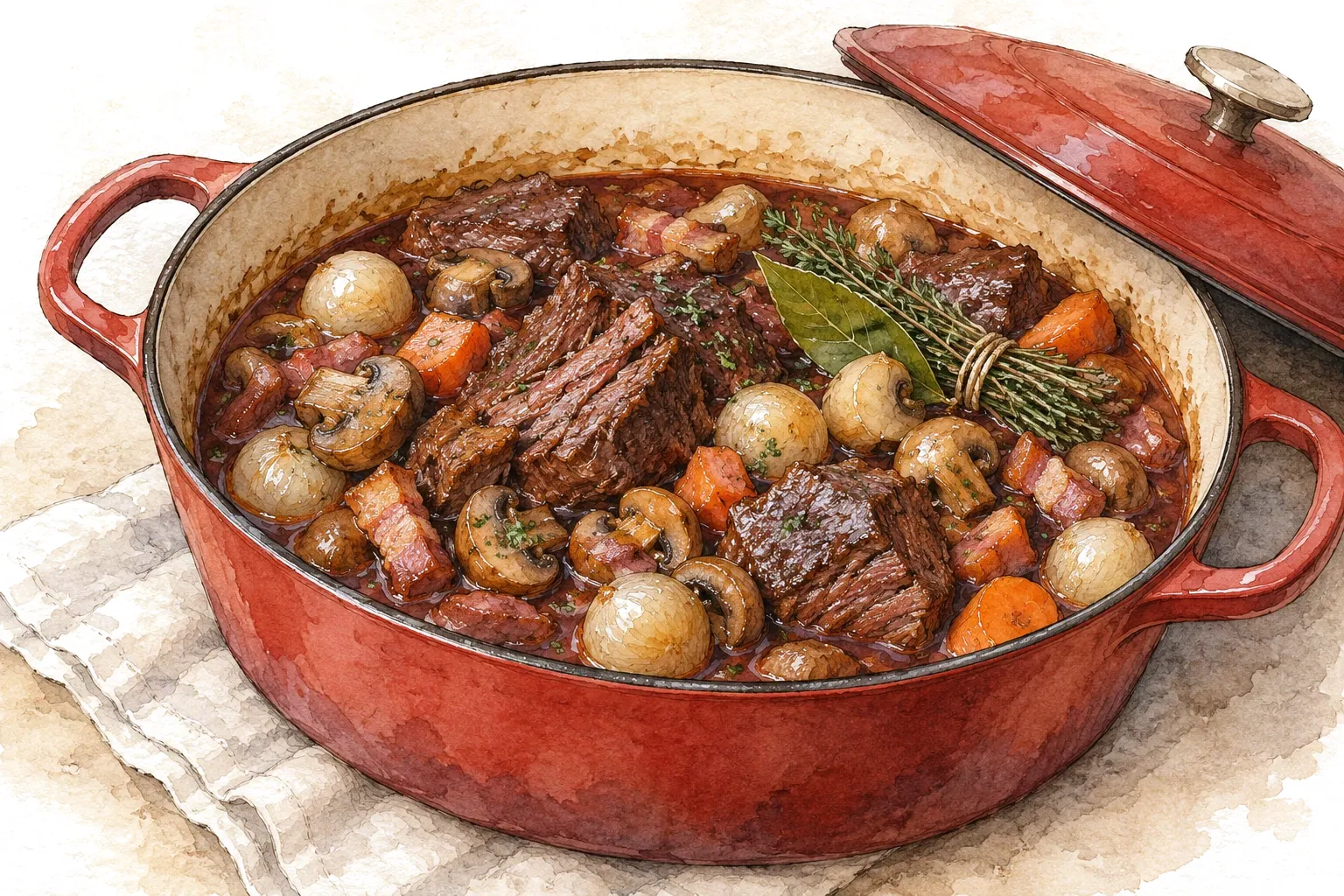 RecipeBœuf bourguignonDijon, France
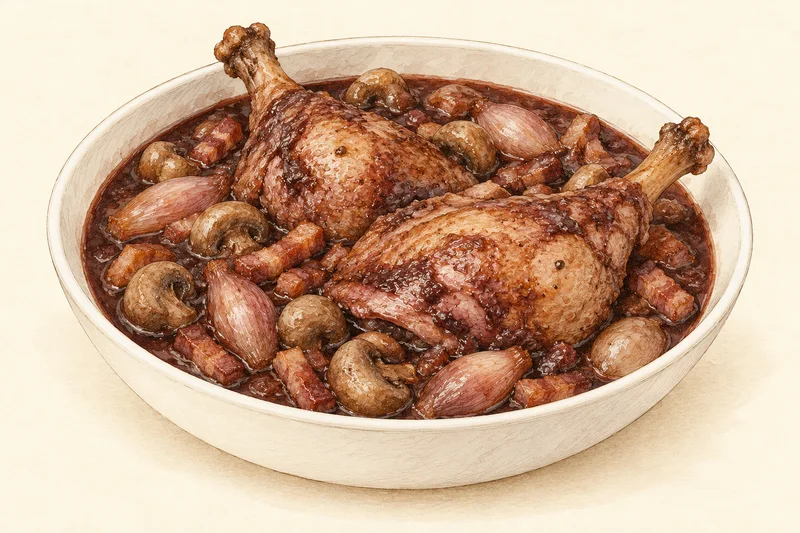 RecipeCoq au vinBurgundy, France
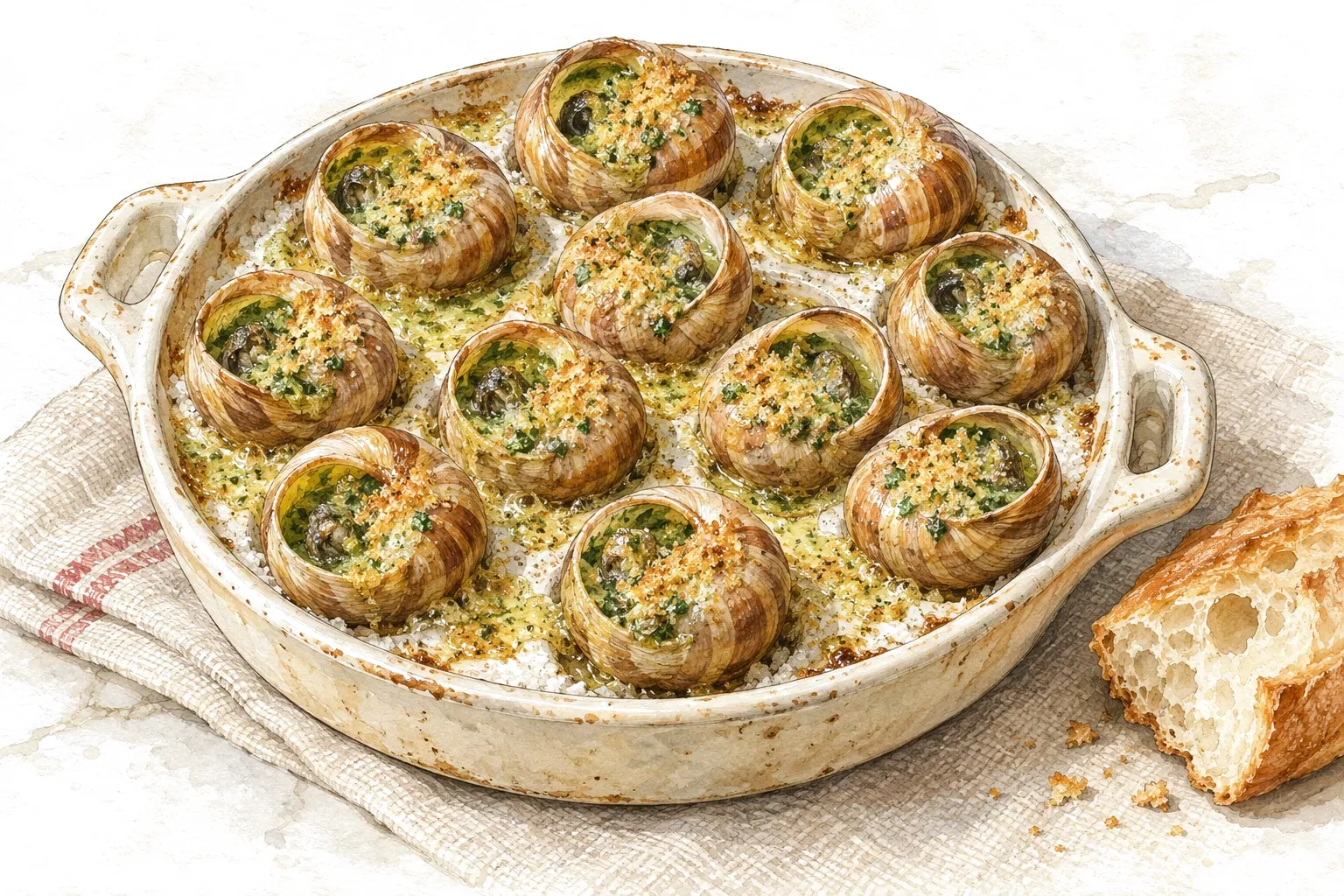 RecipeEscargots à la bourguignonneBurgundy, France
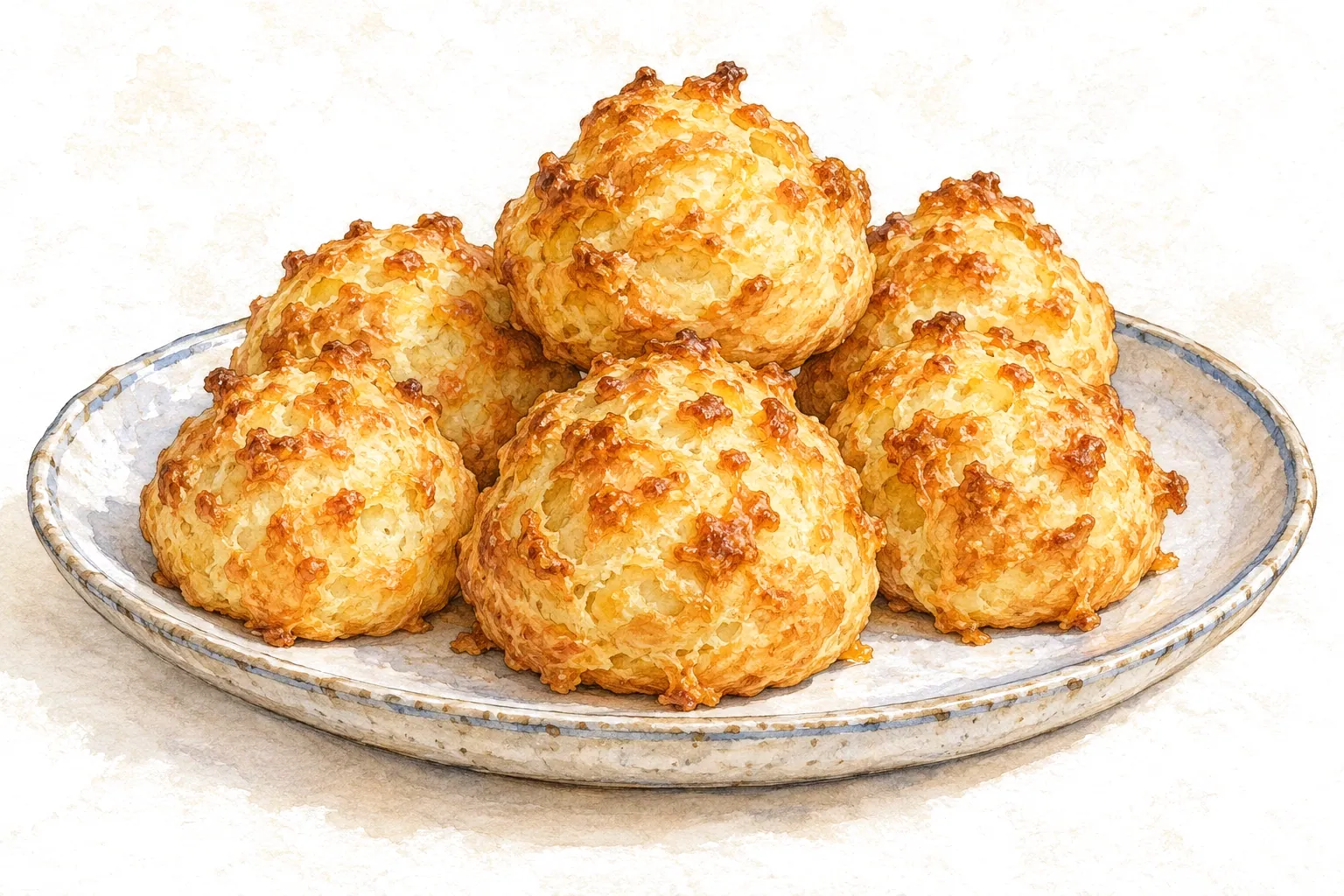 RecipeGougèresBurgundy, France
 RecipeŒufs en meuretteBurgundy, France
 StoryThe Cistercians and the Clos de VougeotVougeot, France
 StoryThe Judgment of Paris, 1976Paris, France
 BreedCharolaisCharolles, France
 Grape varietyPinot Noir