
Wine · Wine region · Short entry
Crémant d'Alsace
Crémant d'Alsace
Crémant d'Alsace is the region's traditional-method sparkling appellation, created by decree of 24 August 1976. Whites may use Auxerrois, Chardonnay, Pinot Blanc, Pinot Gris, Pinot Noir and Riesling; rosé is Pinot Noir only. Whole grapes are pressed, and the wine ferments a second time in bottle and rests at least 9 months on its lees.
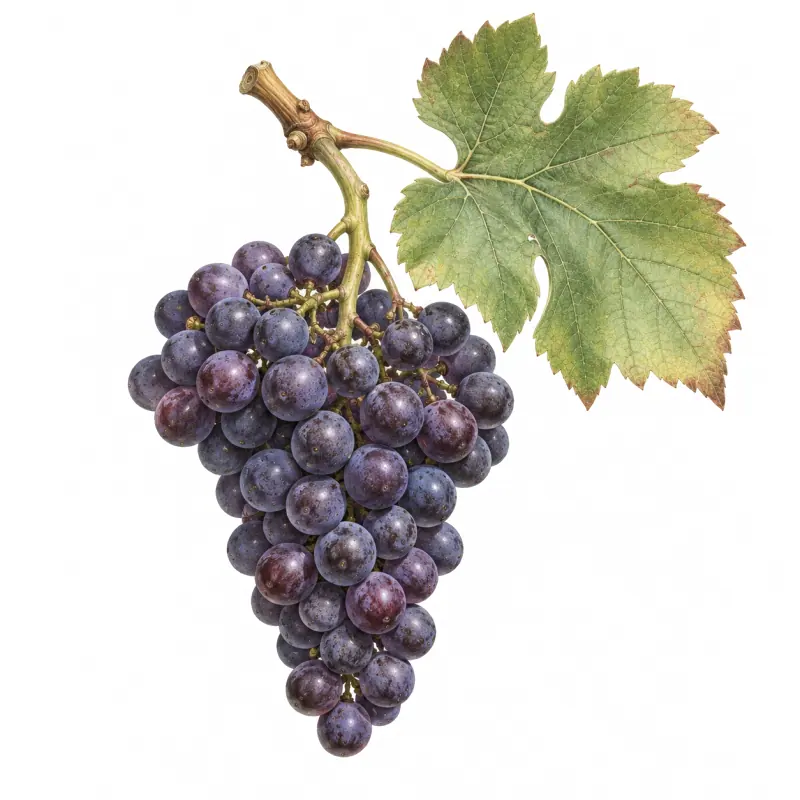

An Alsace sparkling tradition
The specification says that while Alsace was part of the German Empire several Champagne houses brought their skill in second fermentation in bottle to the region. Julien Dopff, who saw the equipment at the 1900 Paris Universal Exhibition, experimented with the method using Alsace base wines, and other well-known houses followed with local sparkling wines. The CIVA adds that Alsace firms were making traditional-method sparkling wine in the late nineteenth century. Trials on the region's grapes first pointed to the Pinot family and then fixed the list of six.
Producers formed a syndicate on 7 November 1974, which took part in national and European work defining the "Crémant" method, and the appellation followed by decree of 24 August 1976. From the 1980s Alsace consumers adopted Crémant d'Alsace as their festive wine, and the specification puts it at 25% of the region's AOC production.
The Alsace vineyard, seen for sparkling wine
Crémant d'Alsace shares the Alsace vineyard: the east face of the Vosges foothills, 120 km long and often less than 1 km wide, from near Cleebourg and Marlenheim to Thann, mostly at 200 to 400 m. The climate is semi-continental, with a January mean of 1.9 °C, July above 20 °C, 1,800 hours of sun at Colmar and 500–650 mm of rain, because the Vosges screen oceanic weather. The faulted edge of the Rhine rift gives shallow acidic soils on schist, granite or sandstone, sandy-gravel alluvial soils at the edge of the plain, and calcareous brown soils and rendzinas with marls on the hills.
For sparkling wine the specification stresses low rain at the end of summer and wide day-night temperature differences during ripening. These keep the grapes healthy, which matters for clean pressing and a fine mousse.
Acid-led freshness
The specification describes whites and rosés built on a complex but naturally acid-led structure that gives freshness and finesse, with fruity notes. During ageing on the lees riper notes appear, often buttery or toasted, and the mousse is fine and light. Whites range from pale yellow with green glints to golden yellow; rosés are a transparent pink of varying depth. It links this to grapes ripened in warm days and cool nights under a high canopy, at an altitude band that keeps acidity, and to picking at optimal ripeness for a good sugar-acid balance. Most wines are sold as brut.
From whole grapes to finished bubbles
Crémant d'Alsace is reserved for white or rosé sparkling wine. Whites are made from Auxerrois, Chardonnay, Pinot Blanc, Pinot Gris, Pinot Noir and Riesling, alone or blended; rosés from Pinot Noir only. Grapes are picked by hand at optimal ripeness and carried in containers of no more than 100 kg. White grapes go whole into the press, and 150 kg of grapes may give at most 100 litres of must, with compulsory rebêches. The base yield is 80 hl/ha.
After the second fermentation in bottle the wines stay on their lees at least 9 months and may be sold only 12 months after tirage. Riddling brings the deposit to the neck so that disgorgement can remove it, and dosage helps set the style. The appellation name alone does not give the blend or sweetness of a bottle.
How it connects
Wine region
- in Alsace
Grape variety
- grows Pinot Noir
- grows Chardonnay
Continue exploring
- CountryFrance162 entries in the atlas so far
- Grape varietyPinot Noir
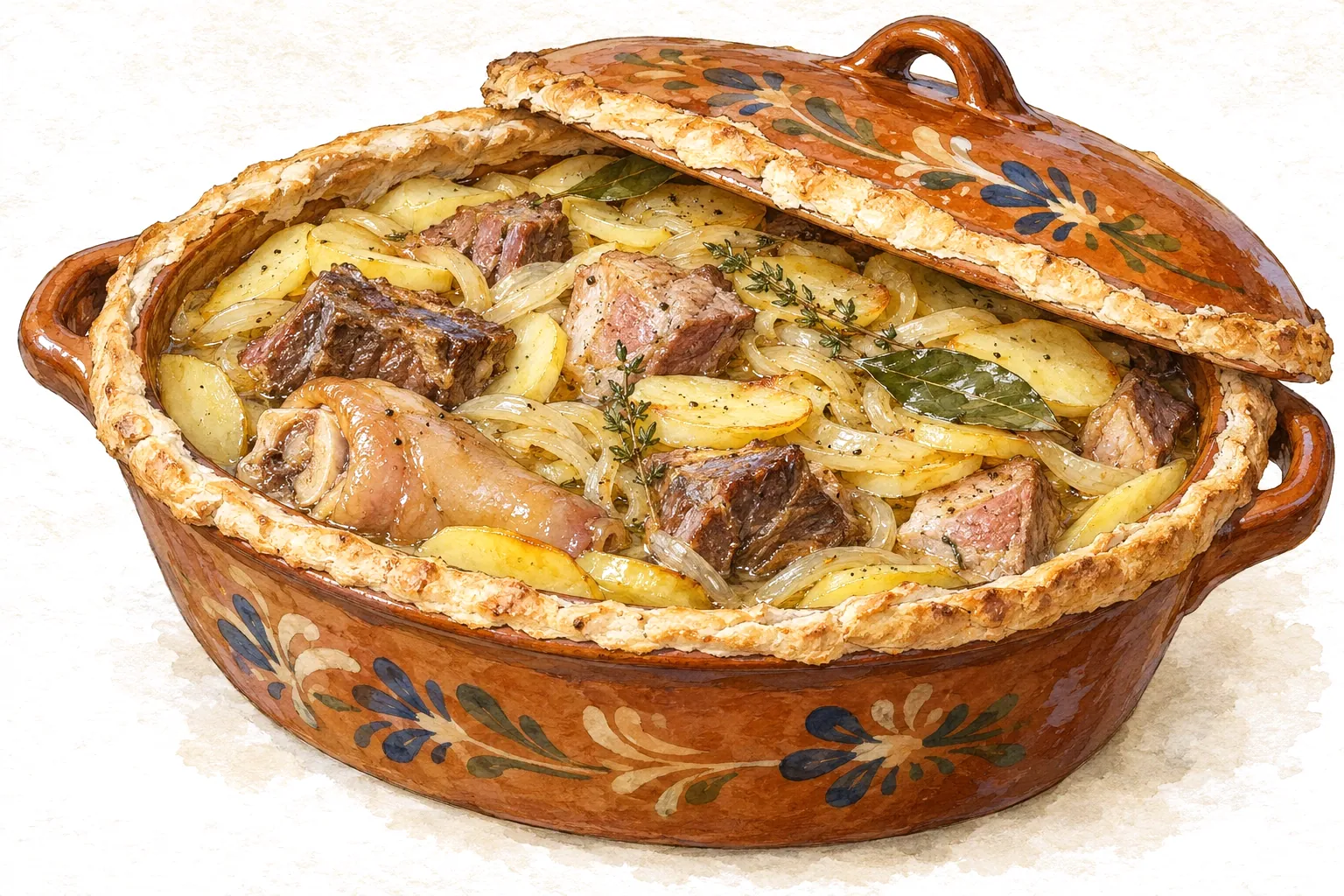 RecipeBaeckeoffeAlsace, France
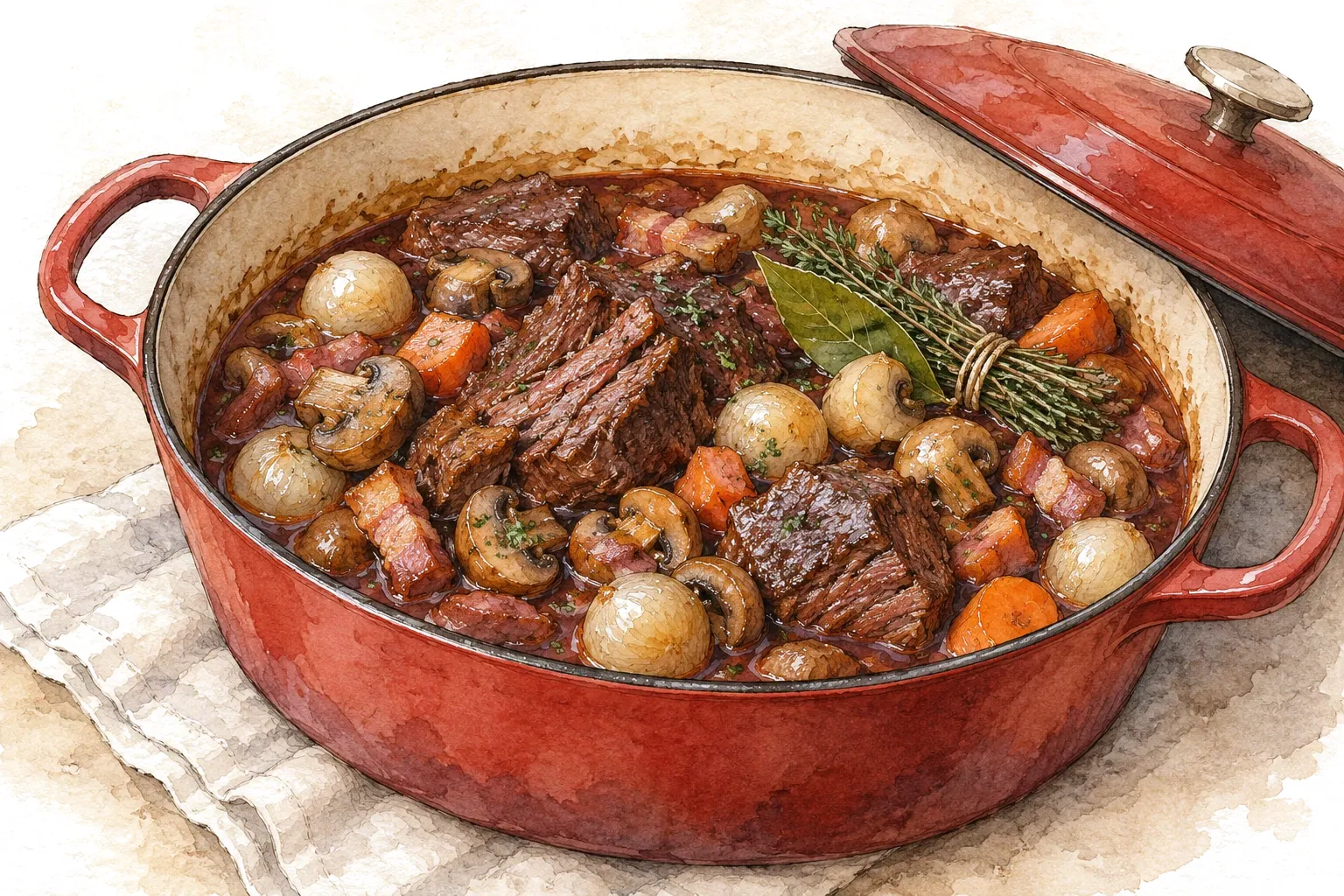 RecipeBœuf bourguignonDijon, France
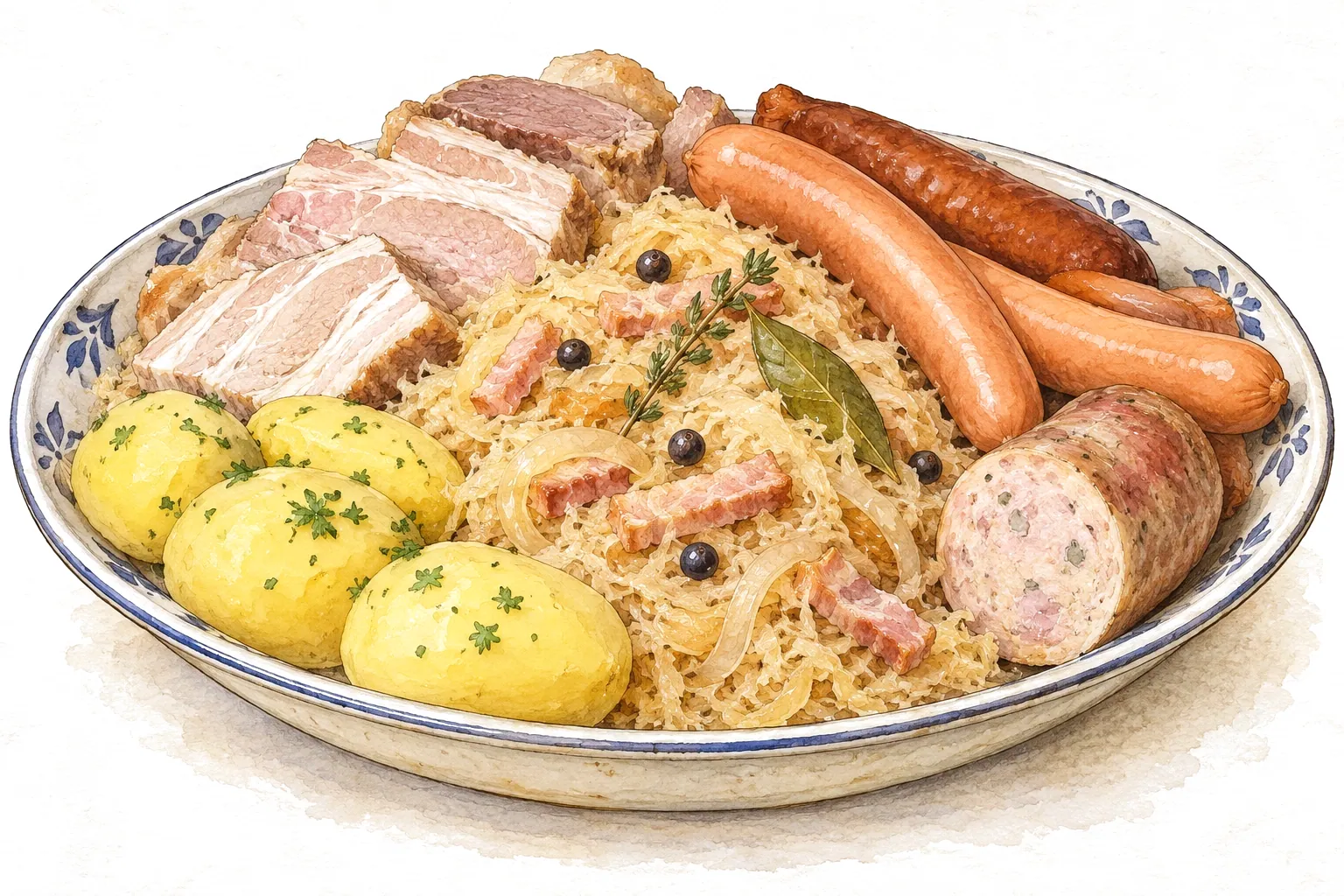 RecipeChoucroute garnieAlsace (Krautergersheim), France
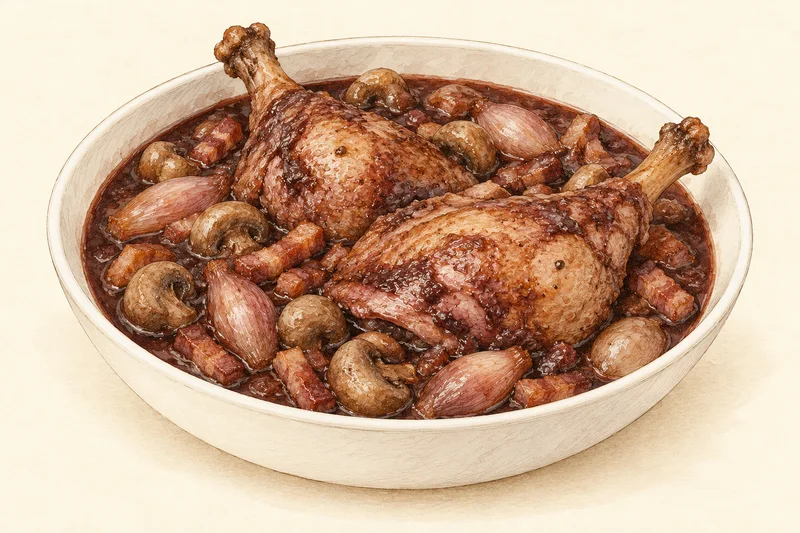 RecipeCoq au vinBurgundy, France
- Grape varietyChardonnay
- Wine regionAlsaceColmar, France
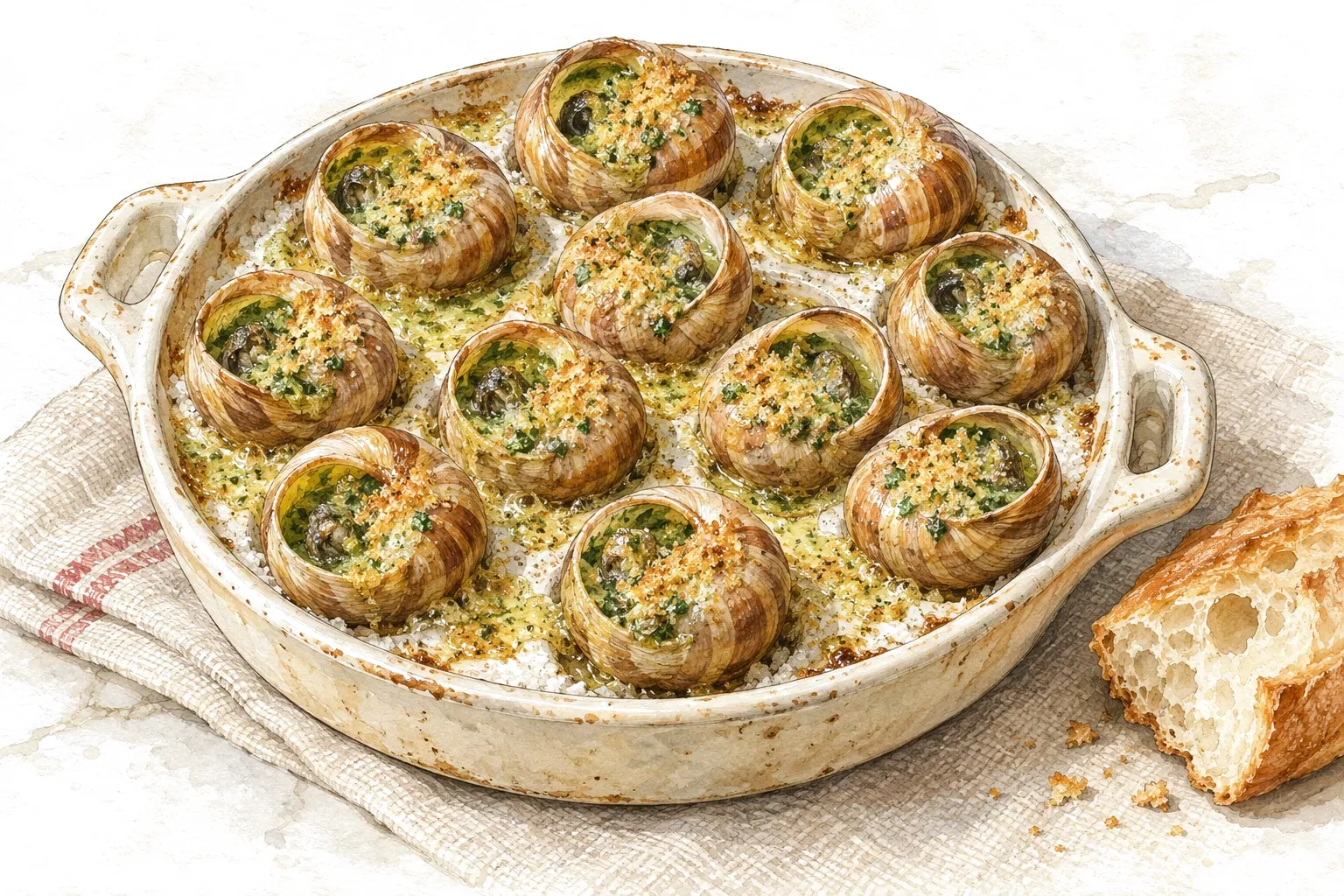 RecipeEscargots à la bourguignonneBurgundy, France
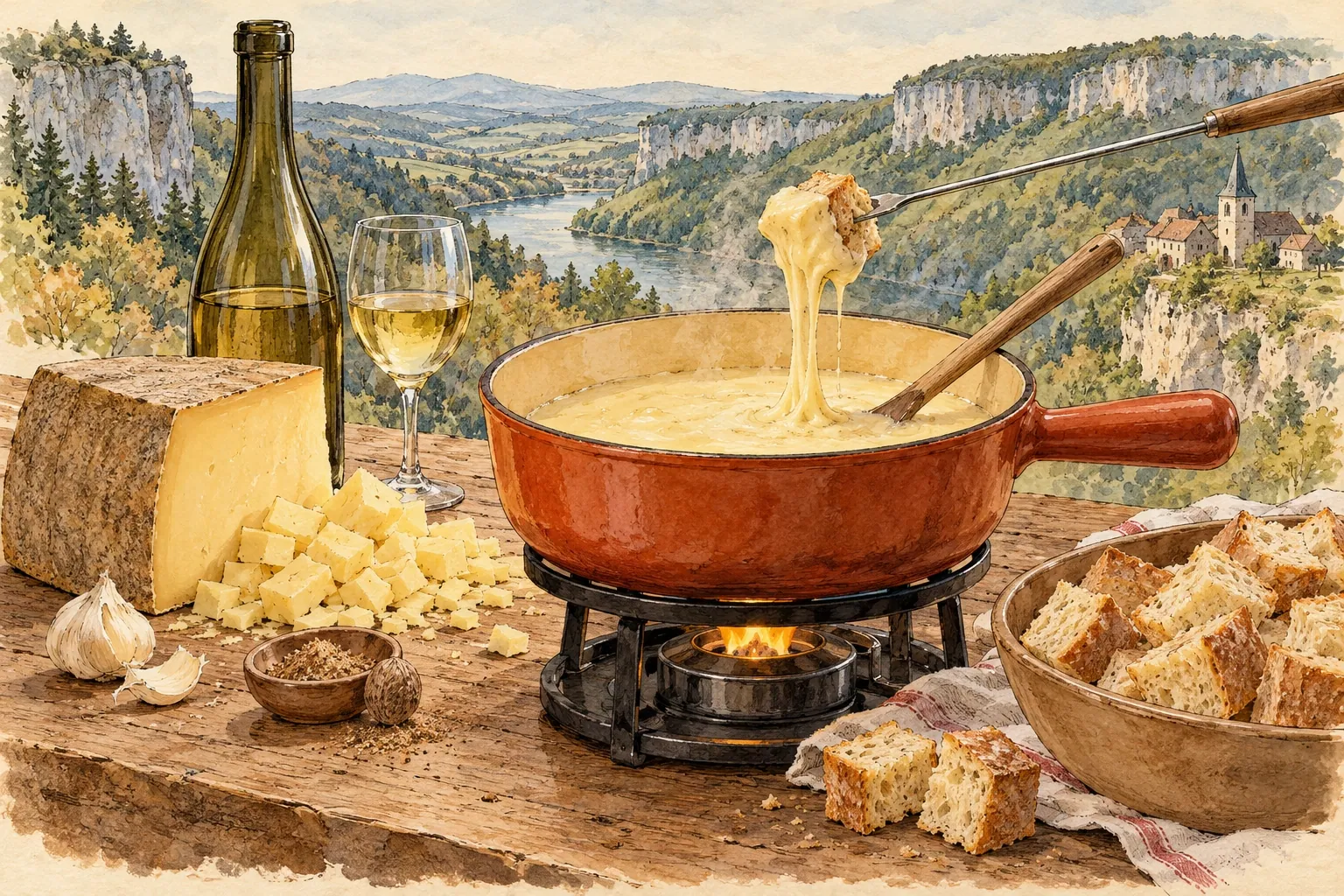 RecipeFondue au ComtéJura massif, Franche-Comté, France