Wine · Wine region · Short entry
Loire Valley
Loire Valley
The Loire wine country follows France's longest river through 14 departments of its basin, from Muscadet near the Atlantic through Anjou, Saumur and Touraine to Sancerre and Pouilly in Centre-Loire. Ancient Armorican rocks in the west give way to white chalk in the middle valley, under a climate that turns from oceanic to semi-continental upstream. The name covers many separate appellations; it is not a single AOC or another name for IGP Val de Loire.
Romans, Plantagenets and the river trade
The specification for IGP Val de Loire credits the Romans with planting vines, mainly around Nantes. The vineyard grew from the fifth century and expanded strongly after Henry II, count of Anjou, became king of England in 1154. The river carried the wine trade, and the nobility and kings of France supported the vineyards along it. In the nineteenth century the railway brought competition from other French regions, which the specification says pushed growers towards quality.
The appellations came later. Anjou and Sancerre were recognised on 14 November 1936, Vouvray on 8 December 1936, and Chinon and Bourgueil on 31 July 1937. Vins de pays were created in 1968. A regional one for the Loire basin, Vin de Pays du Jardin de la France, a name made famous by Rabelais, followed by decree of 16 November 1981 and became Val de Loire in 2007.
From ocean to inland hills
The IGP Val de Loire area covers 14 departments of the Loire basin. The river crosses a wide range of rocks: the ancient formations of the Armorican Massif under the Nantais and much of Anjou, the white chalk of the Saumur area and Touraine, and the volcanic rocks of the Auvergne upstream. The Anjou specification describes where the two main units meet: schist marks the western Anjou noir, and tuffeau chalk the eastern Anjou blanc.
The climate is temperate overall. It is oceanic around Nantes and in Anjou; a continental influence grows in Touraine and becomes semi-continental in Centre-Loire. Rain is regular through the year, 600 to 700 mm, and temperatures are mild, without extremes. Despite this diversity the specification treats the valley as one northern vineyard with a Loire climate. A single climate description cannot represent every site.
Freshness from a northern valley
The IGP specification links the valley's northern position and temperate climate to freshness, liveliness and finesse in its wines. It describes most IGP whites as dry, with delicate fruit and floral aromas; rosés and gris as light and lively; and reds as supple and fresh, with a light, sometimes firmer structure. The appellation specifications use similar terms, from the freshness that the Anjou text attributes to a northern vineyard with a mild climate to the acid-led structure of sparkling Touraine. These describe typical wines, not rules for every bottle.
Read the place as well as the grape
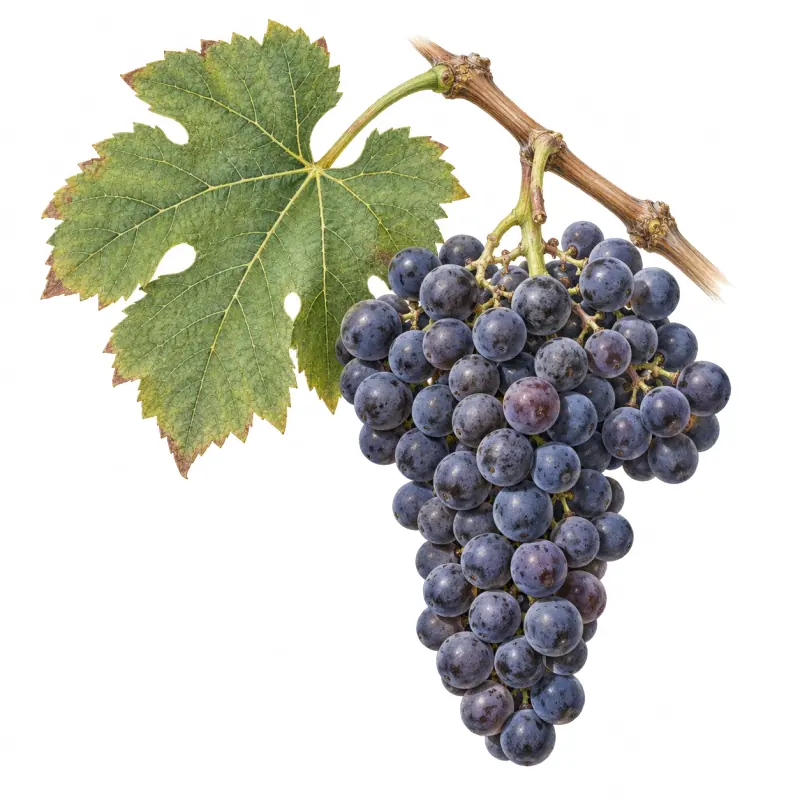
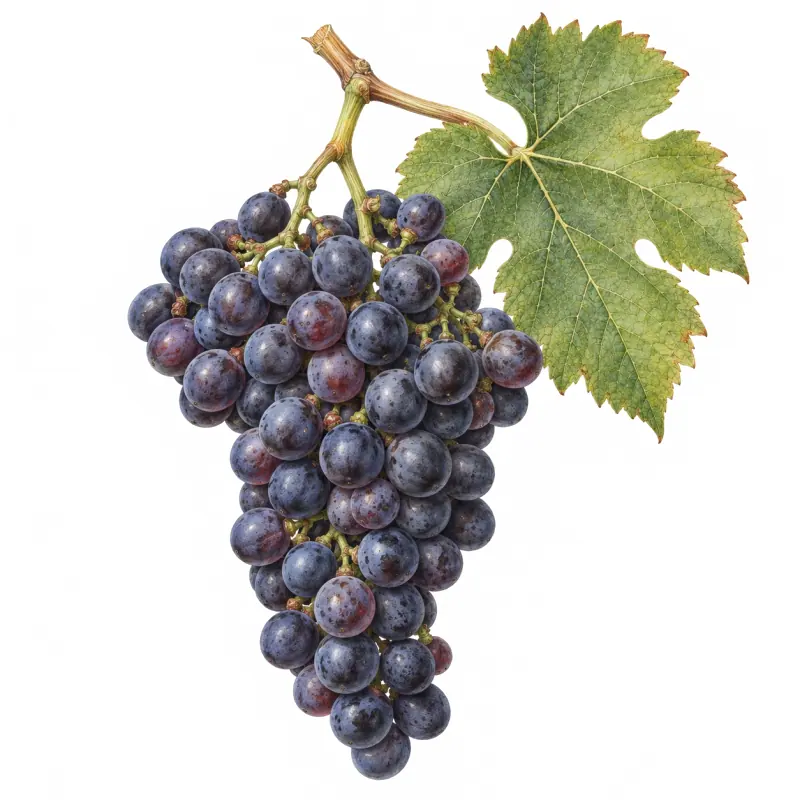
The Loire Valley is a wine region, not an appellation. Its wines are sold under separate AOCs, each with its own grapes and rules: Melon for Muscadet in the west, Chenin for many whites of Anjou and Touraine, Cabernet Franc, locally called Breton, for the reds of Chinon, Bourgueil and Saumur-Champigny, and Sauvignon Blanc and Pinot Noir in Centre-Loire. These associations are a starting point, not a common rulebook.
IGP Val de Loire is a separate designation for still and partially dealcoholised wines in white, rosé, gris and red. It uses 38 grapes grown traditionally in the region, chiefly Sauvignon Blanc, Chardonnay, Chenin, Gamay, Pinot Noir, Cabernet Franc and Cabernet-Sauvignon, with local varieties such as Grolleau, Grolleau Gris, Melon and Pineau d'Aunis. Nearly 90% of IGP Val de Loire is single-variety wine. Its rules must not be applied to the valley's AOCs.
How it connects
Grape variety
- grows Melon
- grows Chenin
- grows Sauvignon Blanc
- grows Pinot Noir
- grows Cabernet Franc
- grown in Cabernet Sauvignon
- grown in Grolleau
- grown in Pineau d'Aunis