
Wine · Wine region · Short entry
Volnay
Volnay
Volnay is a Côte de Beaune appellation for red Pinot Noir, on a steep south-east-facing hill above the village. Most of its vineyard lies in Volnay, with the Santenots climat in neighbouring Meursault. Since the eighteenth century its wines have been described as among the finest and lightest of the Côte de Beaune.
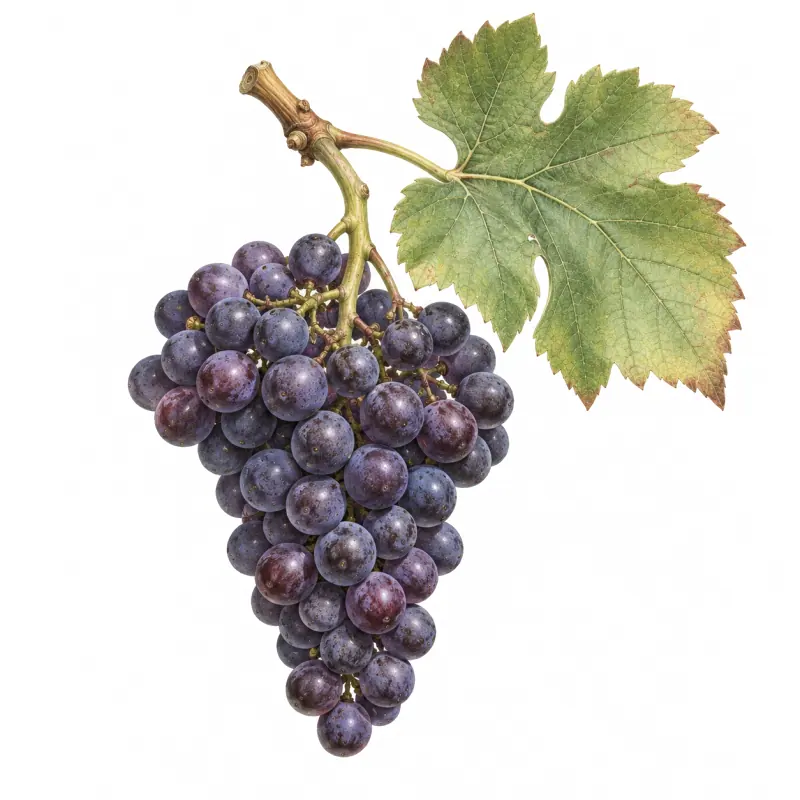
Counts, dukes and a proverb
The village grew up in the Middle Ages around the castle of the Counts of Burgundy, who already owned vines here; the Dukes of Burgundy kept these possessions. The BIVB adds that before the Revolution the harvests went to the Knights of Malta, the abbeys of Saint-Andoche d'Autun and Maizières, and the dukes and their successors, the kings of France.
In the eighteenth century Volnay was the leading wine of the Côte de Beaune. In 1778 the abbé Courtépée recorded the proverb "there is only one Vollenay in France", and in 1816 Jullien called it "the lightest, the finest and the most pleasant of the Côte de Beaune". Nineteenth-century writers often singled out the climats Caillerets and Santenots. The AOC Volnay was recognised by the decree of 9 September 1937, and a list of Premier Cru climats followed in 1943.
Soil, slope and climate
Volnay sits high on the hill of Chaignot, on a narrow, steep site. The hill is turned slightly from the general line of the Côte, so the vines face south-east rather than east, at 230–280 m. The specification describes Callovian platy limestone low on the slope and Oxfordian marls higher up, mostly covered by a few decimetres of clay colluvium that drains well and holds enough fertility. The BIVB sheet describes pinkish oolitic limestone at the top, white Argovian limestone below it, then reddish, pebbly, iron-bearing limestone, and deeper, more gravelly soils at the foot.
The climate is cool oceanic with continental and southern influences, with about 750 mm of rain a year spread evenly. The specification notes that the plots' position on the east-facing slope protects them from frost and morning fog and warms the soil early.
What the place gives the wine
The specification describes ruby wines of great finesse, whose tannic frame is balanced by discreet acidity. They are pleasant young, with fruit, and keep well: 10 years, or 20 for Premier Cru, gaining spice and game while staying elegant. It links two styles to two grounds. Climats on the Dalle nacrée limestone usually give very elegant wines with velvety tannins. Climats higher on the slope, on shallow marl, give denser and very aromatic wines. The BIVB sheet lists violet, gooseberry and cherry, and notes more vigorous versions from some sites.
Grapes and classification
Volnay is red only. Pinot Noir is the main grape; Chardonnay, Pinot Blanc and Pinot Gris are allowed as accessory varieties. The appellation covers Volnay and, for the Santenots climat, part of Meursault; Santenots is a Volnay climat geographically in Meursault, an important label distinction. There are 29 Premier Cru climats. In 2022 the BIVB recorded 212.55 ha, including 125.88 ha of Premier Cru.
How it connects
Wine region
Grape variety
- grows Pinot Noir
Continue exploring
- CountryFrance162 entries in the atlas so far
- Grape varietyPinot Noir
 RecipeBaeckeoffeAlsace, France
 RecipeBœuf bourguignonDijon, France
 RecipeCoq au vinBurgundy, France
- Wine regionCôte de BeauneBeaune, France
 RecipeŒufs en meuretteBurgundy, France
 StoryThe Cistercians and the Clos de VougeotVougeot, France
 StoryDid Dom Pérignon invent Champagne?Hautvillers, France
- Wine regionAlto AdigeBolzano, Italy