Wine · Wine region · Short entry
Alsace
Alsace
Alsace is a Rhine vineyard on the eastern foothills of the Vosges, 120 km long and often less than 1 km wide, across 119 communes of the Bas-Rhin and Haut-Rhin. The Vosges shelter it from oceanic weather, and a faulted mosaic of granite, schist, sandstone, limestone and marl gives very varied soils. AOC Alsace is the regional still-wine designation; the grands crus and Crémant d'Alsace have their own rules.
Between two countries
The specification describes Alsace as by turns the southern vineyard of the German Empire and the northern vineyard of France, which over the centuries developed very aromatic grapes. The Rhine was already an important trade route in the Middle Ages, carrying wines to the countries at its mouth. André Jullien in 1822 called them highly esteemed dry whites with a very marked bouquet, and the specification adds that they were once taken to Mainz to give strength to Rhine wines. Until phylloxera grapes were often grown and made together as "zwicker", later "Edelzwicker" with noble grapes.
The Association des Viticulteurs d'Alsace has managed the vineyard since 1912. The ordinance of 2 November 1945 recognised Alsace wines as an appellation of origin, and AOC Alsace followed in 1962. A decree of 13 May 1959 reserved the tall Rhine flute for a few appellations including Alsace, and a law of 5 July 1972, passed after 4,000 growers demonstrated in Colmar, made bottling in the two departments compulsory. Vendanges tardives and sélection de grains nobles were codified on 1 March 1984.
A sheltered mosaic
Most of the vineyard lies on the east face of the Vosges foothills, from an enclave near Cleebourg in the north and Marlenheim near Strasbourg to Thann near Mulhouse in the south, on hills cut by deep valleys, mostly at 200 to 400 m. The Vosges screen it from oceanic weather, helped by a foehn effect in autumn: rain on the vineyard is 500–650 mm a year against about 2,000 mm on the summits, and Colmar receives 1,800 hours of sun. The climate is semi-continental, with a January mean of 1.9 °C, a July mean above 20 °C and a heat sum of 1,253 °C from April to September.
The collapse of the Rhine rift created a network of faults and a mosaic of small blocks where the sedimentary plain meets the crystalline Vosges. Soils include acidic brown soils on schist, granite or sandstone; colluvial and sandy-gravel alluvial soils at the plain's edge; and calcareous brown soils and rendzinas, with conglomerates and marls, on the hills. Neighbouring parcels can sit on different formations.
Freshness and aroma
The specification attributes a shared identity to a northern vineyard sheltered by the Vosges and well lit, with warm days and cool nights during ripening. The wines have marked freshness from dominant natural tartaric acid, intense aroma and good volume, often with a slight carbon-dioxide prickle locally called "spretsig". It distinguishes dry, mineral wines, usually Chasselas, Sylvaner, Pinot Blanc, Auxerrois, Riesling and Muscat; fruitier, softer wines, usually Gewurztraminer and Pinot Gris; vendanges tardives with exotic and candied fruit; concentrated sélection de grains nobles; fine Pinot Noir reds; and light Pinot Noir reds or rosés called clairet or Schillerwein. The 200–400 m altitude band keeps acidity in balance.
Place names and grape names
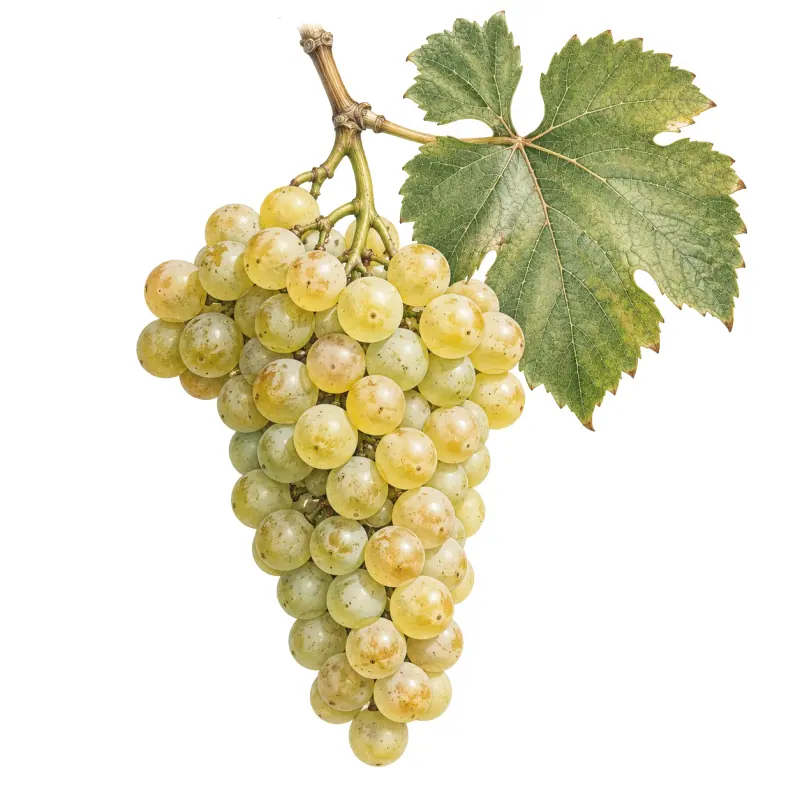
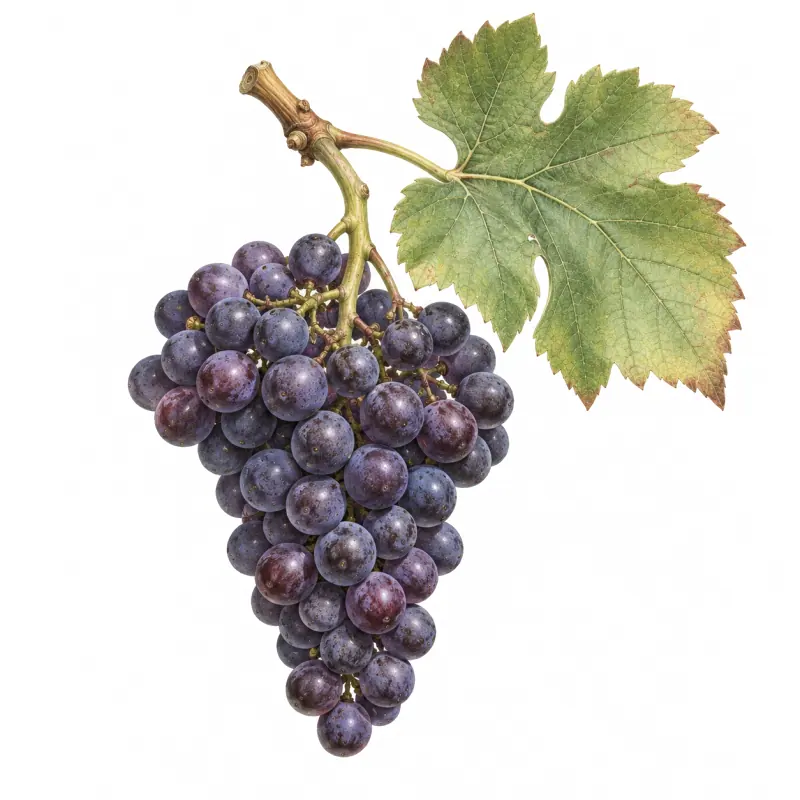
AOC Alsace, or Vin d'Alsace, covers still white, red and rosé wines. White grapes include Auxerrois, Chasselas, Gewurztraminer, Muscat à petits grains, Muscat Ottonel, Pinot Blanc, Pinot Gris, Riesling and Sylvaner, with Savagnin Rose only for Klevener de Heiligenstein; Pinot Noir is the only red grape. A grape name on the label means the wine comes only from that grape; Edelzwicker is a white blend. The name may be followed by one of 13 complementary geographical names, such as Bergheim, Côte de Rouffach or Wolxheim, or by a lieu-dit, under stricter conditions.
Vendanges tardives and sélection de grains nobles apply only to Gewurztraminer, Muscat, Pinot Gris and Riesling. Wines must be bottled in the Bas-Rhin or Haut-Rhin, traditionally in the Rhine flute. About 5,000 holdings farm 15,000 ha in production. The grands crus and Crémant d'Alsace have separate rules.
Classification
- AOC Alsace or Vin d'AlsaceRegional still wines; may carry a grape name.
- Complementary geographical name or lieu-ditThirteen names such as Bergheim or Côte de Rouffach, or a lieu-dit, under stricter conditions.
- Vendanges tardives, sélection de grains noblesGewurztraminer, Muscat, Pinot Gris and Riesling only; hand-picked; at least 18 months' ageing.
How it connects
Grape variety
- grows Pinot Noir
Recipe
- pairs with Coq au vin
- pairs with Quiche lorraine
- origin Baeckeoffe
- origin Choucroute garnie
- origin Tarte flambée
Wine region
Continue exploring
- CountryFrance162 entries in the atlas so far
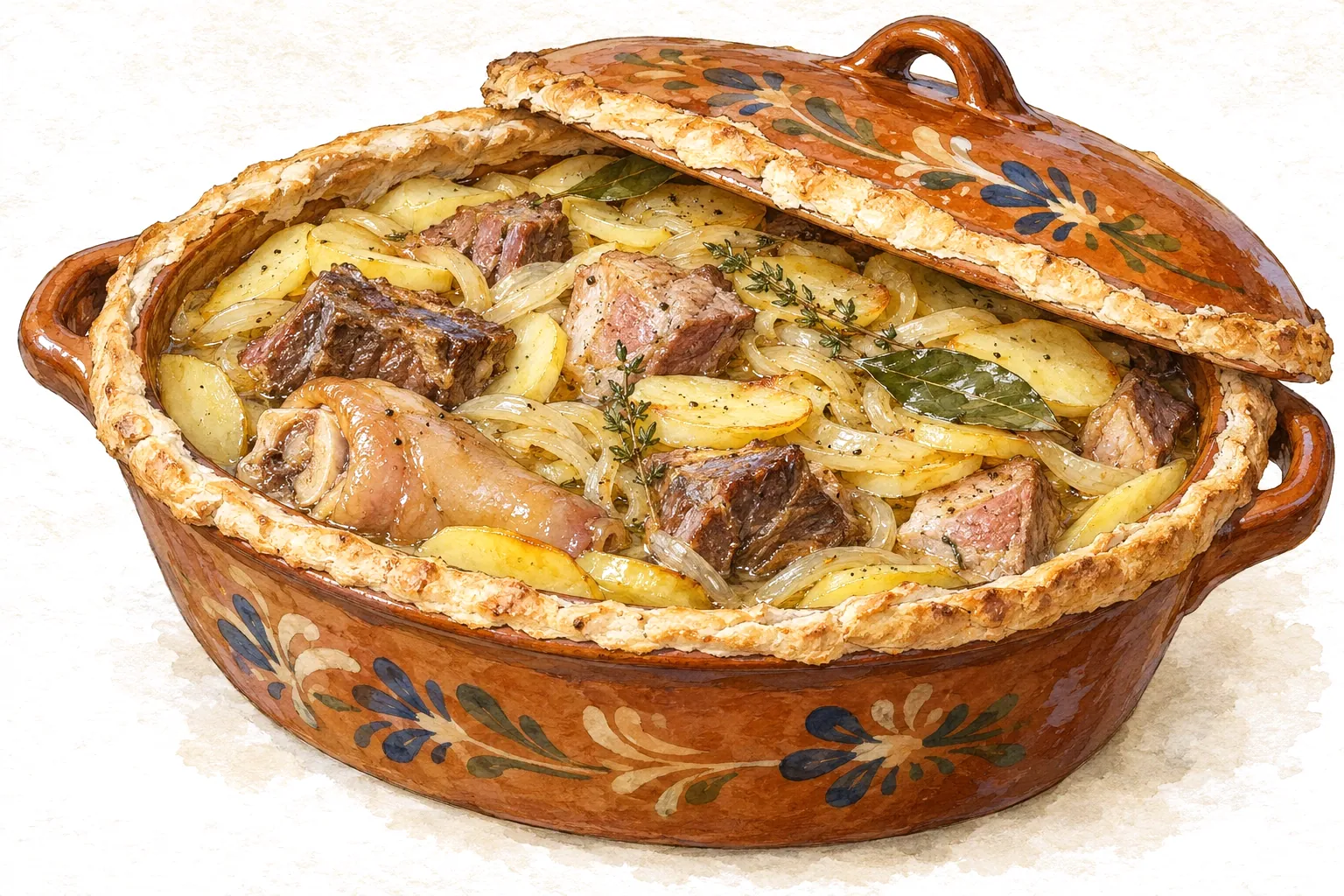 RecipeBaeckeoffeAlsace, France
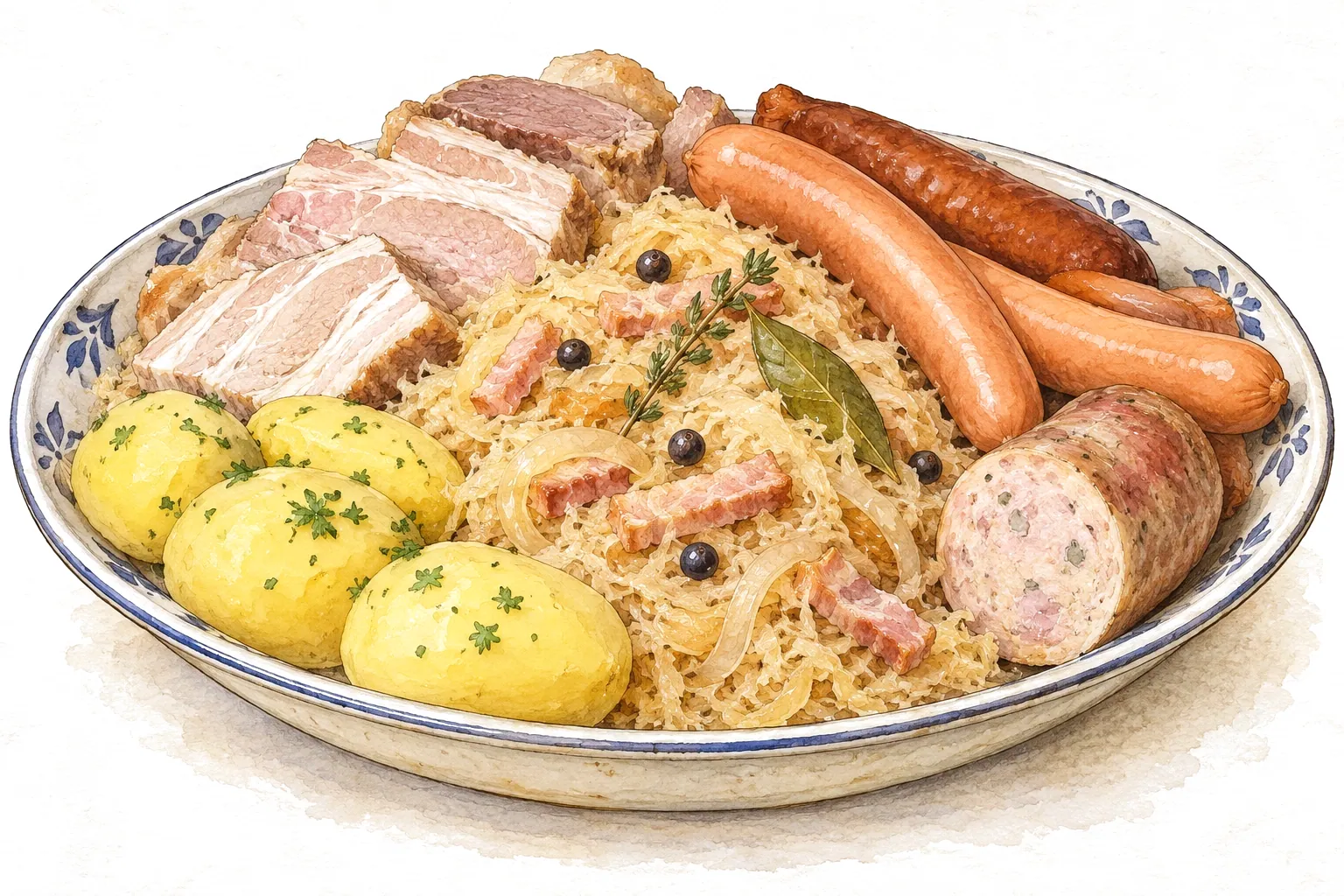 RecipeChoucroute garnieAlsace (Krautergersheim), France
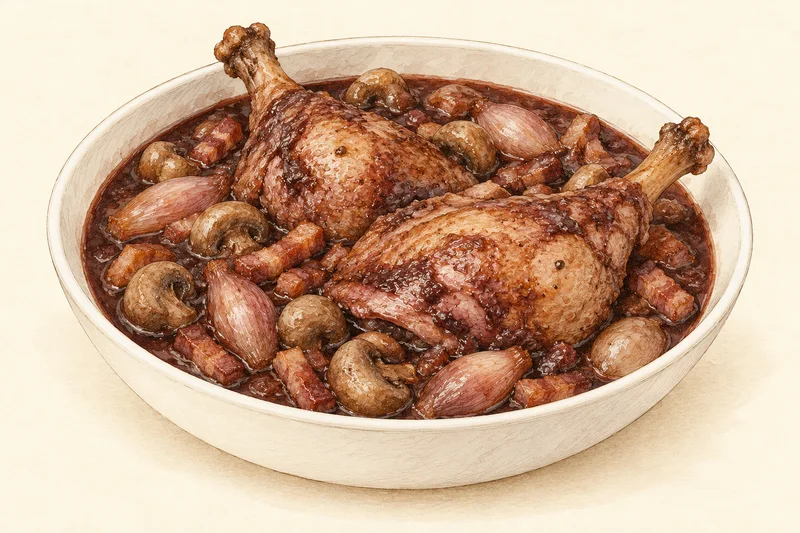 RecipeCoq au vinBurgundy, France
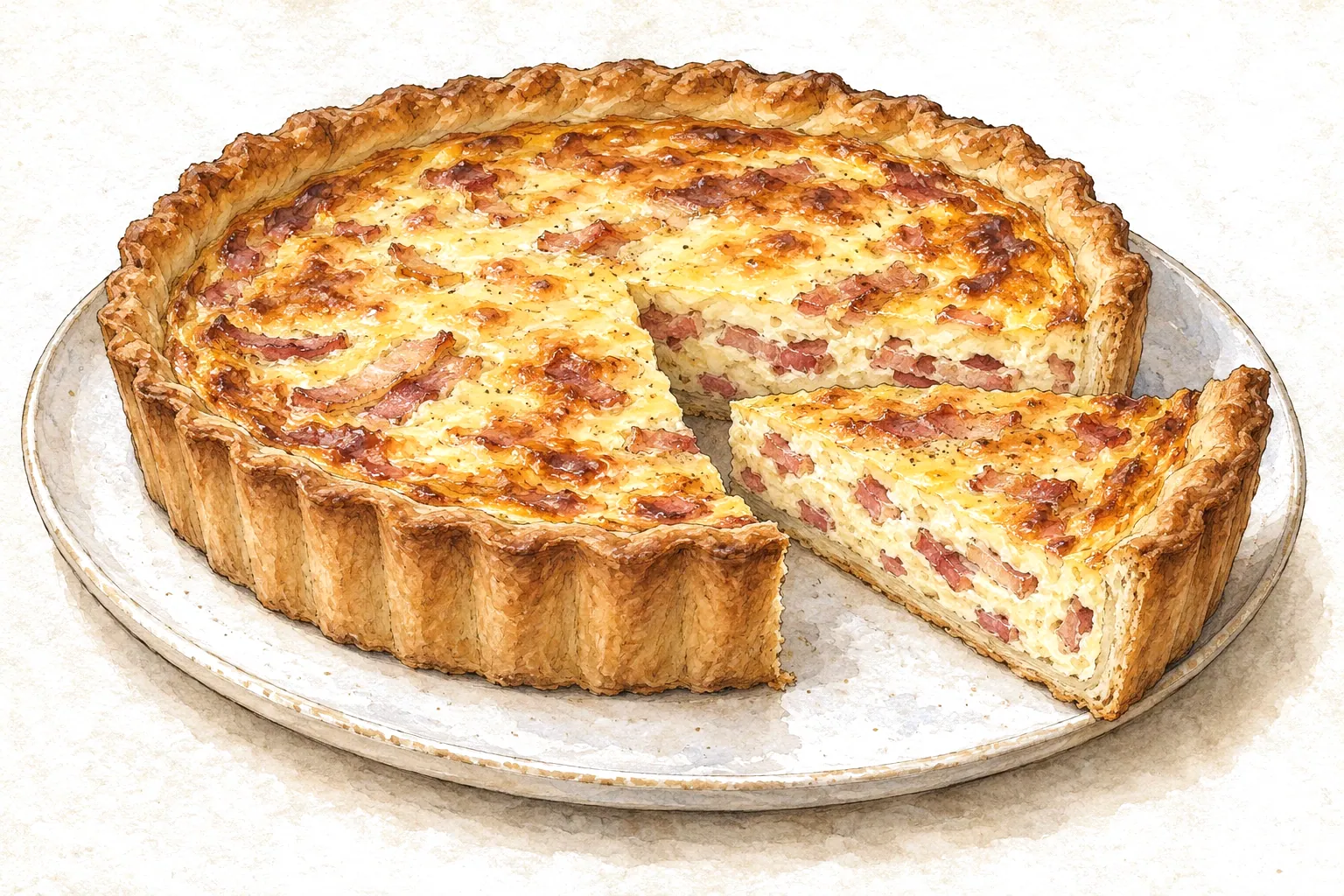 RecipeQuiche lorraineLorraine, France
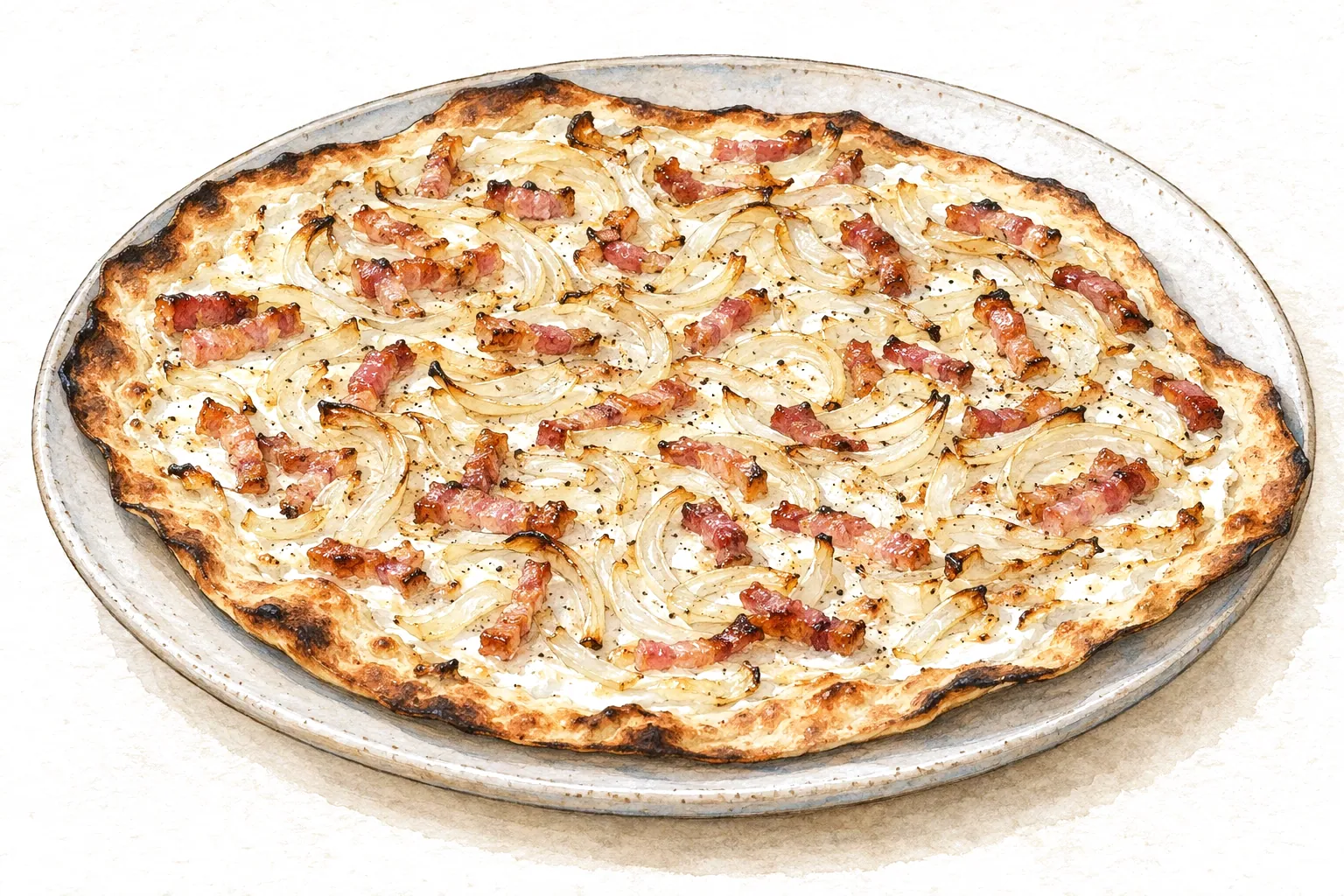 RecipeTarte flambéeAlsace, France
- Grape varietyPinot Noir
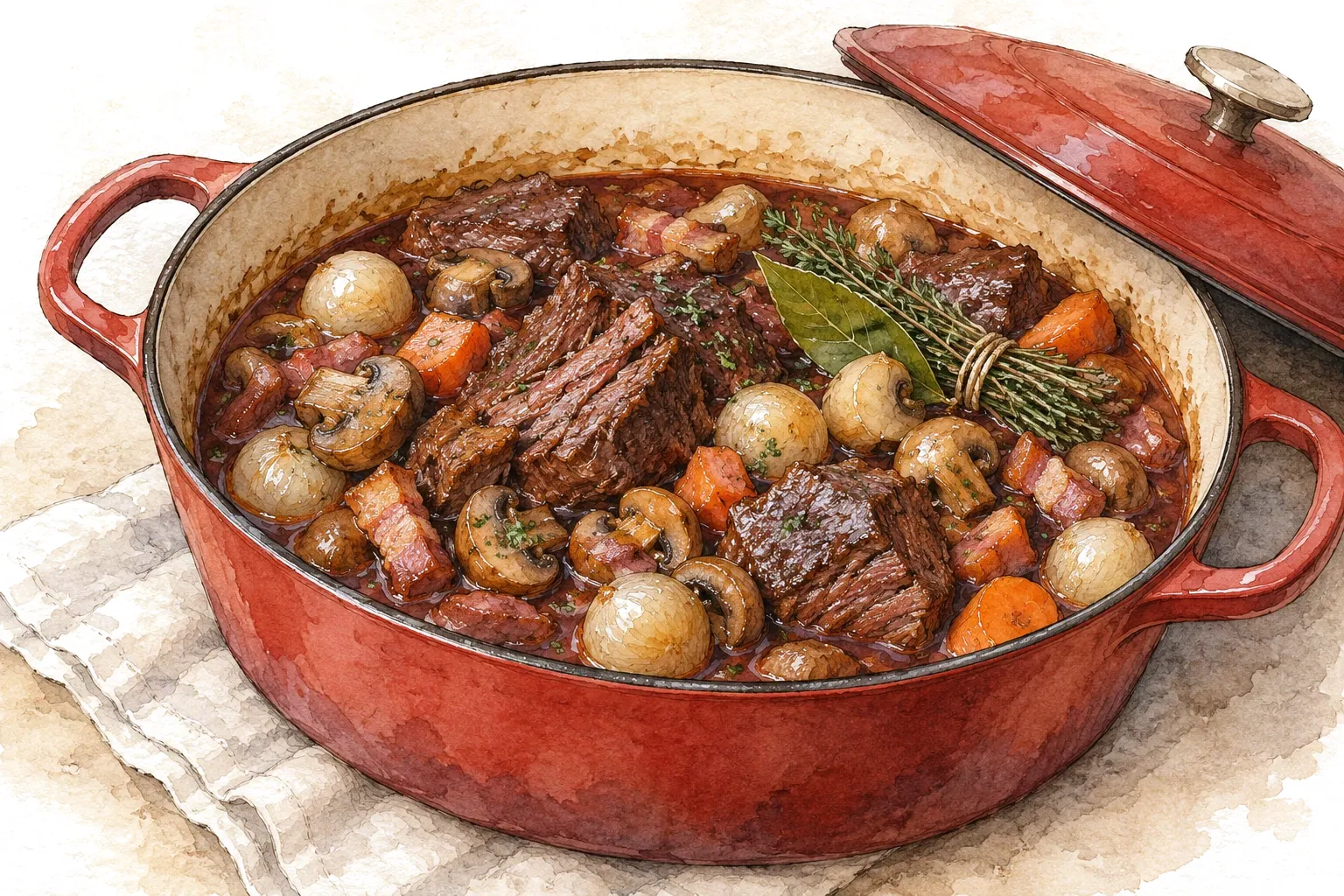 RecipeBœuf bourguignonDijon, France
- Wine regionAlsace Grands CrusFrance
- Wine regionCrémant d'AlsaceFrance