
Wine · Wine region · Short entry
Rheingau
Rheingau
Rheingau is a German protected designation of origin on the right bank of the Rhine, where the river turns west for 30 km between Wiesbaden and Rüdesheim and the Taunus shelters south-facing slopes. Riesling covers about three quarters of its 3,117 ha, and Assmannshausen is known for Spätburgunder. The Cistercian abbey of Eberbach, founded in 1136, and the late harvest at Johannisberg in 1775 shaped its history.
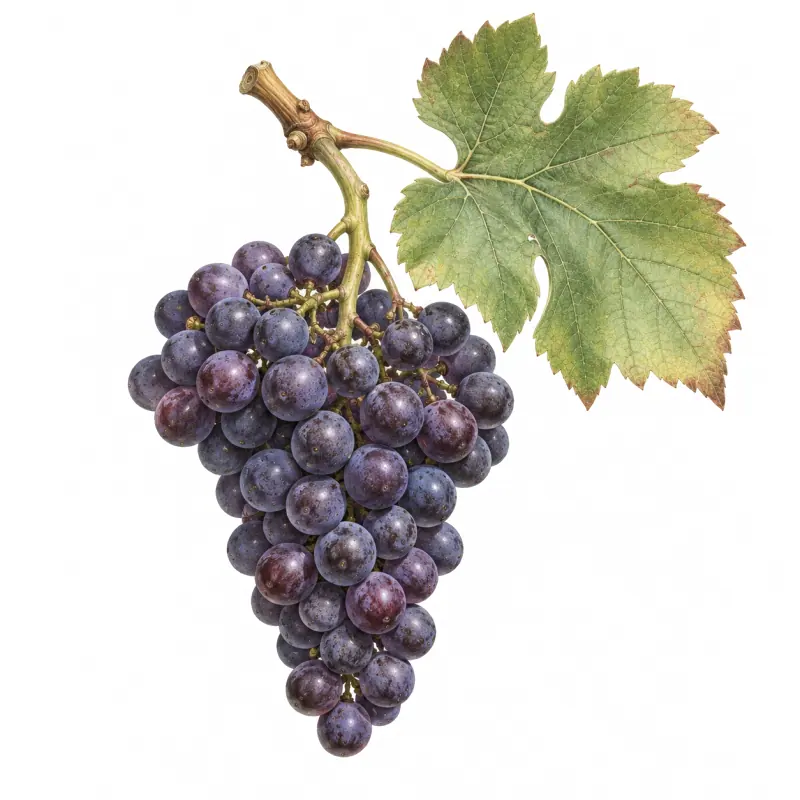
Eberbach, Johannisberg and the Erstes Gewächs
Cistercians from Clairvaux founded Kloster Eberbach on 13 February 1136, moving into the buildings of an earlier house of canons. The abbey says viticulture was one of the monks' essential occupations from the start, and its Steinberg vineyard has been its sole property since 1239. Monastic rooms were turned into wine cellars at the end of the 15th century, and a "Great Barrel" of 71,000 litres was first filled in 1500. The monastery was dissolved in 1803 and passed to Nassau-Usingen, which kept part of it as a state vineyard; since 1946 it has belonged to the State of Hesse.
The German Wine Institute dates the discovery of the late harvest at Johannisberg to 1775 and the founding of the Geisenheim research and teaching institute to 1872. The Rheingau estate owners' association, founded in 1898, was one of the four groups that formed the forerunner of the VDP in 1910. Hesse passed its "Erstes Gewächs" regulation in 1999, and the 1999 vintage was the first to carry the term.
South slopes below the Taunus
The specification places the Rheingau in the Rhine-Main lowland. The Rhine is deflected west for 30 km from its bend at Wiesbaden to the Binger Loch, and vineyards climb a gently rolling strip from the main ridge of the Taunus to the river; the south-facing slope is the dominant landform. The area also takes in the steep cut of the Rhine from the Binger Loch to Lorch and Lorchhausen and the north bank of the Main from Flörsheim and Hochheim to Frankfurt.
It straddles the Mainz Basin and the Rhenish Slate Mountains. The upper and middle Rheingau rest on Tertiary sands and clays, but loess and loess loam on the Rhine and Main terraces cover the largest area. Lower Devonian phyllite and slate form the Taunus foothills, and below the Rhine gorge quartzites and slates give stony rubble soils. The forested Taunus puts the vineyards in a rain shadow and slows cold night air. The 1971–2000 means were 10.6 °C, 582 mm of rain and about 1,603 hours of sun.
Riesling on stony south slopes
The specification says the wines reflect their site and the grower's work. Whites are pale green to yellowish and often show peach, apricot or citrus; reds range from light to dark red with cherry or dark-berry aromas; Weißherbst and rosé recall red berries. The long growing season, topography, local climate and soils give varietal aromas with, in part, high minerality, varying with site and grape. The specification adds that no other wine landscape has tied its economic success so closely to one variety as the Rheingau to Riesling. The German Wine Institute says Riesling thrives on the dry, stony south slopes and uses the long ripening period to build fine acidity and aroma.
Must weights, yields and grapes
Rheingau is a protected designation of origin for Qualitätswein, Prädikatswein, Sekt b.A. and Qualitätsperlwein b.A. from the vineyards of twelve towns and municipalities, among them Lorch, Rüdesheim, Geisenheim, Eltville, Hochheim, Wiesbaden and Frankfurt. The 2011 technical file sets a maximum yield of 100 hl/ha and minimum must weights of 57° Oechsle for white Qualitätswein and 66° for Spätburgunder. Kabinett needs 75° (80° for reds), Spätlese 85° (90°), Auslese 95° for Riesling and 100° for other whites (105° for reds), Beerenauslese and Eiswein 125° and Trockenbeerenauslese 150°. In 2010 about 85% of the area was planted with white grapes.
The German Wine Institute gives 3,117 ha in 2025 and, for 2022, Riesling on 76.9% of the area; it names Assmannshausen for Spätburgunder. Erstes Gewächs wines come from classified sites under strict rules; the Weinverordnung now makes the term a quality mark of the Komitee – Klassifikation Erster und Großer Lagen in Deutschland.
Classification
- Rheingau g.U. (Qualitätswein)Minimum must weight 57° Oechsle for white varieties, 66° for Spätburgunder and 62° for other reds. Maximum yield 100 hl/ha.
- PrädikatsweinKabinett 75° (reds 80°); Spätlese 85° (reds 90°); Auslese 95° for Riesling, 100° for other whites, 105° for reds; Beerenauslese and Eiswein 125°; Trockenbeerenauslese 150°.
How it connects
Wine region
- in Germany
Grape variety
- grows Pinot Noir
Continue exploring
- CountryGermany20 entries in the atlas so far
- Grape varietyPinot Noir
 RecipeBaeckeoffeAlsace, France
 RecipeBœuf bourguignonDijon, France
 RecipeCoq au vinBurgundy, France
- Wine regionGermanyGermany
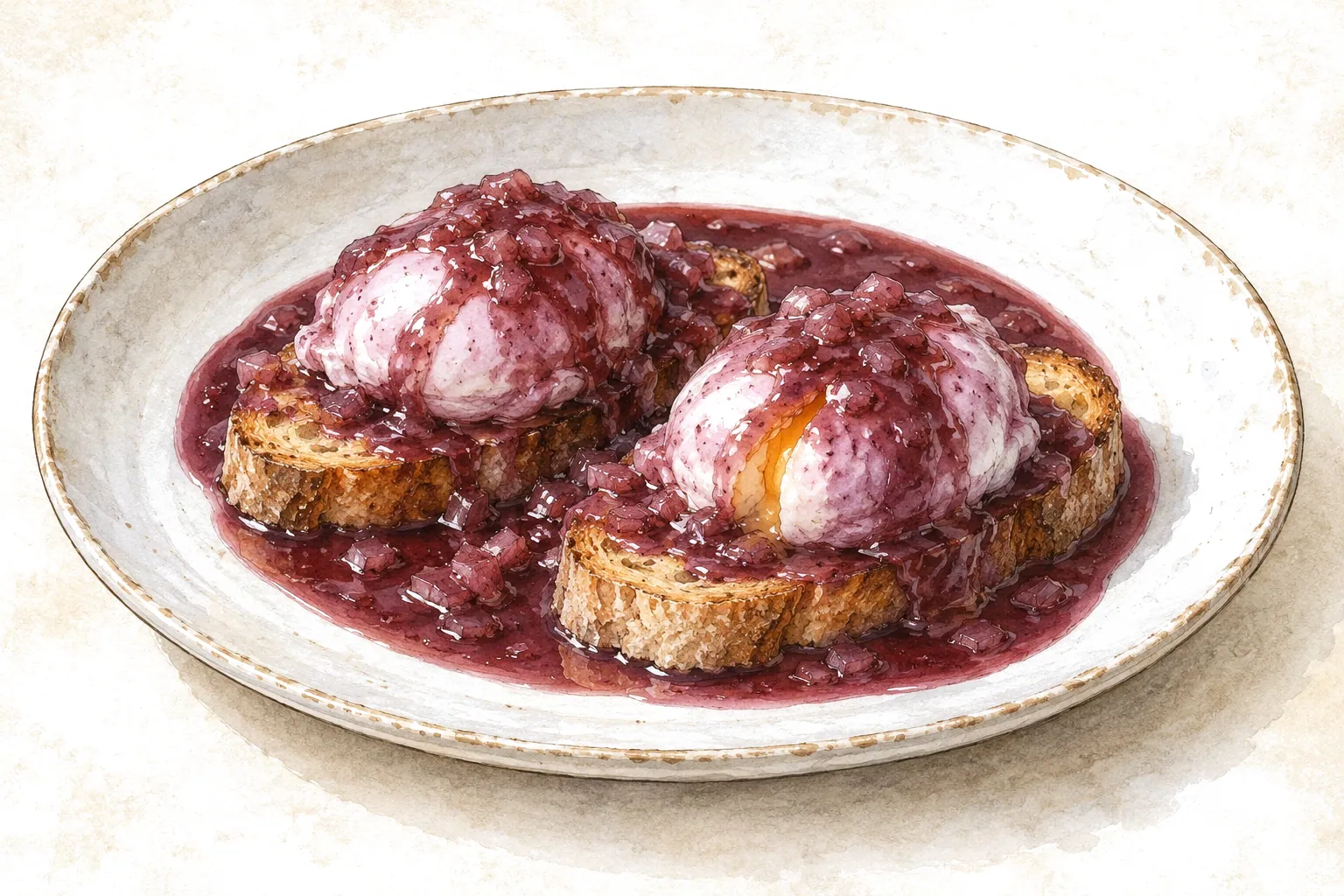 RecipeŒufs en meuretteBurgundy, France
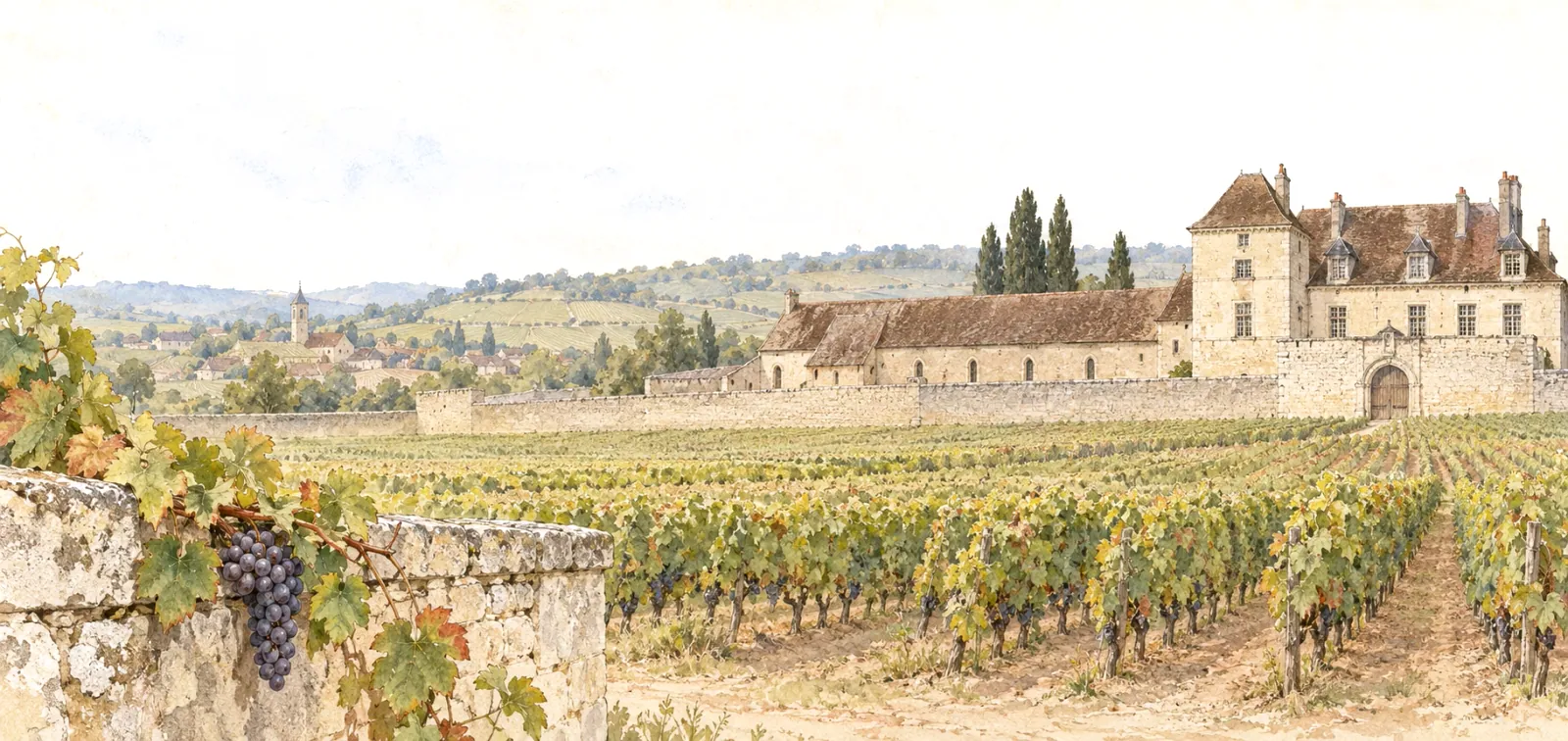 StoryThe Cistercians and the Clos de VougeotVougeot, France
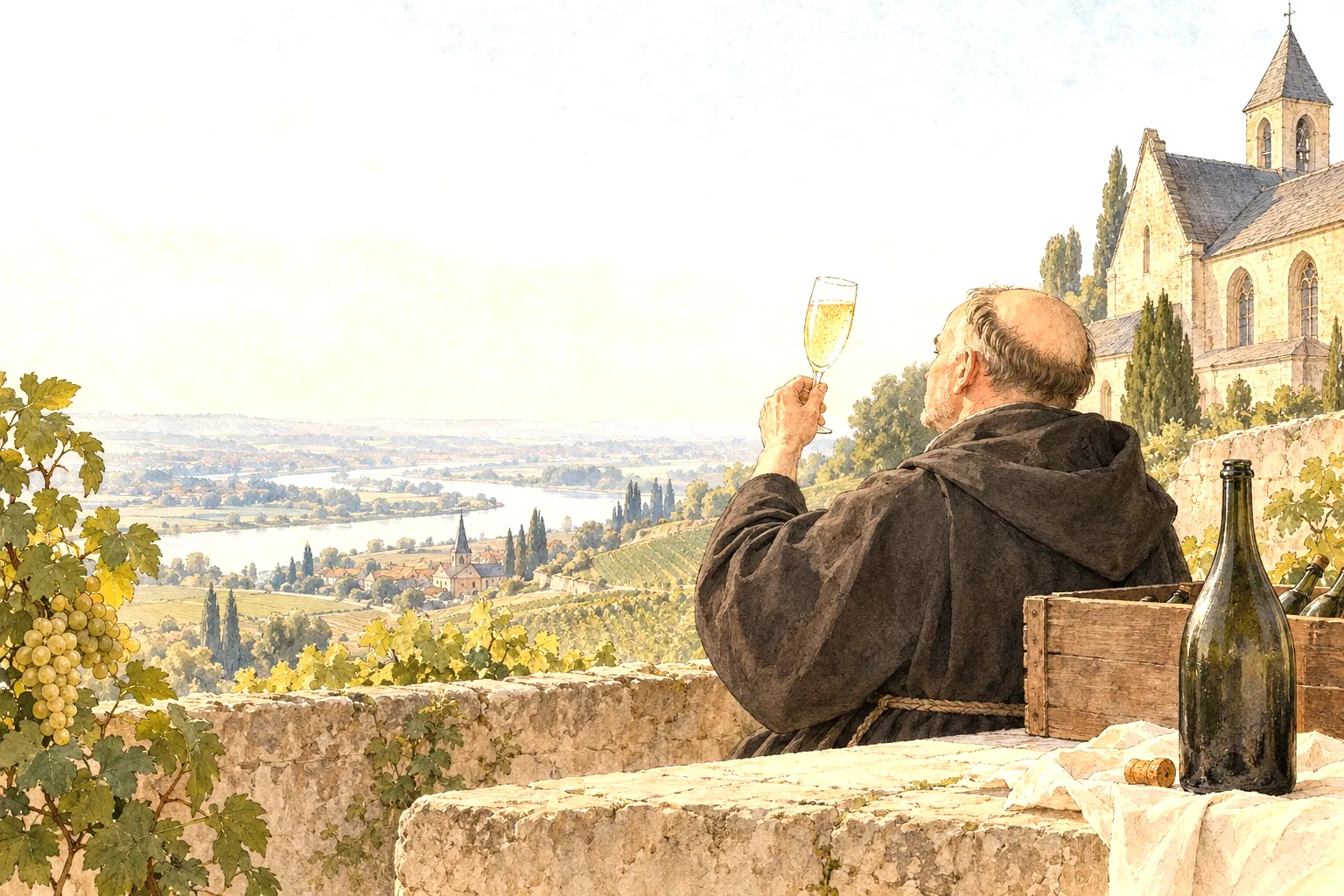 StoryDid Dom Pérignon invent Champagne?Hautvillers, France
- Wine regionAlto AdigeBolzano, Italy