
Wine · Wine region · Short entry
Pommard
Pommard
Pommard is a Côte de Beaune village appellation for red wine from Pinot Noir only, between Beaune and Volnay. Its name has long stood for a deep-coloured, firmly structured style, which the legal rules link to clay colluvium over well-drained limestone.
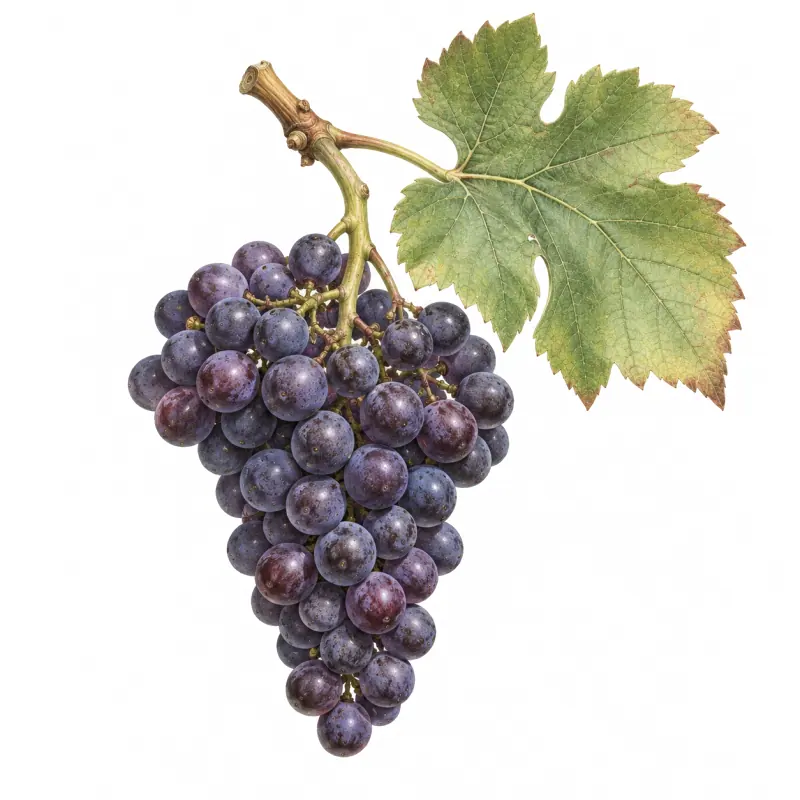
The red wine others were compared to
From the Middle Ages the Pommard vineyard was divided among local lords, Church houses (the BIVB names the abbey of Cîteaux), the Dukes of Burgundy and bourgeois families. Among the "vins de Beaune" traded across Europe from the fifteenth century, Pommard stood out for more tannin and deeper colour and was valued abroad, especially in England. In 1816 Jullien wrote that it had "more colour and body" than its neighbours. The 1860 classification of the Beaune wine committee recorded 343 ha of fine-wine vines at Pommard, 113 ha of them first class.
Growers formed a syndicate in 1922 to defend the name, which was being used for wine from far beyond the commune. A judgment of 1926 limited the appellation to the commune, and an appeal ruling of 1932 restricted it to Pinot vines in a delimited area. The AOC was recognised by the decree of 11 September 1936; a Premier Cru list followed in 1943 and was revised in 1982.
Soil, slope and climate
Pommard sits at the mouth of a deep valley cutting into the plateau, which splits the vineyard into two hills north and south of the village. On the Côte, about 150 m high, Callovian platy limestone outcrops low on the slope and Oxfordian marls and limestones higher up, mostly under scree, clay and silt. Where the valley opens, alluvium forms a fan of coarse limestone and clay with deeper, clayier, but still well-drained soils. The BIVB sheet gives ancient alluvium on the lower ground, clay-limestone soils with rock debris mid-slope, Oxfordian marls and brown limestone soils above, and soils reddened by iron in places. Exposures are east or south, at 250–330 m.
The climate is cool oceanic with continental and southern influences: about 750 mm of rain a year and a mean of 10.5 °C, with shelter from the Morvan.
What the place gives the wine
The specification explains the style through the ground. The limestone rock drains well, while the clay and silt that cover most of the commune supply fertility and a good water reserve. Together they favour a moderate crop of concentrated wines with strong tannins, and good exposure and drainage bring the ripeness that softens them. It describes a solid structure with velvet and fruit, and a long life. Wines from south of the village have a firm attack; those from the north are generally more elegant and expressive when young. The BIVB sheet lists blackberry, bilberry, cherry stone and ripe plum, turning to leather, chocolate and pepper at maturity.
Grapes and classification
Pommard is red only. Pinot Noir is the main grape; Chardonnay, Pinot Blanc and Pinot Gris are allowed as accessory varieties, interplanted and limited to 15% of each plot. The appellation covers the commune of Pommard and has 28 Premier Cru climats, the best known being Les Rugiens and Les Épenots. Site names add precision to the label but do not guarantee one style. In 2022 the BIVB recorded 314.19 ha, including 117.75 ha of Premier Cru.
How it connects
Wine region
Grape variety
- grows Pinot Noir
Continue exploring
- CountryFrance162 entries in the atlas so far
- Grape varietyPinot Noir
 RecipeBaeckeoffeAlsace, France
 RecipeBœuf bourguignonDijon, France
 RecipeCoq au vinBurgundy, France
- Wine regionCôte de BeauneBeaune, France
 RecipeŒufs en meuretteBurgundy, France
 StoryThe Cistercians and the Clos de VougeotVougeot, France
 StoryDid Dom Pérignon invent Champagne?Hautvillers, France
- Wine regionAlto AdigeBolzano, Italy