
Wine · Wine region · Short entry
California
California
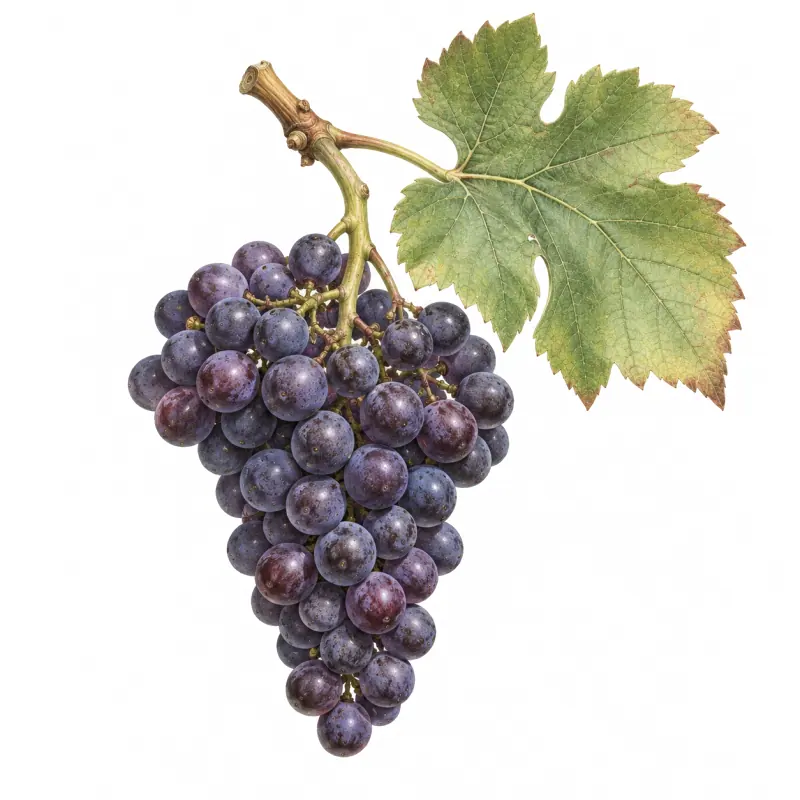
California has the most AVAs in the United States, 154 of the 280 in TTB's 2026 register, grouped by the Wine Institute into areas such as the North Coast, Central Coast, Sierra Foothills and the inland valleys. Vines came with the Franciscan missions from 1769. In 2025 the state had an estimated 540,000 acres (about 218,500 ha) of wine grapes, led by Cabernet Sauvignon and Chardonnay.

From the missions to the Paris tasting
The UC Davis Library dates vineyard planting in California to the Franciscan missions, starting with Mission San Diego de Alcalá in 1769, and says the Mission grape remained the leading variety until 1880. A 2013 proclamation by the Governor notes that Kino had planted vines at Misión San Bruno, in today's Baja California Sur, in 1683, that the date and place of the first vines in Alta California are disputed, and that the first winery was at Mission San Gabriel. It credits Joseph Chapman with the first commercial vineyard, in Los Angeles in 1824.
The Gold Rush of 1848–1855 brought plantings to the north. Prohibition then cut production by 94% between 1919 and 1925, and the UC Davis program in viticulture and enology was created to help rebuild the industry. On 24 May 1976 Californian wines came first in both categories of a blind tasting in Paris.
Coastline, fog and inland valleys
The Wine Institute describes 1,300 km of coastline and a varied topography in which cool ocean air is drawn inland to warmer valleys, creating the coastal fog. Marine breezes and fog give coastal vineyards warm days and cool nights, while the inland valleys are sunny and among the most fertile farmland in the world. It counts about 2,800 soil types, among them sand, clay, loam, granite, volcanic ash, seabed soils and river-run gravel.
Its regional map groups AVAs within the North Coast, the Central Coast and Santa Cruz Mountains, the Sierra Foothills, the inland valleys, Southern California and the far north. The North Coast is described as one of the coolest parts of the state, and the Sierra Foothills as the Gold Rush country where miners left vines in the soil. TTB regulations remain the authority for current boundaries.
Warm days and cool nights
The Wine Institute links California's wine character to the combination of warm days, which ripen the grapes, and cool nights, which regulate ripening. Its material presents a wide spread of styles rather than one statewide type: red varietal wines and blends, whites led by Chardonnay, and rosé, sparkling and late-harvest dessert wines. It describes the sparkling wines as crisp in acidity. The AVA rules for individual areas describe growing conditions, such as fog-driven "coastal cool" climates in the Russian River Valley, rather than a fixed style.
The California appellation and its grapes
California's regulation (Cal. Code Regs. tit. 17, § 17015) is stricter than the federal rule: a wine may use the appellation "California", or a geographical subdivision of it, only if 100% of its volume comes from fruit grown in California, apart from a 1% allowance for wine spirits, and it is fully produced and finished in the state. AVA names follow the federal 85% rule.
The 2025 California Grape Acreage Report estimates 540,000 acres (about 218,500 ha) of wine-type grapes, down from 610,000 in 2023. Cabernet Sauvignon (90,040 acres, about 36,440 ha) and Chardonnay (83,262 acres, about 33,700 ha) lead, followed by Pinot Noir (about 18,190 ha), Zinfandel (about 13,800 ha) and Merlot (about 12,390 ha). The Wine Institute lists more than 110 wine grape varieties.
How it connects
Wine region
- in United States
- subregion Napa Valley
- subregion Sonoma County
Grape variety
- grows Cabernet Sauvignon
- grows Chardonnay
- grows Pinot Noir
Continue exploring
- CountryUnited States of America33 entries in the atlas so far
- Grape varietyPinot Noir
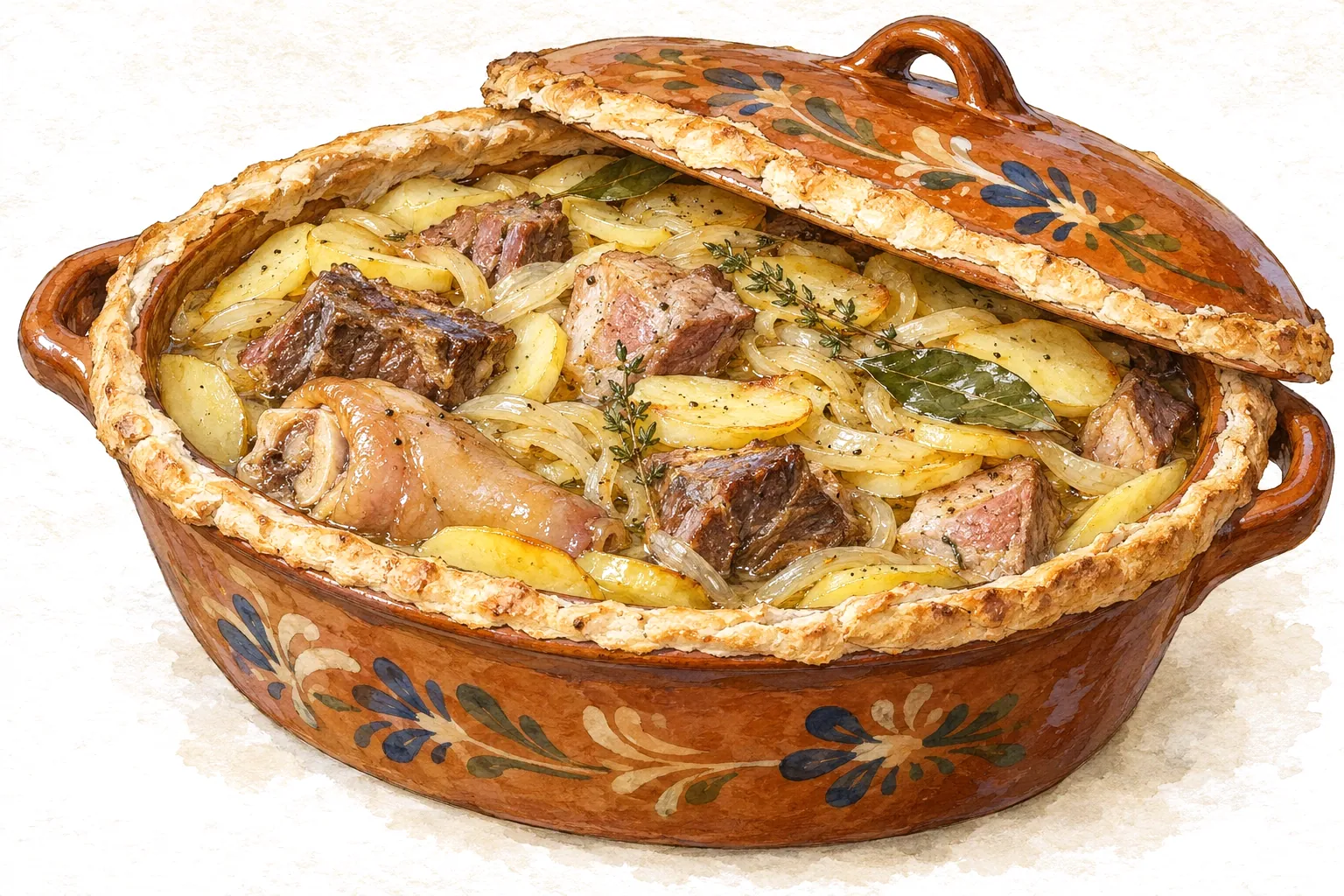 RecipeBaeckeoffeAlsace, France
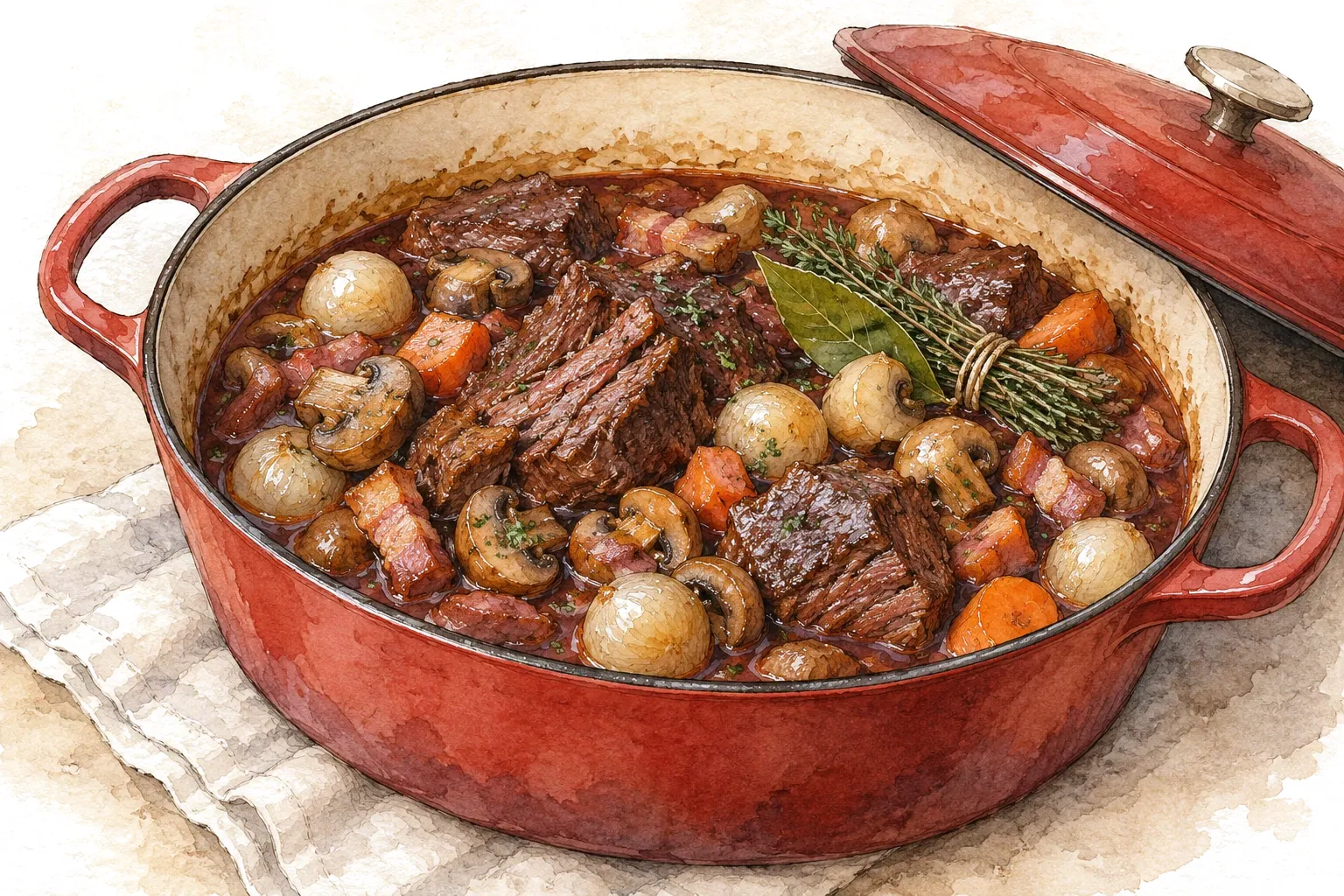 RecipeBœuf bourguignonDijon, France
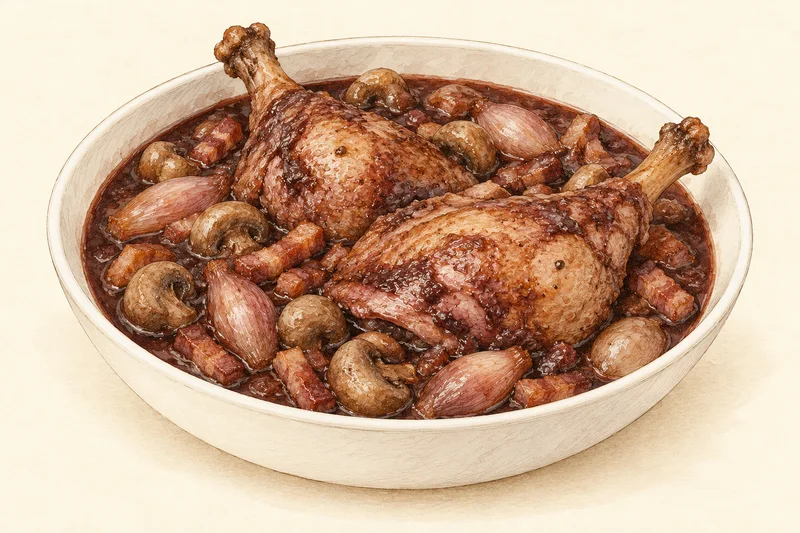 RecipeCoq au vinBurgundy, France
- Grape varietyCabernet Sauvignon
- Grape varietyChardonnay
- Wine regionNapa ValleyYountville, United States of America
- Wine regionSonoma CountySanta Rosa, United States of America
- Wine regionUnited StatesUnited States of America