
Wine · Wine region · Short entry
Gevrey-Chambertin
Gevrey-Chambertin
Gevrey-Chambertin is a Côte de Nuits village appellation for red Pinot Noir from Gevrey-Chambertin and Brochon. Its vineyards span the Côte on either side of the Combe Lavaux and the gravel fan at its mouth. Nine separately named Grand Cru appellations sit within the commune's vineyard landscape.
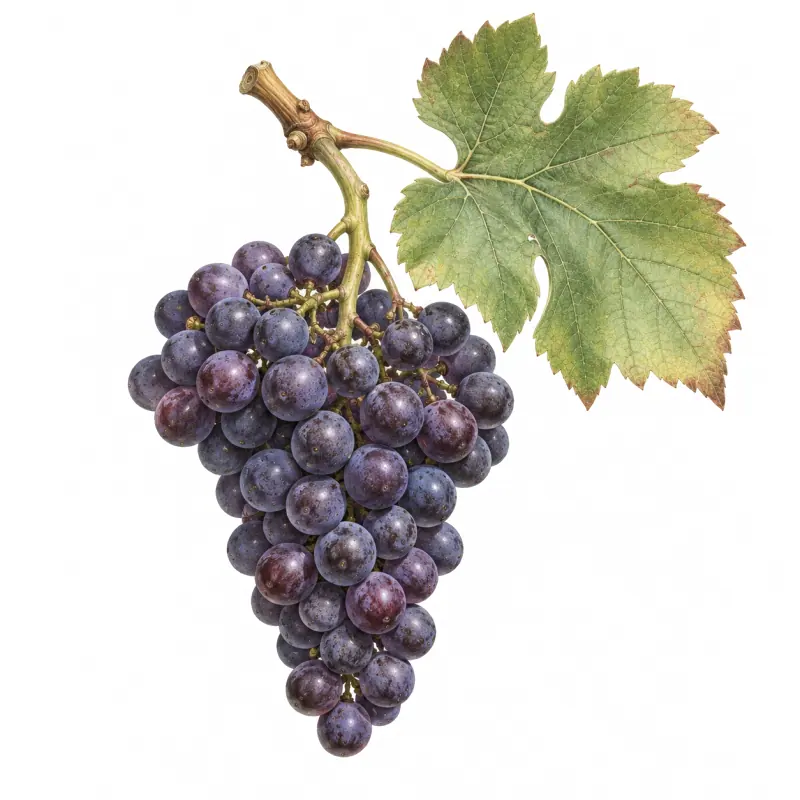
Two thousand years of vines
Traces of a first-century vineyard were found at Gevrey-Chambertin in 2008, on the gravelly soils of the foot of the slope. A walled vineyard belonging to the abbey of Bèze is recorded in 640. In the twelfth century the abbey of Cluny held a large estate here, and in 1257 its abbot built a château that also served as a winery. In 1219 the chapter of Langres bought from Bèze the plot that became the Clos de Bèze.
In the eighteenth century the merchant Claude Jobert, an owner in Chambertin, spread its name across Europe and took the name Jobert de Chambertin. Thomas Jefferson stopped at Gevrey in 1787. In 1847 the village added the name of its most famous vineyard, becoming Gevrey-Chambertin. The Dijon court fixed the limits of the appellation in 1929, confirmed on appeal in 1930, and the AOC was recognised by the decree of 11 September 1936. A list of Premier Cru climats followed in 1943.
Soil, slope and climate
The front of the Côte here rises about 150 m and is built of Bajocian and Bathonian limestones; the compact Comblanchien limestone forms its backbone, and a band of Bajocian marl makes a slight terrace low on the slope. Between Gevrey and Brochon a raised block brings Lias marls to the surface. The Combe Lavaux, a dry valley, cuts the slope, and its fan of gravelly, well-drained limestone alluvium spreads 2–3 km into the plain. Scree mixed with clay and silt covers the slopes: stony and thin above, finer and up to about 1 m deep below. The BIVB places the Premiers Crus at 280–380 m on rather shallow brown limestone soils, with village vines below on brown calcareous soils and marls covered with scree and red silt washed down from the plateau; exposures run from east to south-east.
The climate is cool oceanic with continental and southern influences: about 750 mm of rain a year and a mean of 10.5 °C. Sheltered east of the Morvan, the Côte is warmer and drier than the region around it.
What the place gives the wine
The specification describes ruby wines with an intense bouquet of small fruit, powerful and structured by dense but velvety tannins, which need a few years to open. It ties two types to the ground. Plots on the main slope, with thin soils rich in clay and iron oxides, give powerful, deeply coloured, long-lived wines. Plots on the gravelly, free-draining fan of the Combe Lavaux give fruitier, lighter wines that are ready sooner. The BIVB sheet adds strawberry, violet and rose when young, and liquorice, leather, fur and gamey notes with age; it credits stony soils with elegance and the fossil-rich clayey marls with body.
Grapes and classification
The appellation is for red wine only. Pinot Noir is the main grape; Chardonnay, Pinot Blanc and Pinot Gris are allowed as accessory varieties, interplanted and limited to 15% of each plot. The village appellation covers Gevrey-Chambertin and Brochon and includes 26 Premier Cru climats. Chambertin, Chambertin-Clos de Bèze and seven other Grand Crus have their own appellations; they are not Premier Cru subdivisions. In 2022 the BIVB recorded 409.36 ha, including 79.32 ha of Premier Cru.
How it connects
Continue exploring
- CountryFrance162 entries in the atlas so far
 RecipeCoq au vinBurgundy, France
- Grape varietyPinot Noir
- Wine regionCôte de NuitsNuits-Saint-Georges, France
 RecipeBaeckeoffeAlsace, France
 RecipeBœuf bourguignonDijon, France
 RecipeŒufs en meuretteBurgundy, France
 StoryThe Cistercians and the Clos de VougeotVougeot, France
 StoryDid Dom Pérignon invent Champagne?Hautvillers, France
- Wine regionAlto AdigeBolzano, Italy