
Wine · Wine region · Short entry
Baden
Baden
Baden is Germany's third-largest wine region, with 15,142 ha of vines in 2025, stretching about 400 km from the Tauber in the north to Lake Constance in the south in nine districts (Bereiche). It is the only German region in EU wine-growing zone B, so its wines must reach higher must weights. Burgundy varieties cover 61% of the vineyard, and Baden grows more Spätburgunder and Weißburgunder than any other German region.
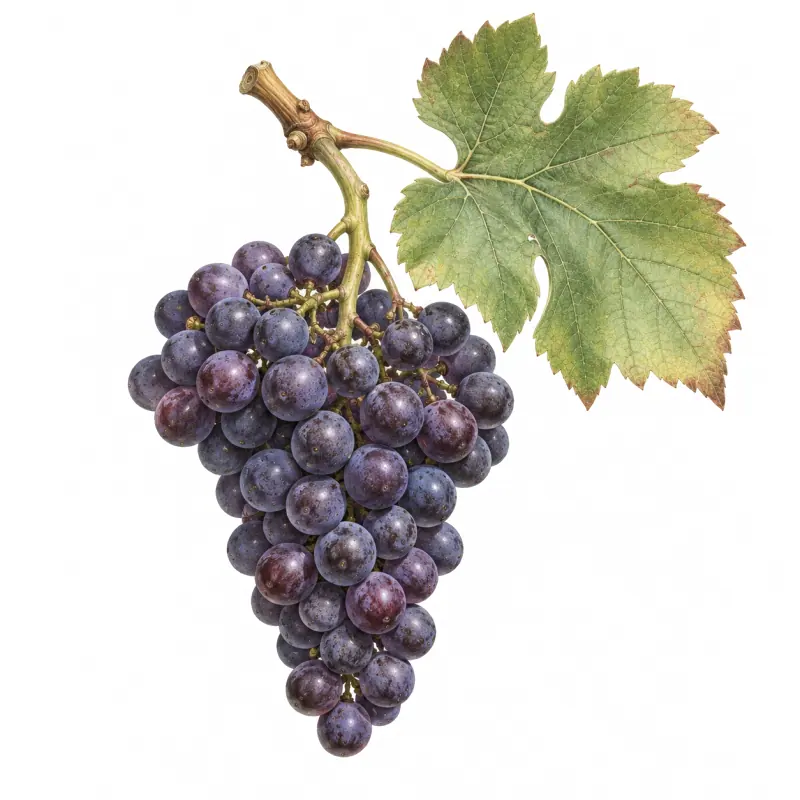
Documented since 720
The Baden specification says wine has shaped the culture and landscape of the region since it was first documented in the year 720. At Ihringen on the Kaiserstuhl vines are recorded from at least 962, and the German Wine Institute thinks the Romans probably grew them there already. In 1813 the grower Georg Ernst Lythin first planted noble varieties, Burgunder, Traminer and Muskateller, on the volcanic Winklerberg at Ihringen; the Institute calls this the birth of quality viticulture on the Kaiserstuhl.
Inheritance by division left small and very small plots on slopes and steep sites, and the Kaiserstuhl's narrow old terraces were mostly bulldozed into large terraces in the 1970s. After 1947 north Baden's growers belonged to a joint Württemberg-Baden association; on 31 December 1964 the north Baden section left it for the Badischer Weinbauverband. The name Baden was approved by an order of 7 January 1936 and has been protected in the EU since 18 September 1973. An amendment of 2017 added grape varieties and tied the boundary to the vineyard plans of Baden-Württemberg.
From Lake Constance to Tauberfranken
Baden runs for almost 400 km between Lake Constance, the High Rhine, the Upper Rhine Graben, the Bergstraße and Tauberfranken, in nine districts. Vineyards lie at about 115–520 m. In the river valleys and the foothills of the Black Forest, slopes of up to about 60% are mostly worked by tractor; on the Upper Rhine, the Tuniberg and the Kaiserstuhl vines stand mainly on terraces. Most vines grow on soils weathered from granite, gneiss, Muschelkalk or volcanic rock, largely covered by loess of varying depth.
The Kaiserstuhl, a volcanic massif rising to 556 m north-west of Freiburg, has about 4,200 ha of vines up to about 400 m. Warm air reaches it through the Burgundian Gate. The Baden growers' association says its thinly covered volcanic rock can heat to 70 °C, and that on the lee sides loess up to 40 m thick lies over the tuff; only 600–700 mm of rain falls there. The Winklerberg at Ihringen grows on a volcano extinct for 15 million years.
Burgundy grapes in a warm, wet-and-dry climate
The specification links Baden's alternation of dry, hot spells and warm, humid conditions to the intensive use of the Burgundy family of grapes. It says the varied rocks, the climate and the range of altitudes allow fruity, mineral white wines marked by terroir and substantial, full-bodied reds with varietal aromas. Reds are medium to dark red, with aromas mostly of fruit and spice, perceptible tannin, usually powerful and sometimes oaky; the Affentaler Spätburgunder recalls blackberry and cherry. Whites are pale yellowish, with aromas of blossom, fruit and spice and mostly mild acidity. The German Wine Institute describes Winklerberg wines from weathered volcanic soil with lime inclusions as full and mineral.
Zone B and the Burgundy family
Baden is a protected designation of origin (PDO-DE-A1264) for wine, liqueur wine, quality sparkling wine and semi-sparkling wine, from vineyards in the districts from Main-Tauber and Rhein-Neckar to Lörrach, Konstanz and the Bodensee. In 2025 the Burgundy varieties covered 9,162 ha, including Spätburgunder on 4,765 ha and Weißburgunder on 1,640 ha; Gutedel covered 971 ha, and the Freiburg-bred Souvignier Gris 188 ha. Riesling, Müller-Thurgau and Schwarzriesling lead in the north, Spätburgunder and Riesling in the Ortenau, the Burgundy varieties on the Kaiserstuhl, Tuniberg and in the Breisgau, Gutedel in the Markgräflerland.
Labels may carry Weißherbst, Badisch Rotgold (a Rotling, named with Grauburgunder and Spätburgunder), Ehrentrudis (Spätburgunder Weißherbst from the Tuniberg), Affentaler, Classic and Riesling-Hochgewächs. The maximum yield is 90 hl/ha plus a 20% carry-over. As in all German regions, a Prädikat is granted only to unenriched wine, and every wine except Federweißer carries an official test number.
Classification
- Qualitätswein and PrädikatsweinMinimum must weights are set by variety and district; varieties added in 2017 need 63–69 °Oe for Qualitätswein and 105 °Oe for Auslese. Maximum yield 90 hl/ha plus a 20% carry-over, raised by up to 10 hl/ha in exceptional years.
How it connects
Wine region
- in Germany
Grape variety
- grows Pinot Noir
Continue exploring
- CountryGermany20 entries in the atlas so far
- Grape varietyPinot Noir
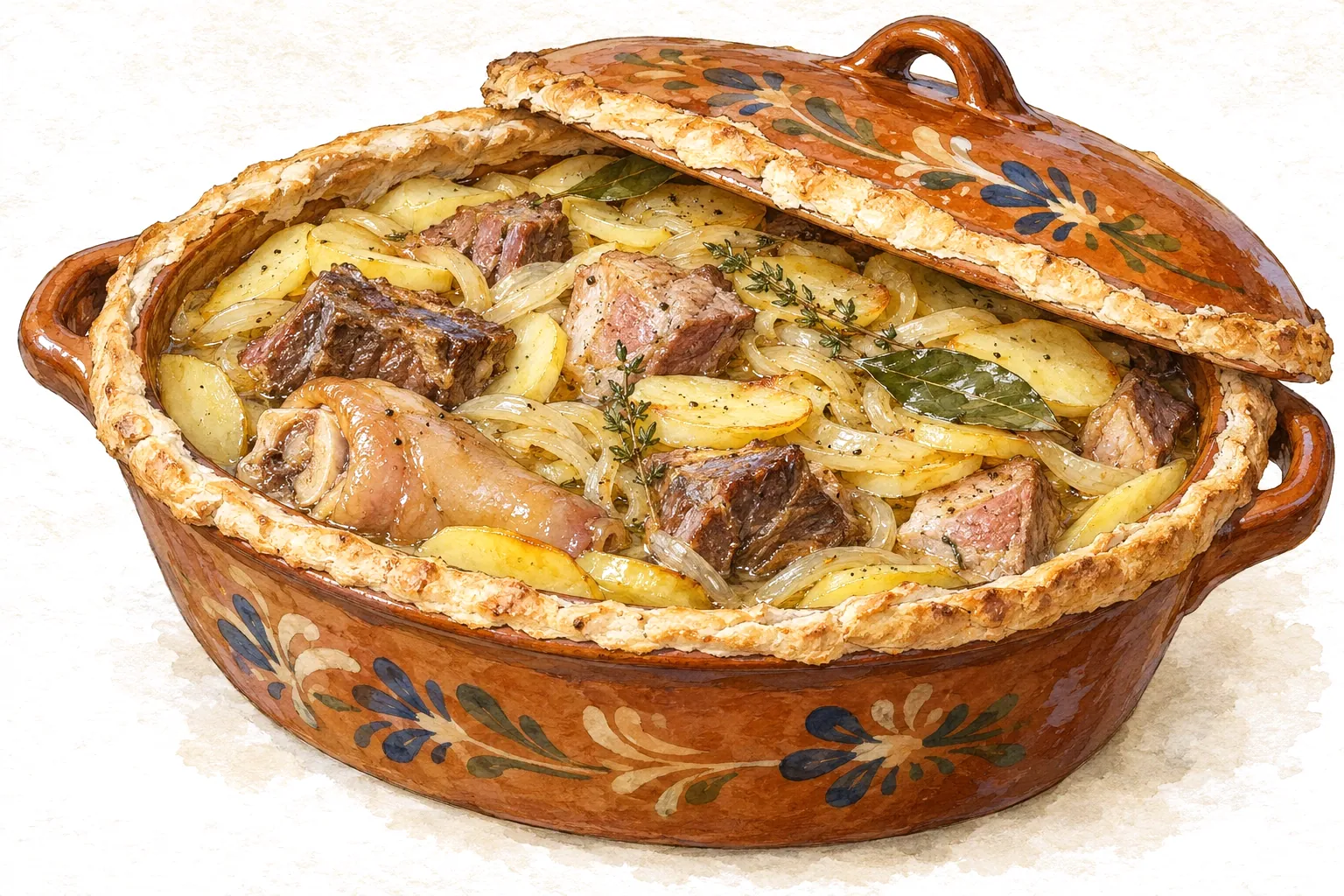 RecipeBaeckeoffeAlsace, France
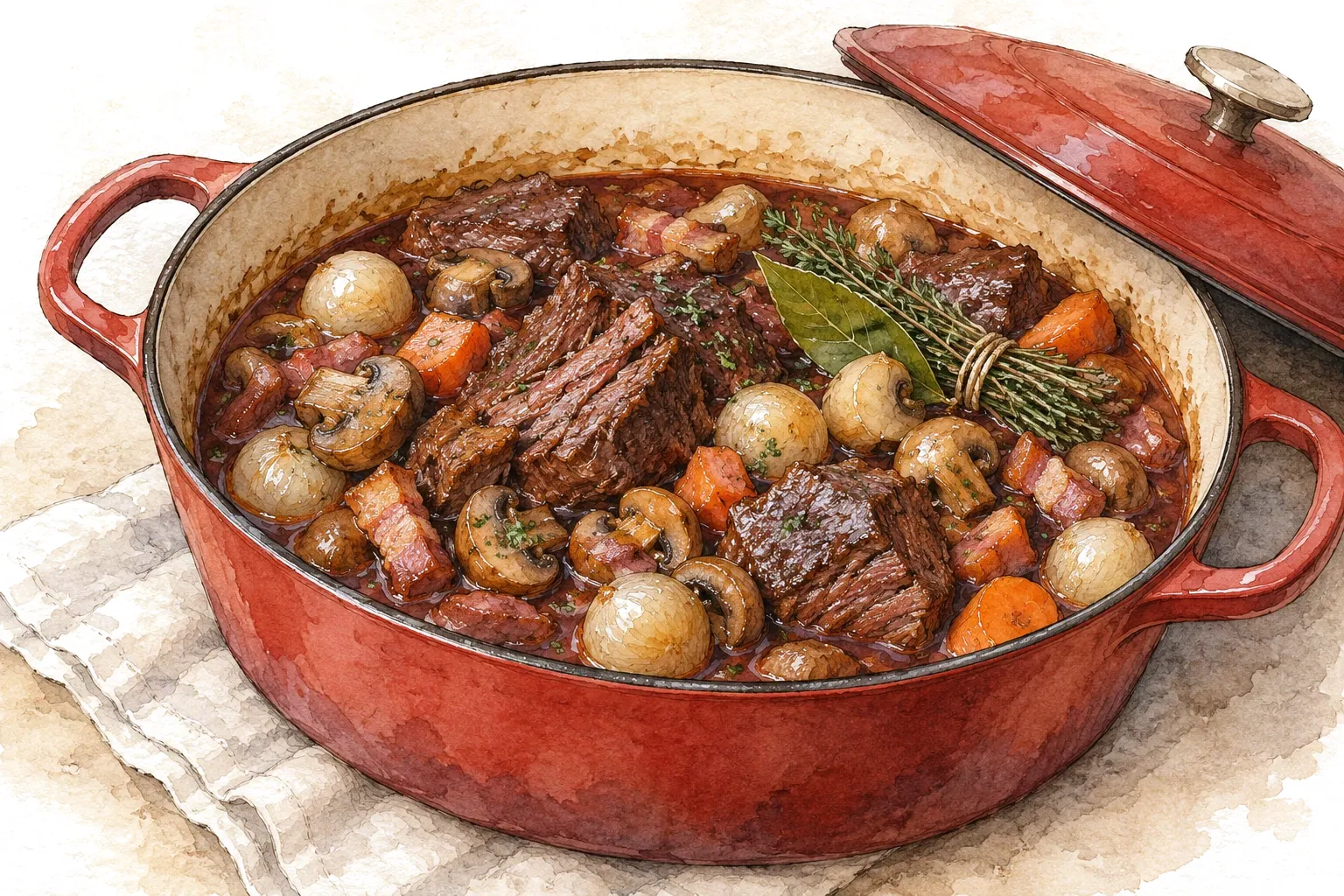 RecipeBœuf bourguignonDijon, France
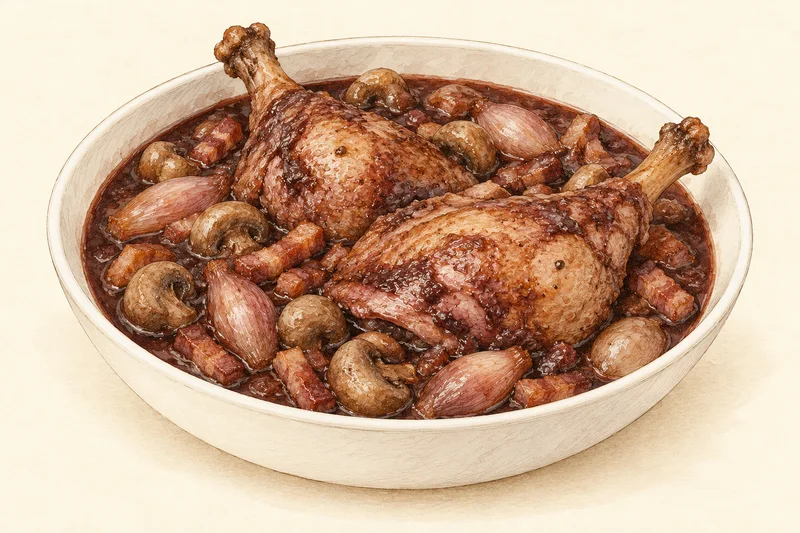 RecipeCoq au vinBurgundy, France
- Wine regionGermanyGermany
 RecipeŒufs en meuretteBurgundy, France
 StoryThe Cistercians and the Clos de VougeotVougeot, France
 StoryDid Dom Pérignon invent Champagne?Hautvillers, France
- Wine regionAlto AdigeBolzano, Italy