Wine · Grape variety · Short entry
Cabernet Sauvignon
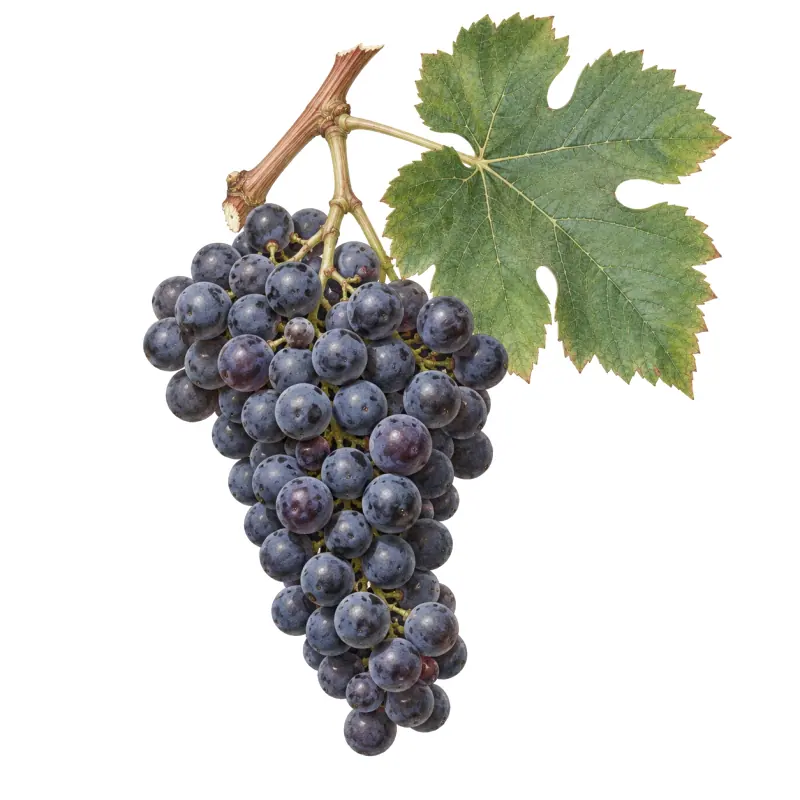
A late-budding black grape from Bordeaux, born of a natural cross between Cabernet Franc and Sauvignon Blanc. Its small berries give deep colour and firm tannins, and its wines age well, usually in blends. In 2015 it was the world's second most planted vine variety, with 341,000 ha.
A surprise parent
In 1997 Bowers and Meredith showed with microsatellite DNA markers that Cabernet Sauvignon is the offspring of two other Bordeaux varieties, Cabernet Franc and the white Sauvignon Blanc. A link to Cabernet Franc had long been suspected; the Sauvignon Blanc parent was a surprise, despite the shared name. VIVC lists the pedigree as confirmed by markers. The variety has been grown in Bordeaux at least since the 17th century.
In the vineyard and the glass
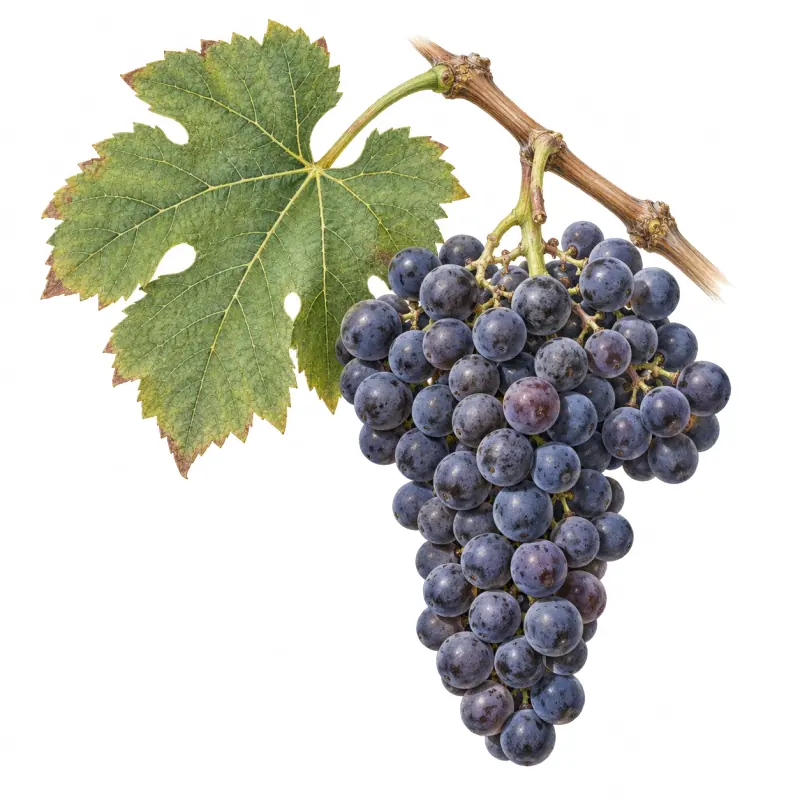
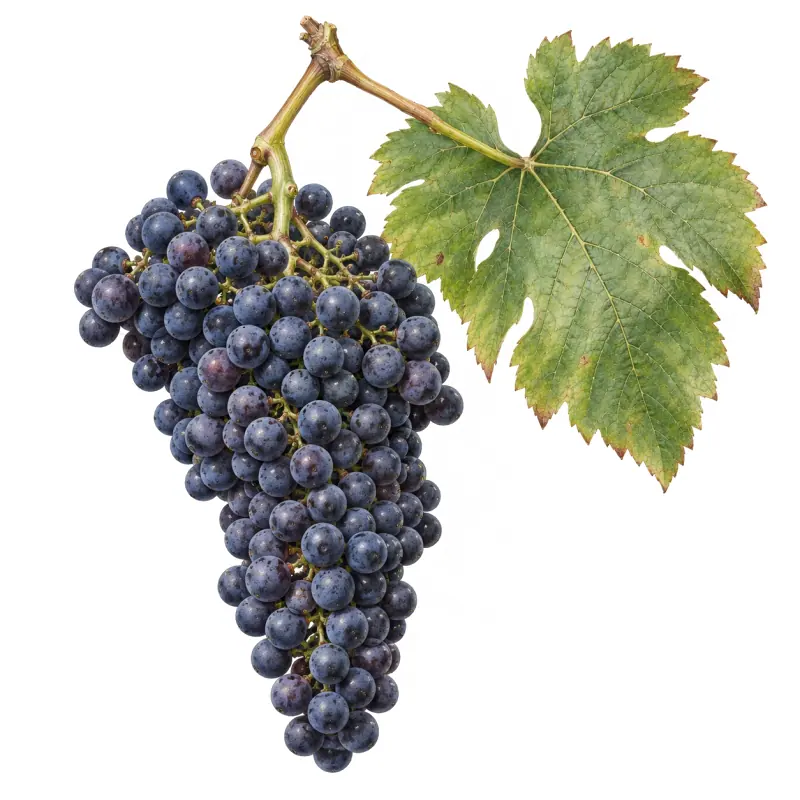
The vine is vigorous, with long shoots that need careful trellising and hard wood that is slow to prune. It resists grey rot well but is very susceptible to trunk diseases (esca, eutypa dieback) and to powdery mildew. Bunches and berries are small.
When fully ripe it gives deep colour and a firm tannic structure suited to ageing in wood. Unripe grapes give vegetal, bell-pepper notes from pyrazines. On its own it can lack body and fullness, which is one reason it is so often blended. In the Médoc it is the traditional base, joined by Merlot and smaller shares of Cabernet Franc and Petit Verdot.
Where it grows
OIV counted 341,000 ha in 2015, about 4% of the world's vineyards, mainly in China, France, Chile, the United States, Australia, Spain, Argentina, Italy and South Africa. It is the most planted variety in Chile (43,000 ha, about 20% of the national vineyard). In France it grew from 7,841 ha in 1958 to 60,385 ha in 2008, then fell to 47,751 ha in 2018.
How it connects
Grape variety
- offspring of Cabernet Franc
- parent of Marselan
Wine region
- grown in Bordeaux
- grown in Loire Valley
- grows California
- grows Washington State
- grows Napa Valley
- grows Sonoma County
- grows Columbia Valley
- grows Okanagan Valley
- grows Niagara Peninsula
- grows Mendoza
- grows Uco Valley
- grows Salta
- grows Patagonia
- grows Chile
- grows Maipo Valley
- grows Colchagua Valley
- grows Maule Valley
- grows Serra Gaúcha
- grows Campanha Gaúcha
- grows Ica
- grows Australia
- grows Barossa Valley
- grows Coonawarra
- grows Margaret River
- grows Yarra Valley
- grows Hawke’s Bay
- grows Nashik
- grows Anjou
- grows Saumur-Champigny
- grows Madiran
Continue exploring
- Wine regionBordeauxBordeaux, France
- RecipeAsado with chimichurriArgentina
- Grape varietyCabernet Franc
- Grape varietyMarselan
- Wine regionAnjouAngers, France
- Wine regionAustraliaAustralia (national overview), Australia
- Wine regionBarossa ValleyTanunda, Australia
- Wine regionCaliforniaUnited States of America
- Wine regionCampanha GaúchaSantana do Livramento (municipality), Brazil
- Wine regionChileChile (national overview), Chile