Wine · Wine region · Short entry
Maule Valley
Valle del Maule
The Maule Valley is a subregion of the Valle Central region covering the province of Talca (except Río Claro), the province of Linares and the commune of Cauquenes, divided into the Claro, Loncomilla and Tutuvén zones. Wines of Chile calls it the country's largest wine-growing region and lists 10,568 ha of Cabernet Sauvignon and 5,991 ha of País. It is home to some of Chile's oldest dry-farmed, head-trained vineyards.
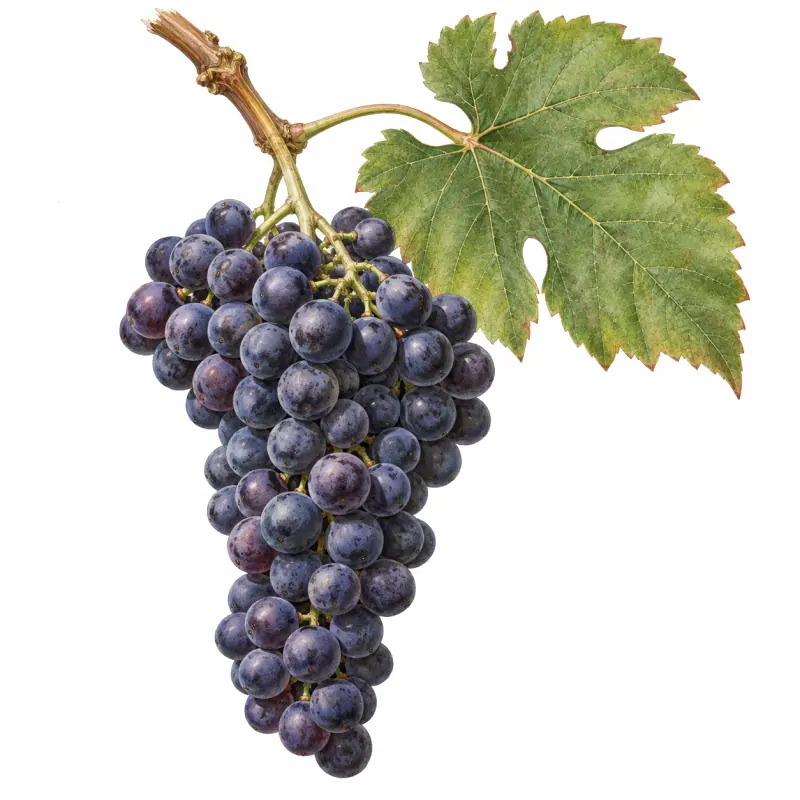
Old vines, harvest traditions and Carménère
Memoria Chilena places vineyards from Coquimbo to Concepción by the late 16th century, a band that includes the Maule. Wines of Chile says the valley holds some of the country's oldest vineyards, dry-farmed and head-trained, and Chile's national tourism service presents its rural production and harvest traditions. In late November 1994, after identifying Carménère in the Maipo, Jean-Michel Boursiquot spent a further week in the Maule at the invitation of growers and went on identifying supposed 'Merlot' vineyards as Carménère. Decree 464 of 1994 made the Maule a subregion of the Valle Central region; its zones and areas follow provinces and communes. The Secano Interior denomination, created in 2002 according to INDAP, covers País and Cinsault from the dry-farmed parts of nine Maule areas in the current text.
Andes, central plain and coastal hills
The subregion spans the province of Talca without Río Claro, the province of Linares and the commune of Cauquenes. The Claro zone covers Talca, San Clemente, Pencahue, Maule, Pelarco, San Rafael, Empedrado and Curepto; the Loncomilla zone covers San Javier, Villa Alegre, Retiro, Parral, Linares, Yerbas Buenas, Colbún and Longaví; Tutuvén is the commune of Cauquenes. Wines of Chile describes a valley running from the Andes in the east across the flat, sunny central corridor to the coastal hills in the west, with a Mediterranean climate and a strong influence of cold Andean wind at night, which widens the daily range and shortens the period of highest temperatures. It states that the Maule, unlike many other Chilean regions, has no maritime influence. Decree 464 nevertheless lists Empedrado and Curepto as 'Costa' areas.
Spicy Carménère and old Carignan
Wines of Chile credits the Andean night winds with slow ripening in good condition and with giving Maule Carménère a characteristic aromatic intensity, full of spice and black pepper; it says Cabernet Sauvignon and Merlot also thrive, and calls the valley an excellent area for exceptional Carignan. The INDAP guide to the neighbouring Itata Valley describes País, abundant in the Maule, as a variety of low phenolic load with somewhat rustic tannins and good acidity. These are the bodies' own descriptions.
Heritage and international grapes
Maule wines with denomination of origin follow the 75% rules of Decree 464. Areas may add 'Andes' (San Clemente, Colbún), 'Costa' (Empedrado, Curepto) or 'Entre Cordilleras' (the other listed areas) when at least 85% of the wine comes from them. País or Cinsault from the dry-farmed parts of nine areas may use 'Secano Interior'. Wines of Chile lists Cabernet Sauvignon (10,568 ha), País (5,991 ha), Merlot (2,865 ha), Sauvignon Blanc (2,726 ha), Carménère (2,201 ha), Chardonnay (2,100 ha), teinturier grapes (1,640 ha), Syrah (1,623 ha), Carignan (726 ha) and Malbec (583 ha). The list shows diversity, not a required recipe.
Classification
- Subregion Valle del Maule (DO)Zones Valle del Claro, Valle del Loncomilla and Valle del Tutuvén, with 14 areas.
- Andes / Entre Cordilleras / CostaAndes: San Clemente, Colbún. Costa: Empedrado, Curepto. The other areas: Entre Cordilleras.
- Secano InteriorFor País or Cinsault from the dry-farmed parts of Talca, Pencahue, San Clemente, San Rafael, San Javier, Villa Alegre, Parral, Linares and Cauquenes.
How it connects
Wine region
- in Chile
Grape variety
- grows Cabernet Sauvignon
- grows Carmenère
- grows Merlot
- grows Sauvignon Blanc