
Wine · Wine region · Short entry
Anjou
Anjou
Anjou is the wine country around Angers, where the ancient rocks of the Armorican Massif meet the chalk of the Paris Basin. AOC Anjou covers Chenin whites, from dry to sweet, Cabernet reds, Anjou Gamay and sparkling wines. Rosé d'Anjou and Cabernet d'Anjou are separate rosé appellations defined in the same specification.
Plantagenet tables and Dutch brokers
The Anjou specification dates a continuous vineyard to the first century AD. Under the monasteries it spread along the Loire and around Angers in the Middle Ages, and the court of Henry II and Eleanor of Aquitaine carried "vin d'Anjou" to the finest tables in the twelfth and thirteenth centuries. Dutch brokers buying for their country and colonies expanded production from the sixteenth century; in the eighteenth the Layon was canalised for the trade. Taxes and the Vendée wars then damaged the vineyard.
It covered 45,000 ha in 1881 and 10,000 ha in 1893, after phylloxera. Replanting favoured Cabernet Franc and then Cabernet-Sauvignon, first for "rouget", a light wine drunk in cafés, then for rosés and, from the 1960s, red wines. Anjou was recognised as an AOC for still whites on 14 November 1936, reds on 9 September 1937, sparkling whites on 14 May 1938 and sparkling rosés on 31 December 1957.
Black Anjou and white Anjou
The area spans two geological units, and vines occupy mainly the slopes of the rivers and some plateaus. In the west the Precambrian and Palaeozoic basement of the Armorican Massif carries schist, including slate, and the landscape is locally called Anjou noir. In the east the Mesozoic and Cenozoic rocks of the Paris Basin cover it, and the tuffeau chalk around Saumur gives Anjou blanc. The zone covers 68 communes in southern Maine-et-Loire, 11 in Deux-Sèvres and 9 in Vienne. Its soils differ but are generally poor, with moderate water reserves, and warm up well.
The climate is temperate and oceanic, evened out by the ocean, the Loire and its tributaries; locals speak of the "douceur angevine", though summer heat is frequent. North-west to south-east ridges shelter the vineyards from wet west winds, and a foehn effect from the Choletais and Mauges keeps rain to about 585 mm a year, against nearly 800 mm in the Choletais.
What the place gives the wine
The specification ties the wines' freshness to a northern vineyard with a mild climate and original soils. Whites are usually dry, with hawthorn, lime blossom, verbena and citrus aromas and a round mouth that ends fresh; on sunny south-facing slopes, in good autumns, Chenin gives riper moelleux or doux wines. Reds have red-fruit aromas and tannin but should stay light, for drinking within three years. Grolleau and Pineau d'Aunis take sandy-gravel hills for fruity rosés, while the Cabernets prefer shallow or brown soils with a regulated water supply. For Anjou Gamay the specification favours soils over Precambrian rock in Anjou noir and excludes every Anjou blanc situation.
Three appellations, one specification
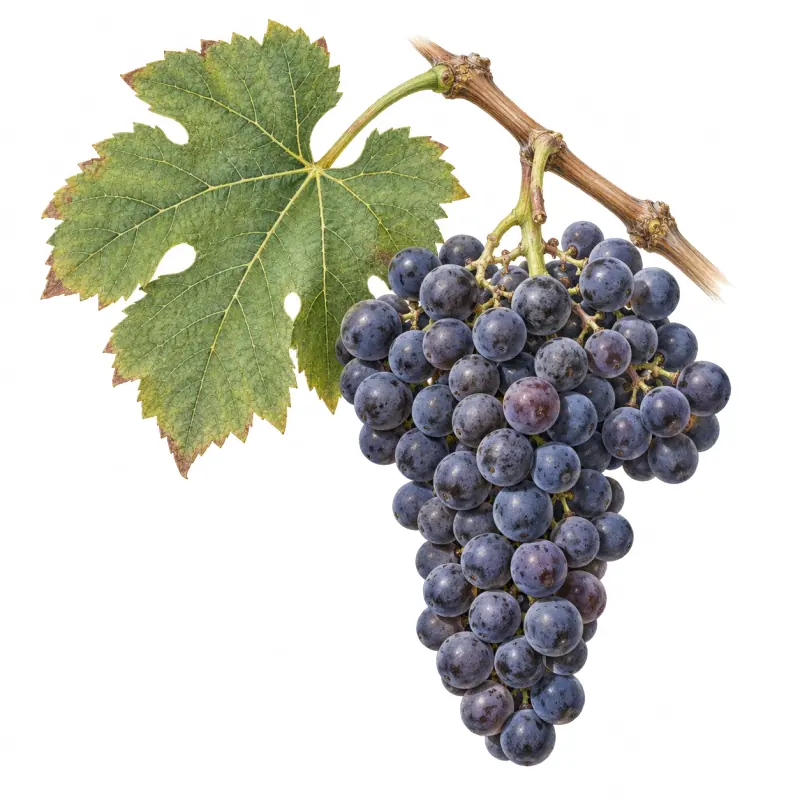
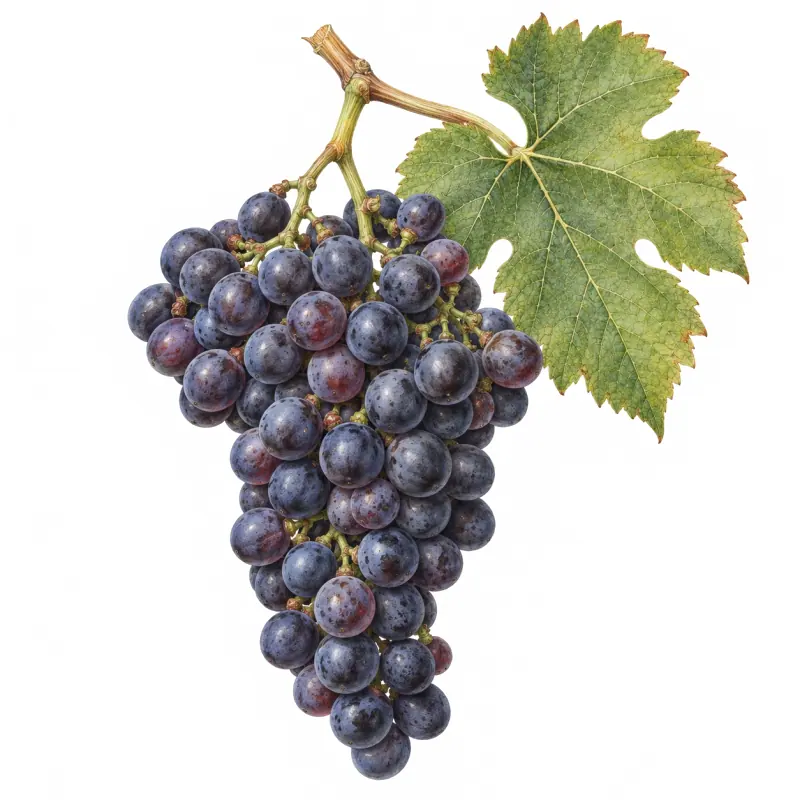
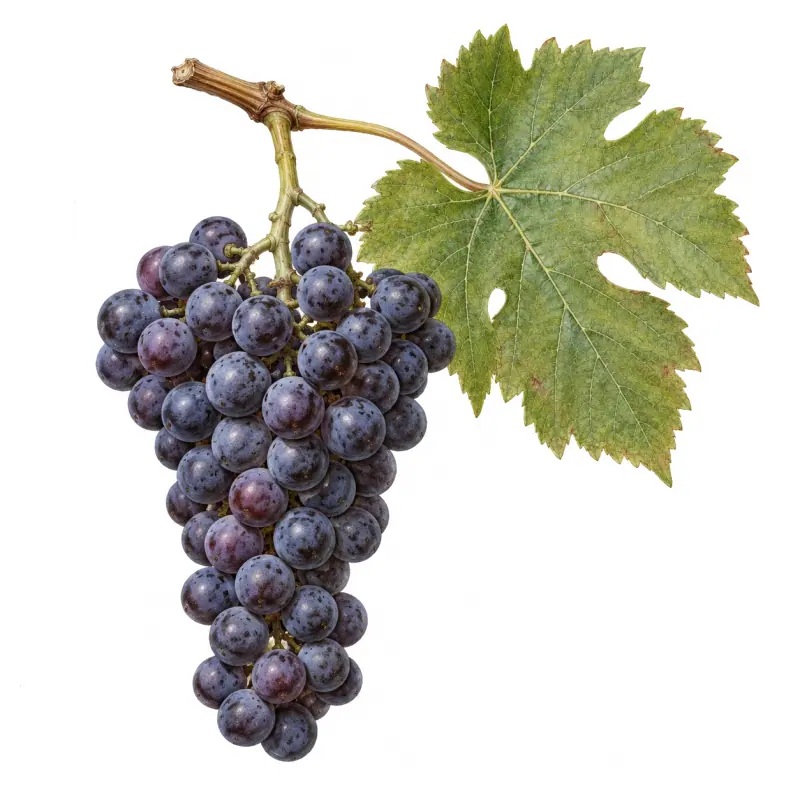
AOC Anjou covers still whites and reds and white and rosé sparkling wines. Whites are Chenin (Pineau de la Loire) with up to 20% Chardonnay and Sauvignon Blanc. Reds are Cabernet Franc and Cabernet-Sauvignon, with Grolleau up to 20% and Pineau d'Aunis up to 10%. Sparkling whites are mainly Chenin, and sparkling wines age at least 9 months on the lees. Anjou Gamay is a red from Gamay.
Cabernet d'Anjou (decree of 9 May 1964) is a rosé from the two Cabernets; Rosé d'Anjou (31 December 1957) is mainly Grolleau and Grolleau Gris. Both keep some residual sugar, and they and Anjou Gamay may be sold as primeur or nouveau. Base yields are 60 hl/ha for still wines, 65 for Rosé d'Anjou and 67 for sparkling wine. Savennières and the Coteaux du Layon are separate appellations, not styles of Anjou.
How it connects
Wine region
- in Loire Valley
- related Savennières
- related Coteaux du Layon
Grape variety
- grows Chenin
- grows Cabernet Franc
- grows Cabernet Sauvignon
- grows Grolleau
- grows Gamay
Continue exploring
- CountryFrance162 entries in the atlas so far
 RecipePommes de terre à la lyonnaiseLyon, France
- Grape varietyCabernet Franc
- Grape varietyCabernet Sauvignon
- Grape varietyCheninFrance
- Grape varietyGamay
- Grape varietyGrolleau
- Wine regionCoteaux du LayonBeaulieu-sur-Layon, France
- Wine regionLoire ValleyNantes, France
- Wine regionSavennièresSavennières, France