Wine · Wine region · Short entry
Chile
Chile's wine origins are fixed by Decree 464 of 14 December 1994, which divides the country into viticultural regions from Atacama in the north to the Austral region in the south, each split into subregions, zones and areas defined by provinces and communes. Since 2012 labels may add 'Costa', 'Entre Cordilleras' or 'Andes' to show the influence of the Pacific, the central depression or the Andes. Cabernet Sauvignon is the most planted grape in the Maipo, Cachapoal, Colchagua and Maule valleys, according to Wines of Chile.
Conquest vines, French grapes and Carménère
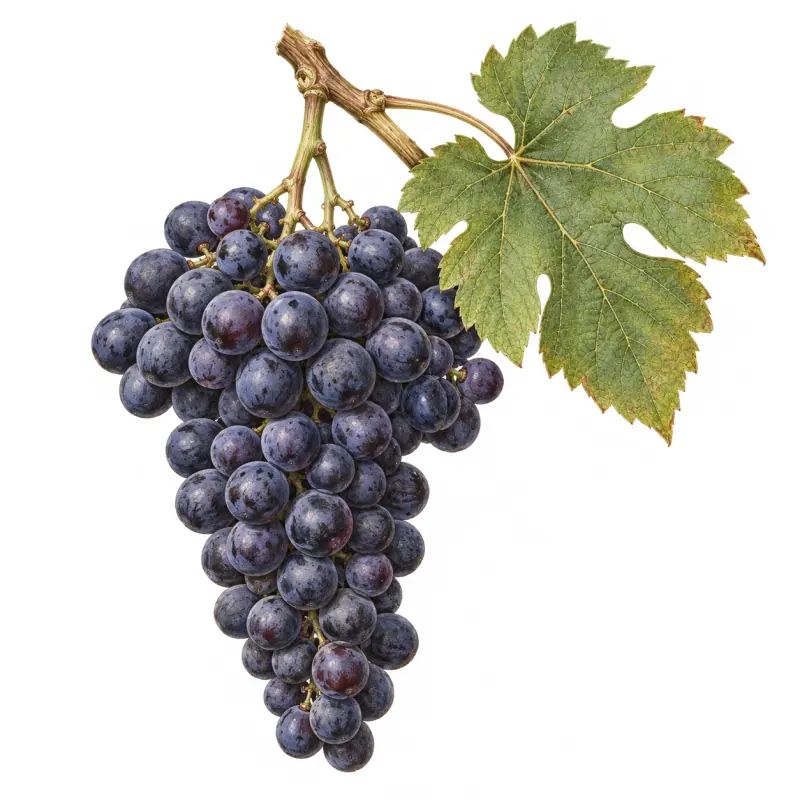
Memoria Chilena, the national library's research site, says wine arrived with the Spanish conquerors and names several early vineyard owners, among them Governor Francisco de Aguirre, Juan Jufré and Inés de Suárez. In the first colonial years almost every plot in Santiago had vines; planting spread from Coquimbo to Concepción, and by 1594 the country produced about 100,000 arrobas, or 1.6 million litres, a year. In 1794 the Crown banned exports of Chilean wine to New Spain and New Granada. The Spanish system of growing and winemaking stayed unchanged until the mid-19th century. From 1850 producers invested in machinery, technicians, imported vines and underground cellars; Silvestre Ochagavía continued the work in 1851, and between 1850 and 1880 Cabernet Sauvignon, Cabernet Franc, Malbec, Merlot, Carménère, Sauvignon Blanc, Chardonnay, Semillon and Riesling arrived. On 24 November 1994 the French ampelographer Jean-Michel Boursiquot identified as Carménère vines known in Chile as Merlot. Decree 464 was signed on 14 December 1994.
Between the Andes and the Pacific
Decree 464 recognises three east-west influences: the Andes, the central depression between the ranges and the Pacific Ocean. Wines of Chile describes very different valleys from north to south. Copiapó lies in the Atacama desert and its small vineyards are watered from oases; Limarí has a semi-arid climate with morning fog, 'camanchaca', some calcareous soils, and Malbec at 1,600-1,800 m near Río Hurtado. The Aconcagua has alluvial and colluvial terraces. Casablanca is cooled by the Pacific and morning fog over old granitic clay soils. Maipo has a Mediterranean climate with hot, dry summers and cold, wet winters, with vineyards from the Andean foothills to the sandy soils of the Coastal Range. In Colchagua, low coastal hills let Pacific breezes meet Andean winds. The Maule has no maritime influence but cold Andean night winds. Curicó receives about 600 mm of rain, mostly in winter. Itata has a humid Mediterranean climate and sandy granitic soils.
What the valleys give, according to Wines of Chile
Wines of Chile attributes style to place. It describes Maipo Cabernet Sauvignon as complex, with well-structured tannins. In Colchagua it says the meeting of sea and mountain air cools the valley and lengthens ripening, keeping acidity and giving reds of good colour, freshness and ageing capacity. In the Maule it credits cold Andean night winds with a wider daily range and slower ripening, giving Carménère aromatic intensity with spice and black pepper. It links Casablanca's cool lower ground to whites of distinctive minerality, and Limarí's fog and calcareous soils to fresh, mineral Chardonnay. These are the trade body's descriptions.
Decree 464 and its label rules
Article 1 of Decree 464 lists the viticultural regions of Atacama, Coquimbo, Aconcagua, Valle Central, Sur and, since a 2025 amendment, the Austral region (Cautín, Osorno and Chiloé), plus the Rapa Nui area. Wines fall into three categories: with denomination of origin, without it, and wines made from table grapes. A DO wine must contain at least 75% wine from the named place; a variety or a vintage named on the label must also make up at least 75%, and a blend may name up to three regions or subregions if each is at least 15%. Since 2012 the terms 'Andes', 'Entre Cordilleras' and 'Costa' may be added when at least 85% of the wine comes from areas listed for that term. The special denomination 'Secano Interior' is reserved for País or Cinsault from the dry-farmed parts of listed areas. DO wines must be bottled in Chile. 'Embotellado en Origen' requires the vineyards and bottling plant to lie in the named area. 'Seco' is allowed up to 4 g/l of sugar, or 9 g/l with enough acidity.
Classification
- Vinos con Denominación de OrigenWines from the regions, subregions, zones and areas of Decree 464, or from the Secano Interior, made from the listed varieties.
- Vinos sin Denominación de OrigenWines from grapes grown anywhere in Chile, from listed or other traditional vinifera varieties.
- Vinos elaborados con uva de mesaWines made from table grapes.
- Costa, Entre Cordilleras, AndesOptional additional terms for DO wines with at least 85% from areas listed for each term.
How it connects
Wine region
- subregion Maipo Valley
- subregion Colchagua Valley
- subregion Casablanca Valley
- subregion Maule Valley
- subregion Itata Valley
Grape variety
- grows Cabernet Sauvignon
- grows Carmenère
Continue exploring
- CountryChile6 entries in the atlas so far
- Grape varietyCabernet Sauvignon
- Grape varietyCarmenère
- Wine regionCasablanca ValleyCasablanca, Chile
- Wine regionColchagua ValleySanta Cruz, Chile
- Wine regionItata ValleyCoelemu, Chile
- Wine regionMaipo ValleyBuin, Chile
- Wine regionMaule ValleyTalca, Chile
 Grape varietyPinot Noir
- Wine regionBordeauxBordeaux, France