
Wine · Wine region · Short entry
Napa Valley
Napa Valley
Napa Valley became California's first AVA on 28 January 1981, the second in the United States. The valley floor is about 48 km long and at most 8 km wide, framed by the Mayacamas and Vaca ranges, with 17 nested AVAs on alluvial fans, benches and mountain slopes. Its dry Mediterranean climate is cooled by fog and wind from San Pablo Bay. Cabernet Sauvignon covers 54% of the vineyard.
Yount, phylloxera and the 1976 Paris tasting
Napa Valley Vintners dates the valley's commercial vineyards to 1836, when George Calvert Yount, holder of a Mexican land grant, planted vines; John Patchett opened the first commercial winery in 1859, with Charles Krug as winemaker. Vineyards grew from 225 acres in 1856 to 24,664 acres (about 9,980 ha) in 1875, and the St. Helena Viticultural Society, founded that year, urged European varieties in place of the Mission grape. Phylloxera then destroyed over 80% of the vines, and Prohibition from 1920 closed most wineries.
André Tchelistcheff arrived at Beaulieu in 1938. The Napa Valley Vintners was founded in 1944, and in 1968 Napa County created the country's first agricultural preserve. On 24 May 1976 the 1973 Chateau Montelena Chardonnay and the 1973 Stag's Leap Cabernet Sauvignon took first place at a blind tasting in Paris. The Napa Valley AVA was established by T.D. ATF-79 on 28 January 1981.
Alluvial fans, volcanic slopes and bay fog
TTB describes the Napa Valley AVA as alluvial fans, riparian land, hillsides and high mountains, from below 120 m to over 1,220 m, with a marine-influenced climate spanning Winkler Regions II, III and IV. Napa Valley Vintners puts vineyards between sea level and about 790 m on a valley floor about 48 km long and 8 km wide. It says plate tectonics lifted the area from the ocean floor and left a mix of volcanic and sedimentary rocks, so that half of the world's soil orders and 33 soil series occur here. The valley floor has deep alluvial clay, gravel and sand; the slopes have shallow volcanic soils; and in the south calcium-rich silts resemble those of San Pablo Bay.
Fog and wind from the bay cool the south: Los Carneros, and above it Wild Horse Valley, which the Vintners call the coolest of the nested AVAs. St. Helena, at the narrow centre, and Calistoga in the north are warmer. Annual rainfall ranges from up to 64 cm in Coombsville to about 150 cm in Calistoga.
Slow ripening and acidity
Napa Valley Vintners links the wines to the valley's large day-night temperature swing, which lets the fruit ripen slowly while keeping the acidity needed for long ageing. Its AVA profiles tie this to place: evening and early-morning fog in Oakville helps maintain acidity, while mountain vineyards above the fog line have smaller day-night ranges and cooler days. Shallow volcanic soils with limited water retention, as on Atlas Peak, often need irrigation. The Vintners say the varied soils give the wines nuanced flavours, and their timeline names Cabernet Sauvignon as the valley's defining variety since the 1940s.
Seventeen nested AVAs
Napa Valley Vintners lists 17 nested AVAs inside the Napa Valley AVA, among them Atlas Peak, Calistoga, Chiles Valley, Coombsville, Crystal Springs of Napa Valley, Howell Mountain, Los Carneros, Oakville, Rutherford, Spring Mountain District, St. Helena, Stags Leap District and Wild Horse Valley. Crystal Springs of Napa Valley, established in 2024, is the newest. A wine labelled with one of these AVAs, or with Napa Valley, needs at least 85% of its grapes from that area under federal rules.
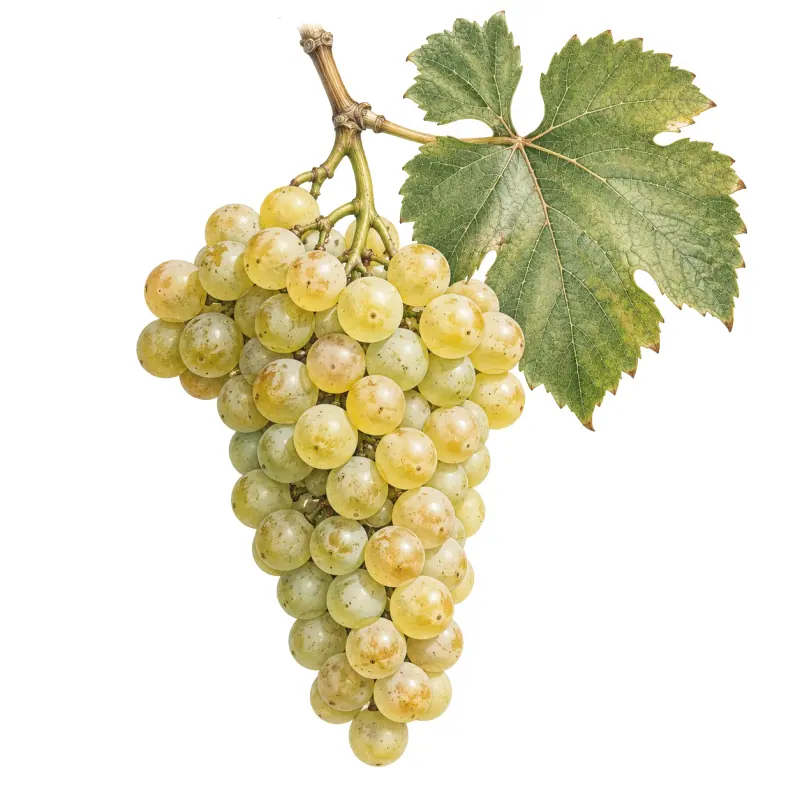
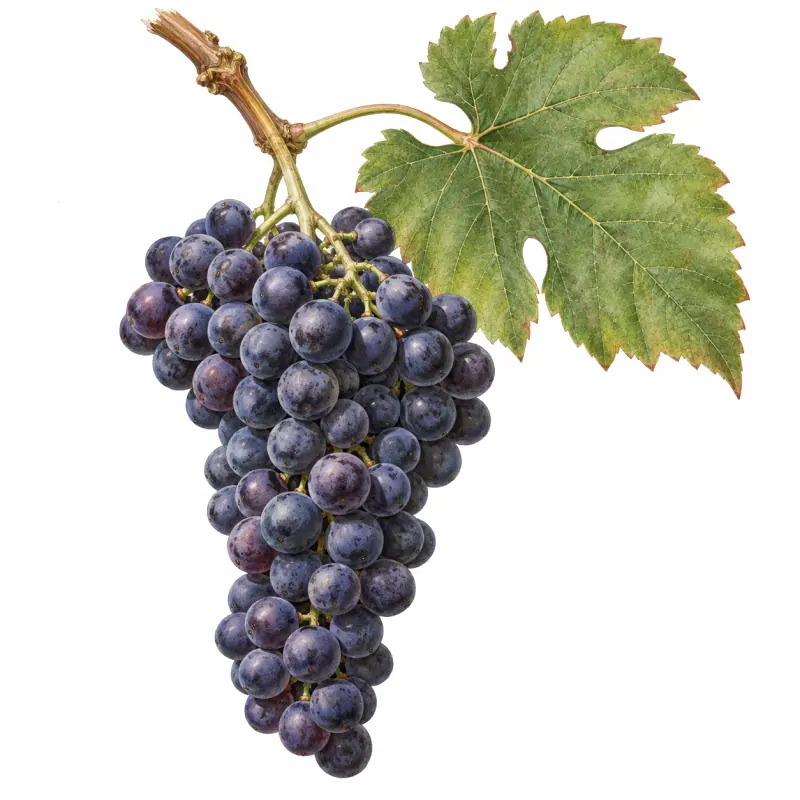
Of more than 34 varieties grown, red grapes cover 80% of the vineyard. Cabernet Sauvignon has 54% (10,117 ha), Chardonnay 12% (2,277 ha), Merlot 8% (1,469 ha), Sauvignon Blanc 6%, Pinot Noir 5%, and Zinfandel and Cabernet Franc 3% each. Napa Valley gives only 4% of California's wine grape harvest.
How it connects
Wine region
- in California
Grape variety
- grows Cabernet Sauvignon
- grows Chardonnay
- grows Merlot
- grows Sauvignon Blanc
Continue exploring
- CountryUnited States of America33 entries in the atlas so far
- Grape varietyCabernet Sauvignon
- Grape varietyChardonnay
- Grape varietyMerlot
- Grape varietySauvignon BlancFrance
- Wine regionCaliforniaUnited States of America
 RecipeEscargots à la bourguignonneBurgundy, France
 RecipeFondue au ComtéJura massif, Franche-Comté, France
 RecipeGougèresBurgundy, France
 StoryDid Dom Pérignon invent Champagne?Hautvillers, France