
Wine · Wine region · Short entry
Mendoza
Mendoza is Argentina's largest wine province, with 148,996 ha of vines in 2021, 71% of the national total, according to the INV. Its vineyards lie between 430 and 2,000 m in five irrigated zones at the foot of the Andes: the North, the Centre (Primera Zona), the East, the Uco Valley and the South. The province contains both of Argentina's controlled designations of origin, Luján de Cuyo and San Rafael.
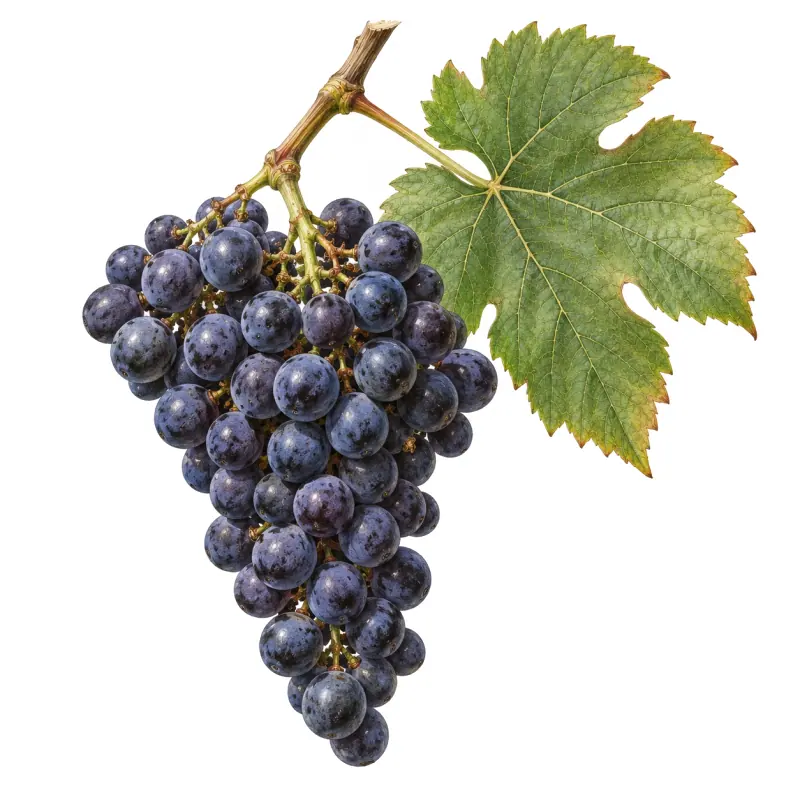

Criolla grapes, the railway and the first DOC
Wines of Argentina places the first vineyards of Mendoza's Primera Zona in the 17th and 18th centuries, as family, hand-worked plots of criolla grapes; for the Uco Valley it says Jesuit missionaries were the first colonisers to plant vines, in the 16th century. Industrial viticulture began in the 1850s with European varieties, and in 1853 the Quinta Normal, Argentina's first school of agriculture, opened in Mendoza under Michel Aimé Pouget, the first to introduce French vines to the province. The railway reached Mendoza in 1880, bringing European immigrants and linking the province to the Buenos Aires market. Consumption peaked at 90 litres a head in the 1970s; a crisis followed in the 1980s as habits changed. In the 1990s the industry opened to foreign markets and advisers and replanted. Luján de Cuyo became a DOC in 1990, and since 1995 new vineyards in Tunuyán, in the Uco Valley, have all been planted above 1,000 m.
Five oases fed by Andean rivers
The INV divides the province into five zones: North, Centre, East, Uco Valley and South. Wines of Argentina names the same five, calling the centre Primera Zona, and says the Andes shape the climate. Mendoza receives about 220 mm of rain a year, against 851 mm in Bordeaux in the guide's comparison, with mean annual temperatures of 15-19 °C and vineyards at 430-2,000 m. Primera Zona, the departments of Luján de Cuyo and Maipú south and south-east of the city, had 26,476 ha in 2021; it is watered by a large irrigation network from the Mendoza River and holds 40% of Argentina's wineries, while the city has spread over former vineyard land. Luján de Cuyo lies on the pre-cordillera. The Uco Valley, at 900-1,250 m on its floor, is confined between the Cordillera Frontal and the Huayquerías and has stony, permeable soils on its high piedmont. The East and South oases form the remaining zones, the South around General Alvear and San Rafael.
From table wine to altitude reds
Wines of Argentina contrasts the Primera Zona of the past, flood-irrigated, densely planted and producing fine and table wines from French, Italian, Spanish and criolla vines, with today's mainly red fine wines from French varieties, drip and flood irrigation and clonal selections. In the Uco Valley the INV attributes high colour and tannin in red grapes to a daily range of about 15 °C, and Wines of Argentina says red grapes from Paraje Altamira are noted for colour and acidity.
Two DOCs and a long list of IGs
Both Argentine DOCs are in Mendoza: Luján de Cuyo, which Wines of Argentina says is the only one in use and the INV calls the most used, and San Rafael. The guide lists about thirty IGs in the province, from the provincial IG Mendoza to departments (Maipú, Tunuyán, San Carlos) and districts such as Agrelo, Las Compuertas, Lunlunta, Paraje Altamira, Los Chacayes and Vista Flores. In 2022 Valle de Uco was the most used IG in the country, with 41% of wine sold under an IG or DOC, and Mendoza 7%. By area in 2021 the main varieties were Malbec (39,248 ha, 26.7% of the province), Bonarda (14,824 ha), Cereza (13,492 ha), Criolla Grande (12,411 ha) and Cabernet Sauvignon (10,494 ha). Pedro Giménez (7,086 ha) and Chardonnay (4,711 ha) led the whites. Mendoza is a broad origin; a valley or district IG gives a more specific location.
Classification
- DOC Luján de CuyoRecognised in 1990; the most used DOC in Argentina.
- DOC San RafaelThe province's second DOC, in the South oasis.
- IGProvincial IG Mendoza and many departmental and district IGs, such as Agrelo, Las Compuertas, Paraje Altamira and Los Chacayes.
How it connects
Wine region
- in Argentina
- subregion Uco Valley
Grape variety
- grows Malbec
- grows Cabernet Sauvignon
- grows Chardonnay
Recipe
- pairs with Asado with chimichurri
Continue exploring
- CountryArgentina6 entries in the atlas so far
- RecipeAsado with chimichurriArgentina
- Grape varietyCabernet Sauvignon
- Grape varietyChardonnay
- Grape varietyMalbec
- Wine regionArgentinaArgentina (national overview), Argentina
- Wine regionUco ValleyTunuyán, Argentina
 RecipeEscargots à la bourguignonneBurgundy, France
 RecipeFondue au ComtéJura massif, Franche-Comté, France
 RecipeGougèresBurgundy, France