
Wine · Wine region · Short entry
Bonnezeaux
Bonnezeaux
Bonnezeaux is a sweet Chenin appellation limited to the former commune of Thouarcé, now part of Bellevigne-en-Layon, on the right bank of the Layon. Its vines occupy three steep south-west-facing slopes, La Montagne, Beauregard and Fesles, on schist and sandstone. Grapes are hand-picked in successive passes and must reach at least 255 g/l of sugar.
A fief that produced 2,000 hectolitres
The specification calls Chenin probably native to Anjou and says it found a favoured site at Bonnezeaux. In 1453 Guillaume Prevost, lord of Bonnezeaux, received a tithe of about 115 hl, which suggests a fief producing about 2,000 hl. Records of prices in the 1580s show the high standing of Thouarcé wines, and in 1789 an abbé asked a grower to keep him a cask of the 1788, since "the canton of Bonnezeaux" produced the best. Guthrie's geography, translated in 1802, placed Thouarcé, "in which lies the cru of Bonnezeaux", in the first class of Anjou wines.
Phylloxera reduced the vineyard to a local market. The growers' syndicate, holding to low yields and successive picking, won back the national market and then foreign ones. The AOC was recognised on 6 November 1951. Stories about the origin of the name remain uncertain; the specification says it seems to come from iron-rich springs.
Warm exposures above the river
The zone is the delegated commune of Thouarcé, divided by the Layon; on the right bank the hamlet of Bonnezeaux sits on top of a steep slope. The vines occupy three south-west-facing slopes, La Montagne, Beauregard and Fesles, in a band 2,800 m long and 500 m wide, with gradients of about 15–20%, steepest on Beauregard and La Montagne. North of them a gently rolling plateau averages 90 m, while the Layon flows at 29 m. The bedrock is the Saint-Georges-sur-Loire series, a schist-sandstone complex of Upper Ordovician to Lower Devonian age, sometimes covered, notably at Fesles, by Cenomanian gravelly or sandy clay. Erosion has stripped the schist, so soils are shallow and very stony, greenish-grey, with under 100 mm of water reserve.
Sheltered by the Choletais and Mauges, the area gets 550–600 mm of rain. InterLoire also mentions quartz, phtanite and morning mists that can favour noble rot.
Shrivelled on the vine
The specification links steep south-west slopes and shallow, stony soils that warm very well to early growth and ripening of Chenin. Prevailing winds sweeping the slopes and a very low water supply on skeletal soils concentrate the berries by shrivelling on the vine. Very low yields and several picking passes for very ripe grapes built the wines' reputation. They are valued for power: great sweetness with complex fruit (dried fruit, exotic fruit, white flowers) and a light golden colour with green glints. The balance of acidity, alcohol and richness lets them gain complexity with age.
Selection of ripe fruit
Bonnezeaux is reserved for still white wine from Chenin only. All grapes are picked by hand in successive passes; they must reach at least 255 g/l of sugar and 15% natural alcohol by volume. The base yield is 25 hl/ha, with a ceiling of 30, and finished wines keep more than 51 g/l of sugar. The wine council speaks of overripe grapes concentrated with or without noble rot and an opulent texture balanced by freshness.
Bonnezeaux is a specific part of the Layon landscape, not a synonym for the broader Coteaux du Layon appellation. A local legend credits Saint Martin with planting Chenin in Anjou; it is not used here as a planting date or genetic origin.
How it connects
Wine region
- in Loire Valley
- related Coteaux du Layon
Grape variety
- grows Chenin
Continue exploring
- CountryFrance162 entries in the atlas so far
- Grape varietyCheninFrance
- Wine regionCoteaux du LayonBeaulieu-sur-Layon, France
- Wine regionLoire ValleyNantes, France
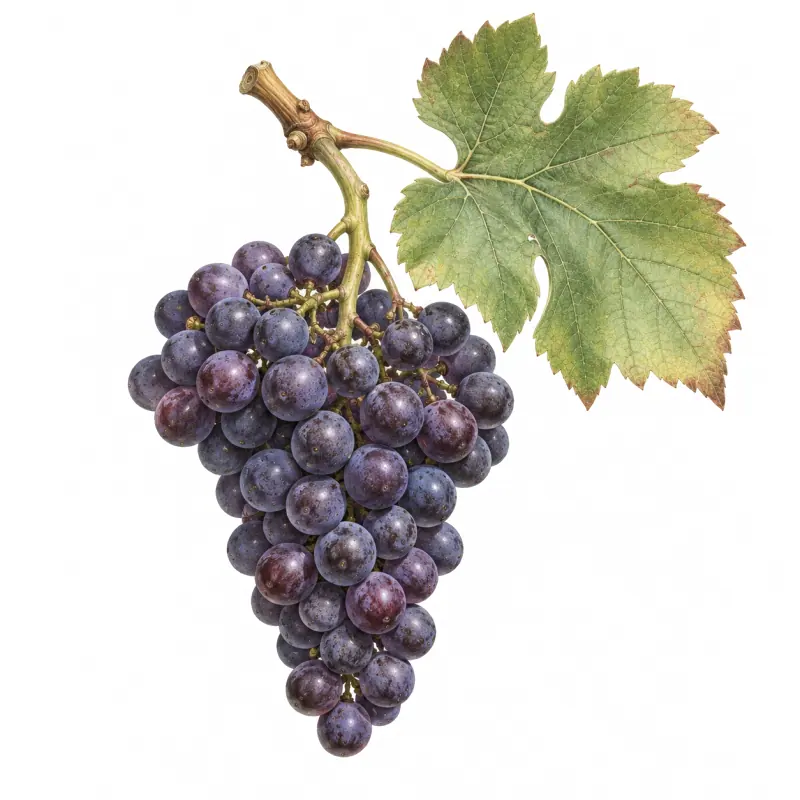 Grape varietyPinot Noir
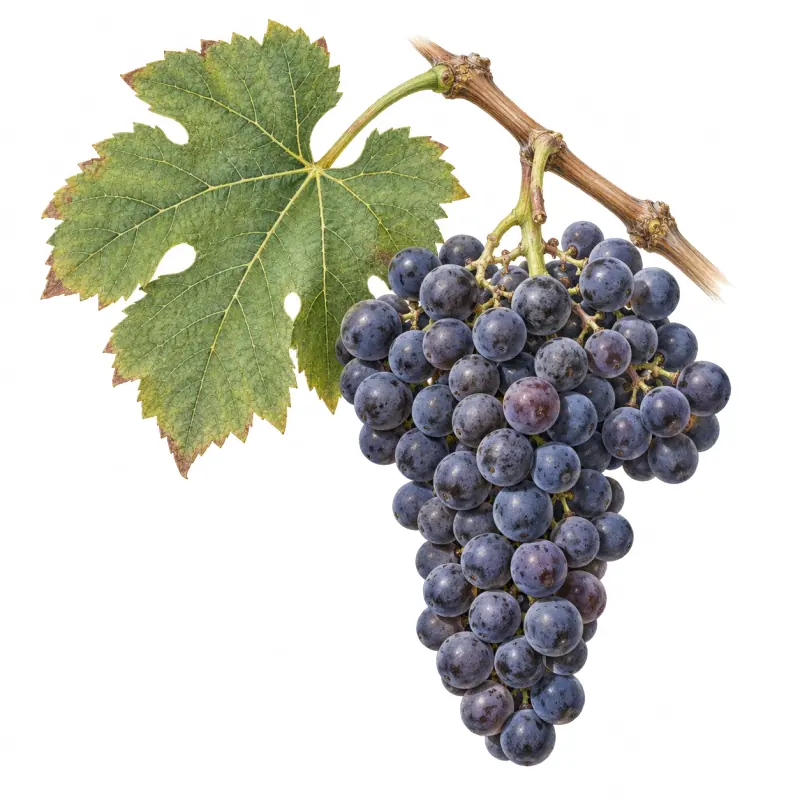 Grape varietyCabernet Franc
- Grape varietyCabernet Sauvignon
- Grape varietyColombardFrance
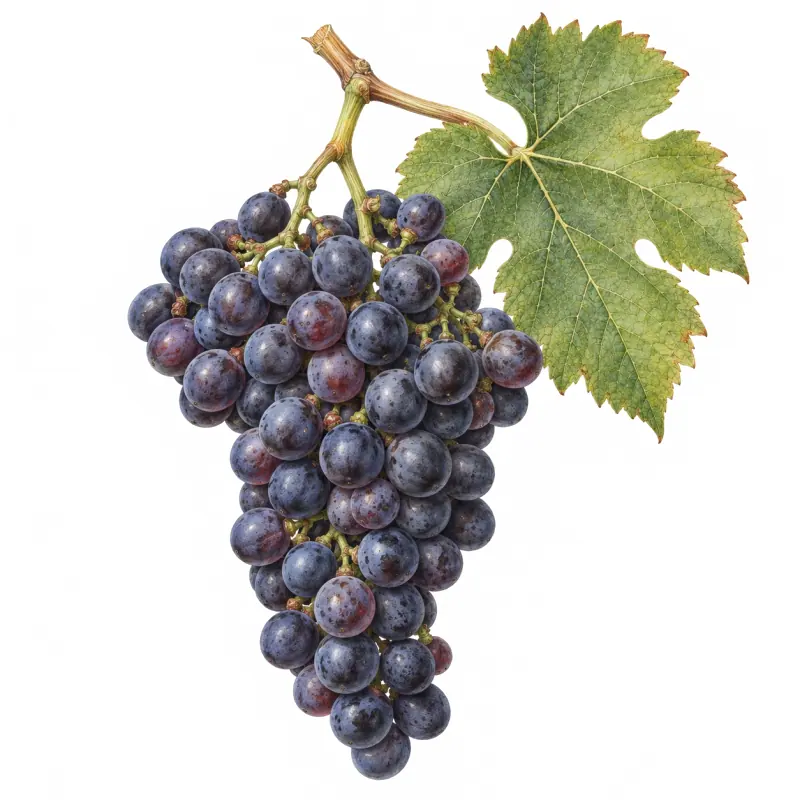 Grape varietyGrolleau
- Grape varietyMelonFrance