Wine · Wine region · Short entry
Rhône Valley
Rhône Valley
The Rhône Valley wine region follows the river between Vienne and Avignon across six departments. The broad Côtes du Rhône appellation, recognised in 1937, sits beneath Côtes du Rhône Villages and the named crus. Syrah leads in the continental north and Grenache in the Mediterranean south.
From Greek colonists to the CDR mark
The Côtes du Rhône specification says the first vines were probably brought by Greek colonists about 600 BC, and that Roman estates then spread vine growing through the valley. In the north the Allobroges developed the vineyard of Vienne from the first century BC; Pliny the Elder reports their pride in its resinated wine. The name "la Côte du Rhône" was established in the fifteenth century for an area within the old civil diocese of Uzès, where planting restrictions applied from 1615 and a harvest date was set each year. In 1737 a ruling of the Council of State required the letters CDR and the vintage on barrels from about ten communes around Roquemaure, Tavel and Lirac. Jules Guyot wrote of "Côtes du Rhône" in 1864. The AOC was recognised by decree on 19 November 1937.
A former fjord between two climates
In the Tertiary the valley was a Mediterranean fjord reaching Vienne, filled by sedimentary basins between older uplands. Quaternary erosion shaped the present slopes and terraces. The specification lists soils on river terraces, on marls and soft limestones, and on eroded marl, sand, sandstone or molasse. In the north the vineyards climb steep slopes and terraces around Côte-Rôtie and Condrieu; farther south Châteauneuf-du-Pape combines stony, sandy and sandstone ground.
The south is Mediterranean, with hot, dry summers; the north is continental temperate, with similar annual rainfall. Rain falls mainly in autumn and late winter, so summer evaporation gradually exhausts soil water and slows the vines' growth. The Mistral, strengthened by the corridor between the hills, blows on about 120 days a year and helps give more than 2,500 hours of sunshine.
Generous reds, floral whites
The specification describes Côtes du Rhône reds as fruity and generous, with good colour. How long they keep depends on soil: lighter wines come from sandy or sandy-silt ground, richer and more tannic ones from stony or clay soils. Rosés are fruity or floral; whites are floral and round, sometimes with exotic notes. It credits the cold, dry Mistral with protecting the vines from fungal disease. Grenache is historically placed in the south and Syrah in the north, because Syrah needs less heat to ripen.
A regional appellation beneath the crus
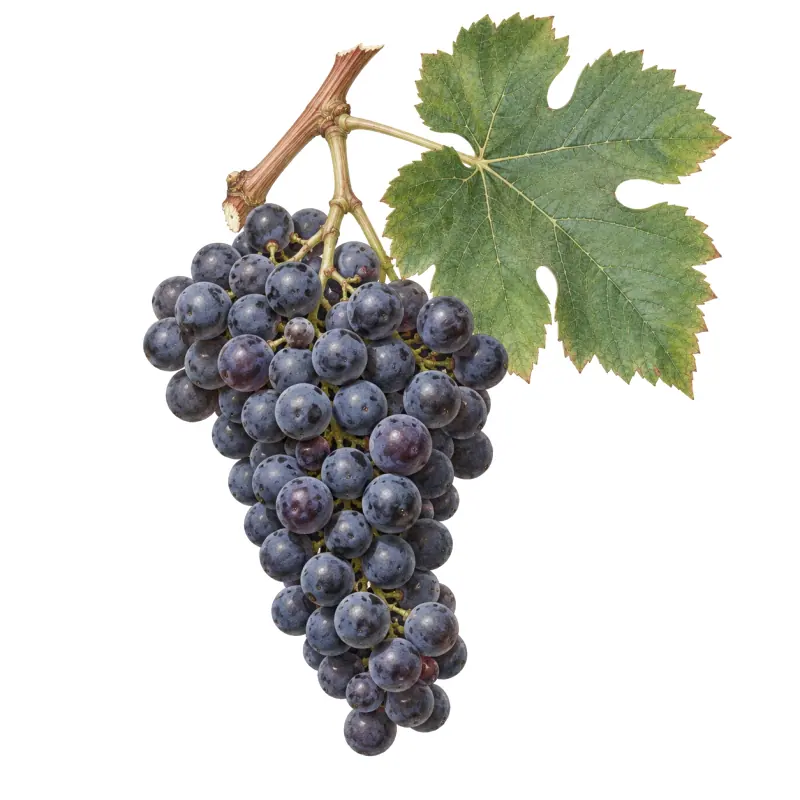
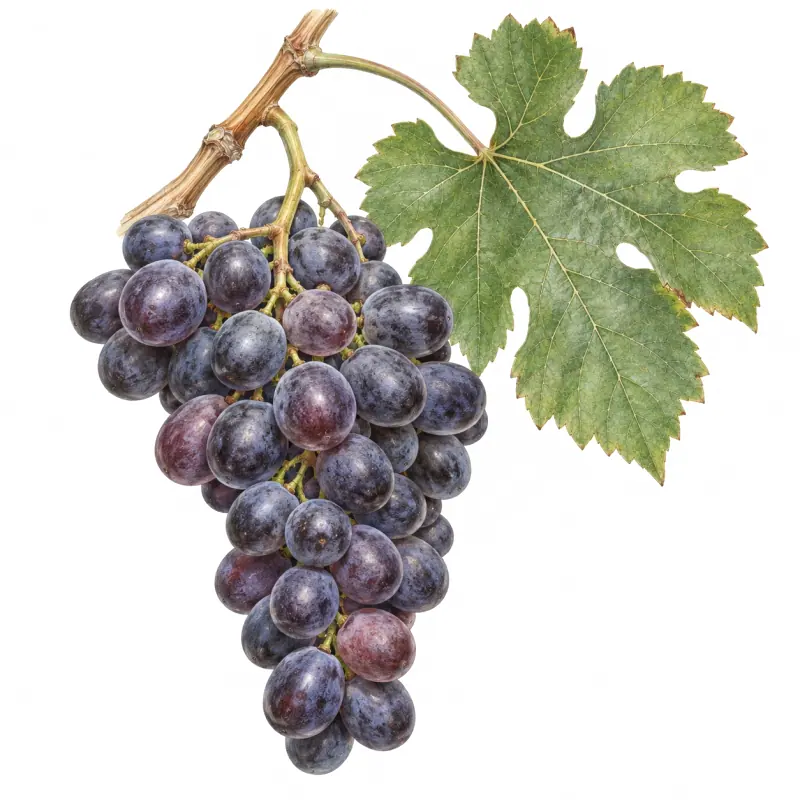
The Rhône Valley is a region, not one appellation. Its base AOC, Côtes du Rhône, covers dry still red, rosé and white wines, with a primeur or nouveau mention for reds and rosés. Reds and rosés have Grenache, Mourvèdre and Syrah as principal grapes, with a long list of accessories including Carignan, Cinsault and Counoise. Whites have Bourboulenc, Clairette, Grenache Blanc, Marsanne, Roussanne and Viognier as principal grapes. The base yield is 51 hl/ha. In 2010 production was about 1.5 million hl, from more than 1,000 independent growers and nearly 5,000 growers in 65 cooperatives. Above it sit Côtes du Rhône Villages and the crus, each under its own rules; in the north these are built on Syrah, Viognier, Marsanne and Roussanne.
How it connects
Grape variety
- grows Syrah
- grows Cinsaut
- grows Viognier
- grows Marsanne
- grows Roussanne
- grows Garnacha Tinta
- grows Monastrell
- grows Clairette
- grows Bourboulenc
Recipe
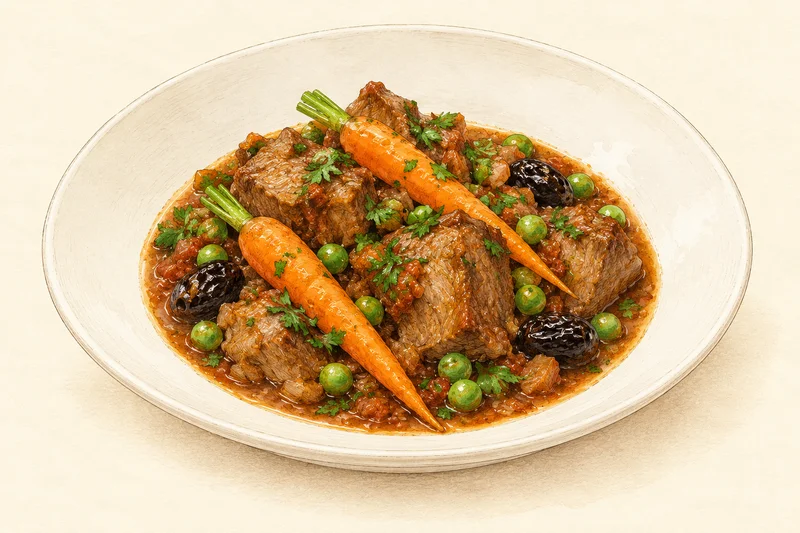
- pairs with Navarin d'agneau printanier
Wine region
- in Côte-Rôtie
- in Condrieu
- in Hermitage
- in Crozes-Hermitage
- in Saint-Joseph
- in Cornas
- in Châteauneuf-du-Pape
- in Gigondas