Wine · Wine region · Short entry
Cornas
Cornas
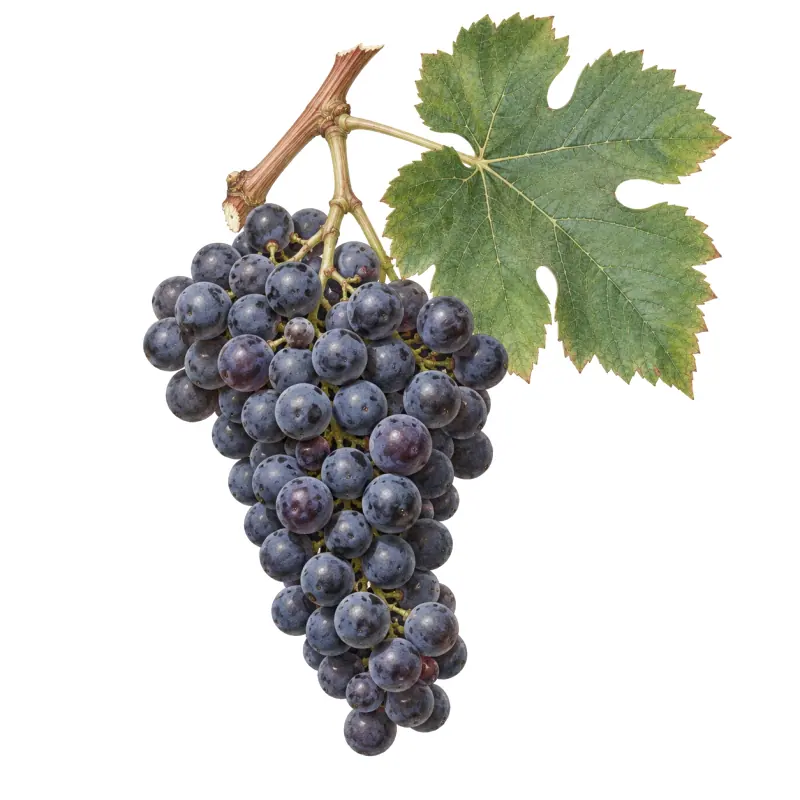
Cornas is a red-wine cru confined to its namesake commune on the Rhône's right bank, opposite Valence. It is the only northern Rhône appellation made from Syrah alone, grown mostly on weathered granite in a south-facing amphitheatre. The specification notes that harvest often begins about a week earlier than at Hermitage, 12 km to the north.
A wine of the Vivarais
The oldest written trace of vines at Cornas itself is the gift of a vine to a canon, about the year 1000, in the cartulary of the abbey of Saint-Chaffre du Monastier. The specification cites wines "of Saint-Péray and Cornas" passing through the river port of Soyons. While the Rhône was a border, the wines went mainly inland on the right bank, carried by muleteers to the Gévaudan, the Velay and Auvergne and traded for wheat. Later the Briare canal opened the Paris market. The mayor F. Michel, H. Astruc of the Gard oenological station and Baron Le Roy, president of the Côtes du Rhône growers' syndicate, are called the founders of the AOC, recognised by decree on 5 August 1938. Local merchants made most of the wine at first; the first bottling for a private cellar came only in 1952.
A granite amphitheatre
The vineyard lies opposite Valence, between Saint-Péray and Saint-Joseph, in an amphitheatre open to the south and protected from the north by the Arlettes, a limestone massif of the Secondary era. Most vines grow on soils weathered from porphyritic Tournon granite, locally called gore. The Arlettes have shed limestone scree on their southern side, notably at Pied-la-Vigne, but this covers only a very small part of the area. On the steep granite slopes small terraces with dry-stone walls, called chaillées, hold the granite sand; Inter Rhône describes these slopes as facing east and south-east. Larger parcels lie on alluvium at the foot of the slopes, and vines have recently spread to hills above 250 m. The climate is temperate, "Lyonnais", strongly modified by the southern exposure and shelter from the north wind.
Dark, powerful, long-lived
The specification describes a very dark colour, garnet to almost black, turning amber with age. The wines are powerful and firmly built, reach their peak after long ageing and are often called "virile". It credits the warm, sheltered granite amphitheatre with early ripening, and with black-coloured wines with abundant but silky tannins and strong aromas. In 1819 a sommelier's manual already described wines "rich in colour, with much body". The specification also reports that "Cornas" means "burnt earth" in Celtic. Inter Rhône notes fruit giving way to spice and leather with age.
One commune, one grape
Cornas is reserved for still red wine from Syrah alone, grown, made and finished in the commune of Cornas. The base yield is 40 hl/ha. The specification sums up its identity as one commune, one grape and mostly granite soils. In 2021 the vineyard covered about 160 ha and produced about 5,000 hl a year. About 60 private cellars work alongside merchants and the nearest cooperative, at Tain-l'Hermitage. Its neighbour Saint-Péray is recognised only for white wine.
How it connects
Wine region
- in Rhône Valley
Grape variety
- grows Syrah