Wine · Wine region · Short entry
Hermitage
Hermitage
Hermitage is a single hill of granite and old river terraces on the Rhône's left bank, mainly in Tain-l'Hermitage with small parts of Crozes-Hermitage and Larnage. It makes red wine from Syrah, white wine from Marsanne and Roussanne, and a little sweet vin de paille. The name comes from hermits documented on the hill from 1598.
Hermits, notables and Jefferson
Roman remains at Tain-l'Hermitage include a taurobolium altar and traces of a temple of Hercules, and the area belonged to the Allobroges, whose wine of Vienne, Allobrogica, ancient authors from Pliny the Elder to Martial name. A story published in 1836 has the knight Henri Gaspard de Sterimberg settle on the hill as its first hermit about 1224; the specification calls it apocryphal, but the town archives record hermits there from 1598, and the hill of Saint-Christophe took the name Ermitage. In the nineteenth century notables built follies among the vines, and Thomas Jefferson in 1791 called Hermitage "the first wine in the world without exception". Replanting after phylloxera began in 1881. Growers founded a protection syndicate in 1930; the Valence court recognised the appellation of origin on 25 June 1936, and the AOC decree followed on 4 March 1937. The hill was listed as a protected site by decree on 5 June 2013.
Granite in the west, terraces in the east
The hill is a fragment of granite massif that the Rhône cut off from the Ardèche mountains, leaving an island of granite in the Drôme. Its southern end, the rock of Pierreaiguille (335 m), marks the western limit of the slope. In the west, granite overlain by mica schist and gneiss weathers into fragile sandy-clay granite sand; Inter Rhône names the Bessards sector here. In the east lie old alluvial terraces of Alpine glacial outwash, the oldest highest, with calcareous loess surviving on the flats at the top of the slope. Running across the valley axis, the hill faces south and is sheltered from north winds by its steep slopes. The specification describes a very warm mesoclimate, with relic olive trees in the Beaumes quarter and no spring frost risk. Syrah grows mostly on the western granite or on alluvium; the white grapes, chiefly Marsanne, on the more calcareous soils.
Red and white reputations
The specification describes reds of intense colour with ripe fruit, spice and undergrowth, powerful and tannic, with good ageing capacity. Whites have strong aromas of white flowers, spice and honey, and a fine balance between acidity and softness without residual sugar. Vin de paille is amber and sweet, with marked alcohol and candied fruit, often with smoke, exotic fruit, vanilla and honey. It credits the very warm mesoclimate with the ripe-fruit, spice and undergrowth notes of the reds, and says Hermitage is the only northern cru whose reputation rests as much on white as on red. Because holdings are scattered across the hill, growers blend complementary soils.
Three wines, one hill
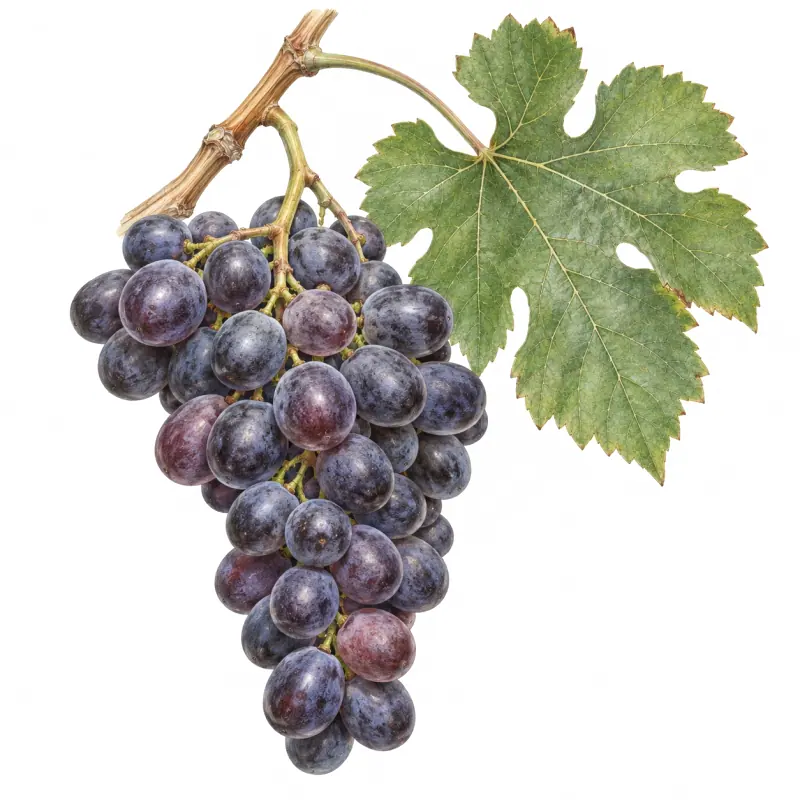
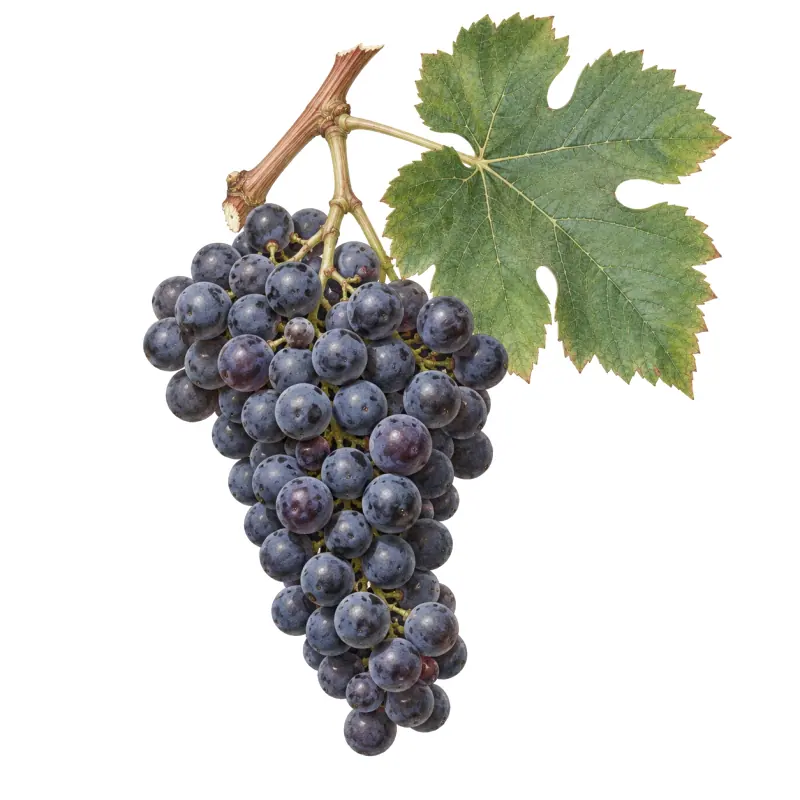
The AOC, which may be written Hermitage, Ermitage or l'Hermitage, covers still red and white wine and white vin de paille. Reds come from Syrah, at least 85% of each holding's vines, with Marsanne and Roussanne allowed only interplanted and up to 15% of the vines. Whites and vin de paille come from Marsanne and Roussanne; for vin de paille the grapes dry naturally for at least 45 days before a slow, incomplete fermentation. Vines are planted at a minimum of 6,000 per hectare. Base yields are 40 hl/ha for red, 45 for white and 15 for vin de paille. In 2009 the hill had 137 ha in production, shared by one cooperative, seven merchants and 17 private cellars, and red was 70% of the wine.
How it connects
Wine region
- in Rhône Valley