Wine · Wine region · Short entry
Côte-Rôtie
Côte-Rôtie
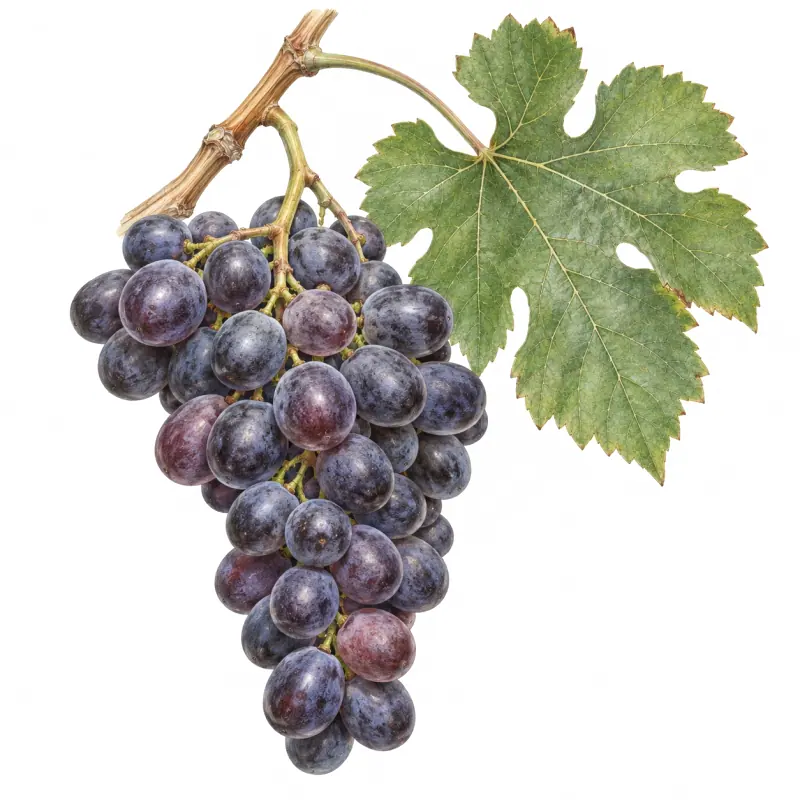
Côte-Rôtie is the northernmost Rhône cru, a red-wine appellation on the right bank across Ampuis, Saint-Cyr-sur-le-Rhône and Tupin-et-Semons. Syrah grows on very steep metamorphic slopes held by terraces and dry-stone walls, with Viognier allowed for up to 20% of the vines. The specification links the name to slopes "roasted" by the sun.
From Allobrogica to the Ampuis wine fair
The specification calls these vines probably among the oldest in the Rhône valley. A mosaic from Saint-Romain-en-Gal, beside the vineyard, dated to the early third century, shows the harvest, treading and the pitching of a jar: the local wine was resinated and known as Allobrogica. In the Middle Ages tolls at Lyon and Mâcon hindered trade north, so in the seventeenth century the wines went to Paris by the Loire. The name Côte-Rôtie is recorded at least from 1698. Phylloxera, the First World War and industry then nearly emptied the slopes; revival began in the 1960s, and by 2010 the vines again covered their pre-phylloxera area. Ampuis and Tupin-Semons entered Côtes du Rhône on 19 November 1937, the Côte-Rôtie AOC followed by decree on 18 October 1940, and Saint-Cyr-sur-le-Rhône was added on 21 December 1966. A wine fair has been held at Ampuis since 1928.
Côte Blonde and Côte Brune
About 40 km south of Lyon, on the eastern edge of the Massif Central, the vineyard covers very steep slopes above the right bank, facing the southern part of Vienne. The specification ties the two historic slopes, separated by the Fontgent stream, to their rock. The Côte Blonde lies mainly on gneiss, weathered into pale siliceous soils, often re-limed by loess from the plateau; its friable clayey sands, called arzel, can only be farmed behind dry-stone walls called cheys. The Côte Brune lies on mica schist, which gives darker, more clay-rich and iron-rich soils, stable enough for narrow terraces called chaillées. Inter Rhône describes mica schist in the north and gneiss and migmatite farther south.
The climate is semi-continental, "Lyonnais", with the last Mediterranean influences reaching up the valley. The north wind, the Bise, is frequent, and the general south-east orientation gives shelter and sun.
Robust and elegant
The specification describes a dark, almost black colour that turns garnet with time, and a nose of black fruit and spice, sometimes violet when Viognier is in the blend. With age come lightly smoky notes of toast, coffee and cocoa, and cooked or candied fruit. The tannins are silky, and rounder with Viognier, which by custom is fermented with the Syrah in small proportion. It credits the Lyonnais mesoclimate, the steep slopes and the metamorphic soils with a red that combines robustness and elegance; vines planted with both grapes are more common on the Côte Blonde.
Red only, with a little Viognier
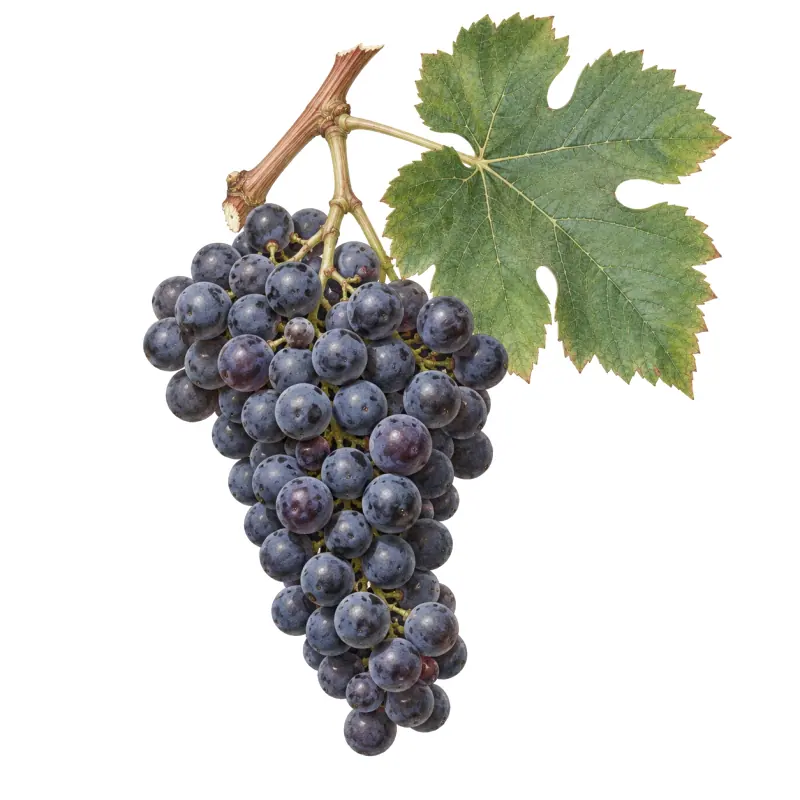
Côte-Rôtie is reserved for still red wine. Syrah is the principal grape and must make up at least 80% of each holding's vines. Viognier is the accessory grape, allowed only interplanted among the Syrah and up to 20% of the vines. Vines are planted at a minimum of 6,000 per hectare, and the base yield is 40 hl/ha. The specification describes hand harvesting as a tradition the growers keep. In 2009 the vineyard covered about 250 ha and produced about 10,000 hl a year, from about 100 producers, some 60 of them with their own cellars.
How it connects
Wine region
- in Rhône Valley