Wine · Wine region · Short entry
Gigondas
Gigondas
Gigondas is a southern Rhône cru confined to its namesake commune below the limestone Dentelles de Montmirail. Red wine is 99% of production, based on Grenache with Syrah and Mourvèdre; rosé and, from the 2023 vintage, white wine from Clairette are also allowed. Vines grow at 160–400 m on slopes facing west and north-west.
From olive groves back to vines
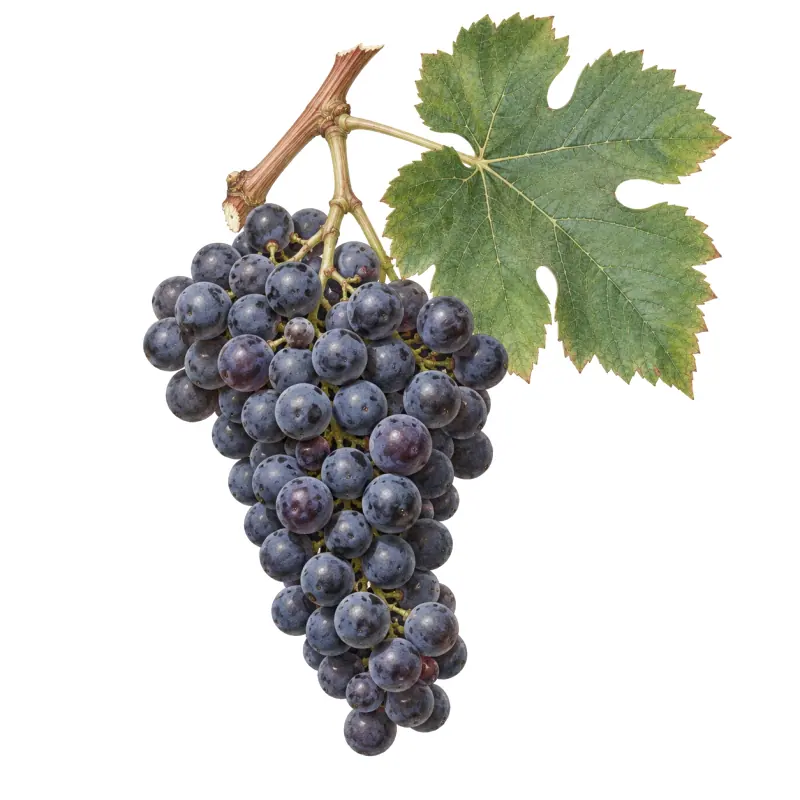
Pliny the Elder, in book XIV of his Natural History, already praised wines from the slopes above the Ouvèze, and local tradition credits soldiers of the Second Legion with the first estates. The monastery of Notre-Dame de Prébayon (611) and the priory of Saint-André were frequented by the bishops of Vaison and Orange. On 30 September 1771 the village council banned picking before the general harvest date. In the nineteenth century vines covered only about 50 ha until Eugène Raspail saw the site's potential; phylloxera then pushed growers toward olives, but the frosts of 1929 and 1956 killed many olive trees and tipped the balance back to vines. Wines were claimed as appellation of origin Gigondas from 1924; the commune entered Côtes du Rhône in 1937, could add its name from 1951, and became a cru by decree on 6 January 1971. The specification links the name to Latin "jucunditas", joy.
Below the Dentelles
The commune is bound to the Dentelles de Montmirail, a limestone ridge reaching 630 m at the Rocher du Turc and, the specification says, the most complex geological structure on the left bank, with Triassic, Jurassic and Cretaceous rocks ringed by Oligocene and Miocene formations. Slopes and valleys descend north-west to a cliff above the Ouvèze, between the Trignon stream to the north and the hills toward Vacqueyras to the south. The upper vineyard lies on sandy and calcareous molasse with skeletal, light, very warm soils that resist drought. The lower vineyard lies on old alluvium with shattered stones on the Ouvèze terraces, mostly red, permeable, stony and clay-rich. Vines grow at 160–400 m, facing west and north-west, which limits excessive summer sun; the slopes stay above the Rhône fogs and spring frosts. The climate is Provençal, with hot summers, a violent Mistral and torrential rain at the equinoxes.
Slow ripening under the ridge
The specification says the Dentelles cut the morning sun and so lengthen Grenache's ripening, which must be gradual. Grenache brings tannin and roundness; Syrah, in moderate amounts, colour, aroma and ageing potential; Mourvèdre spice, complexity and a fit with wood ageing. Reds are ruby to dark garnet, firmly built and generous, with very ripe red and black fruit that turns toward undergrowth and truffle. Rosés are deeply coloured, with almond and cooked small fruit. Whites, mostly Clairette, are pale and brilliant; the specification relates their freshness to slow ripening high up, their minerality to limestone and their saltiness to the Miocene sands.
Grenache reds and Clairette whites
Gigondas covers still red, rosé and white wine from the commune of Gigondas. For reds and rosés Grenache is the principal grape, at least 50% of the vines; with the complementary Syrah, Mourvèdre and Cinsault it must reach 90%, and a long list of accessory grapes follows. Whites take Clairette as principal grape, at least 70%, with complementary Bourboulenc, Clairette Rose, Grenache Blanc, Grenache Gris, Marsanne, Piquepoul Blanc and Roussanne, and up to 5% Viognier and Ugni Blanc. Sorting the harvest is compulsory. Base yields are 36 hl/ha for red and rosé and 40 for white. In 2009 the vineyard covered 1,230 ha and produced 32,500 hl, 80% of it by private cellars.
How it connects
Wine region
- in Rhône Valley
Grape variety
- grows Syrah
- grows Clairette
- grows Garnacha Tinta