Wine · Wine region · Short entry
Priorat
Priorat
Priorat is a qualified designation of origin in the mountains of central Tarragona, about 25 km from the sea, enclosed by the Serra de Montsant. Its vines grow on steep slopes between about 200 and 700 m over Palaeozoic slate called llicorella, with shallow soils and yields near 1 kg per vine. Garnatxa and Carinyena are the recommended red grapes.
The Carthusians of Scala Dei
The specification credits the spread of the vine to the Carthusian monastery of Scala Dei, founded in the twelfth century at the foot of the Montsant. King Alfons I the Chaste asked monks of the order of Saint Bruno to settle in the reconquered district. Seven of today's villages came under the Prior of the house, and its lands became known as the "Priorato". Over the centuries, and especially in the eighteenth and nineteenth, the growth of the vineyard and the intensity of the wine made the area's wines known as unlike those of any other.
The Wine Statute of 1932 recognised Priorat as a wine area to protect, but civil war and the Second World War delayed its application. The first Reglamento of the designation was approved on 23 July 1954 and published in the BOE on 11 August 1954. The rules say that in the last two decades new planting and new growers have revived an area hit by depopulation.
Llicorella in a ring of mountains
Priorat lies in the Prelitoral range in the centre of Tarragona, about 25 km from the sea. The Serra de Montsant closes it to the north, the crests of Lloar and La Figuera to the west, the Serra del Molló to the east. The Siurana river crosses it from north-east to south-west in a winding depression surrounded by mountains. The zone covers 176 km² (17,629 ha), of which 2,429 ha are excluded from vine growing. Vines are planted on steep slopes, often in narrow terraces, that are hard to mechanise.
The hills are Palaeozoic, mainly Devonian and Carboniferous slates formed between 416 and 318 million years ago, among the oldest rocks at the surface in Catalonia. Soils are shallow, usually a single horizon with the rock 10-15 cm down, poor in organic matter and made of broken slate called llicorella, laminar and brittle, dark copper in colour. Roots work between the plates for water. The mean temperature is 14-15 °C and rain 400-500 mm. North-west winds dry the surface quickly.
Concentration from low yields
The specification links steep slopes from about 200 to 700 m, llicorella soils that prevent excess moisture, the shelter of the Montsant, wide day-night swings, cold winters, hot dry summers and low rain to small, weak vines, small concentrated bunches and slow, long ripening. Yields average about 1 kg of grapes per vine. These factors, it says, give the wines concentration, body and structure. Reds are deep dark red with high dry extract and correct acidity for ageing. Wines of the first harvests are clear and bright, with fruit aromas, marked minerality and fresh acidity. The high sugar of some grapes underlies the liqueur wines; the rancios, aged oxidatively in small casks called carratells for at least five years, turn from ruby to brick tones and gain dried-fruit aromas.
Garnatxa, Carinyena and a ladder of origins
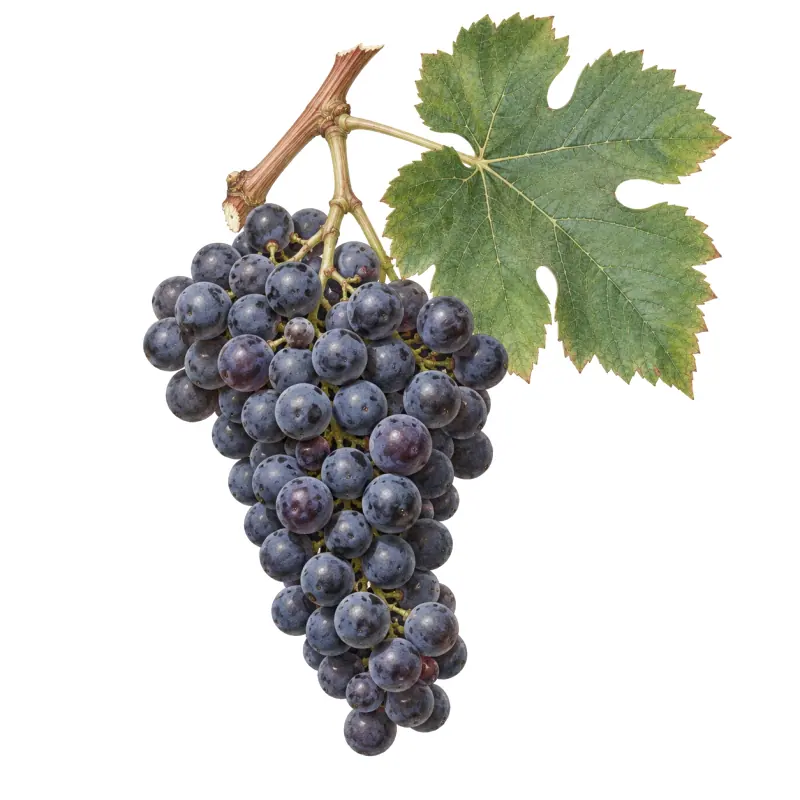
Recommended red grapes are Garnacha Tinta (Garnatxa) and Cariñena (Mazuela or Samsó). Authorised reds are Garnacha Peluda, Cabernet Sauvignon, Cabernet Franc, Ull de Llebre, Pinot Noir, Merlot, Syrah and Picapoll Tinto. Authorised whites include Garnacha Blanca, Macabeo, Pedro Ximénez, Chenin, two Muscats, Pansal, Picapoll Blanco and Viognier. Reds need at least 13.5% alcohol and whites 13%. Maximum yield is 6,000 kg/ha for red grapes.
Labels may name one of twelve villages as "vi de vila", a named site as "vi de paratge", or a registered "vinya classificada" or "gran vinya classificada"; each step lowers the yield, raises the minimum vine age and requires at least 60% (90% for gran vinya) of Carinyena and/or Garnatxa. "Vi de finca" is estate wine. Liqueur wines include rancio, aged at least five years, mistelas and vino dulce natural. Priorat is distinct from neighbouring Montsant.
Classification
- Vi de vilaTwelve villages, among them Gratallops, Porrera, Poboleda, Torroja and Escaladei; 5,000 kg/ha for reds, 90% of vines over 10 years, at least 60% Carinyena and/or Garnatxa.
- Vi de paratgeNamed sites; 4,000 kg/ha for reds and 90% of vines over 15 years.
- Vinya classificada / Gran vinya classificadaSingle registered vineyards; Gran vinya classificada needs 3,000 kg/ha, 80% of vines over 35 years and at least 90% Carinyena and/or Garnatxa.
How it connects
Grape variety
- grows Garnacha Tinta
Continue exploring
- CountrySpain32 entries in the atlas so far
- Grape varietyGarnacha Tinta
- Wine regionBandolBandol, France
- Wine regionBarossa ValleyTanunda, Australia
- Wine regionCannonau di SardegnaSardinia, Italy
- Wine regionChâteauneuf-du-PapeChâteauneuf-du-Pape, France
- Wine regionCorsicaBastia, France
- Wine regionGigondasGigondas, France
- Wine regionLanguedocNîmes, France
- Wine regionPic Saint LoupSaint-Mathieu-de-Tréviers, France