
Wine · Wine region · Short entry
Languedoc
Languedoc
Languedoc is both a broad Mediterranean wine region and a regional AOC that arcs for 200 km along the Gulf of Lion from Nîmes to the Spanish border, across the Aude, Gard, Hérault and Pyrénées-Orientales. First recognised in 1985 as Coteaux du Languedoc, the AOC took its present name in 2007. Its reds are always blends, and geographical names such as Pézenas or Saint-Saturnin can be added.
Greek ports, cooperatives and a federation
The specification dates the vineyard to the Greeks, seven centuries BC, near the ports of Agde, Lattes, Narbonne and Port-Vendres, on a land of passage crossed by the Via Domitia. The wine trade revived in the fourteenth and fifteenth centuries, by sea through Sète, by the Rhône and, from 1680, by the Canal du Midi; the railway later brought vines to the plains. After phylloxera and the crisis of the early twentieth century, cooperatives formed from 1900. Between 1951 and 1955 nineteen historic hillside vineyards became VDQS, and in 1960 many were federated as Coteaux du Languedoc, recognised as an AOC on 24 December 1985. Named areas followed, including Pézenas (2006) and Sommières (2010). A decree of 30 April 2007 renamed the AOC Languedoc and brought in the areas of Cabardès, Collioure, Corbières, Côtes du Roussillon, Fitou, Limoux and Minervois.
From the coast toward the hills
The area arcs along the Gulf of Lion, closed from north-east to south by the Cévennes, the Larzac, the Espinouse, the Montagne Noire and the Corbières. About twenty rivers, among them the Vidourle, Hérault, Orb, Aude, Agly, Tech and Têt, have shaped the relief. Almost every geological stage occurs, from Primary schists to Quaternary alluvium. The commonest settings are old river terraces of the Rhône, the Hérault and the Aude, the schists of the Montagne Noire, the Pyrenees and the Corbières, and limestones. Whatever the rock, the soils are poor, stony and well drained, with limited water spread at depth. The climate is Mediterranean, with a marked summer drought and rain in autumn, sometimes torrential, and spring; rainfall rises from about 400 mm on the coast to 900 mm in the foothills. The Mistral blows in the east, the Cers and Tramontane in the west, and sea air tempers the summer heat.
Ripe tannins, round whites
The specification links the soils, the summer water shortage during ripening, the parcel delimitation and moderate yields to a family of wines marked by their setting. Reds, always blends, have medium to deep colour, red and black fruit through to spice and roasted notes, and firm, ripe tannins, keeping on average two to five years; those with a geographical name are more concentrated and need ageing. Rosés, mainly from Syrah, Cinsault and Grenache, are bright and round. Whites are dry and round, with exotic fruit, citrus, white flowers or dried fruit. It credits the hot, dry climate with ripe tannins in the reds.
A regional AOC with local names
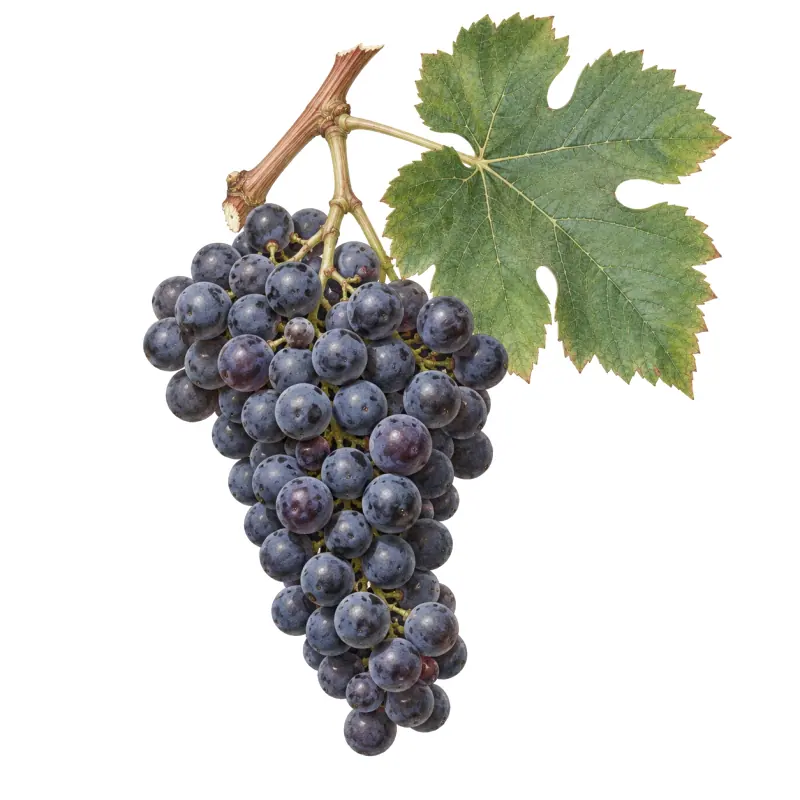
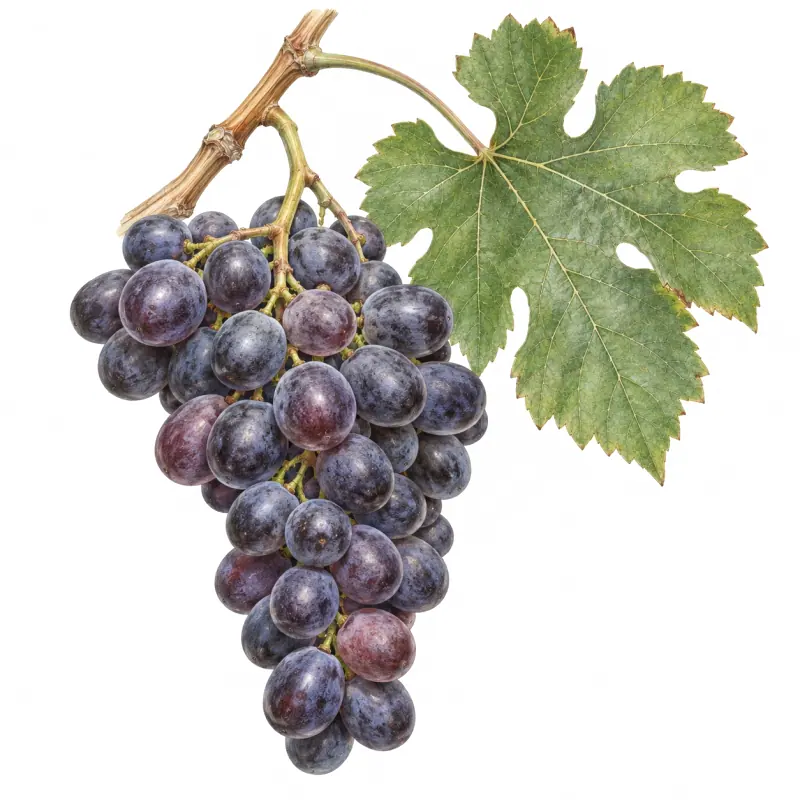
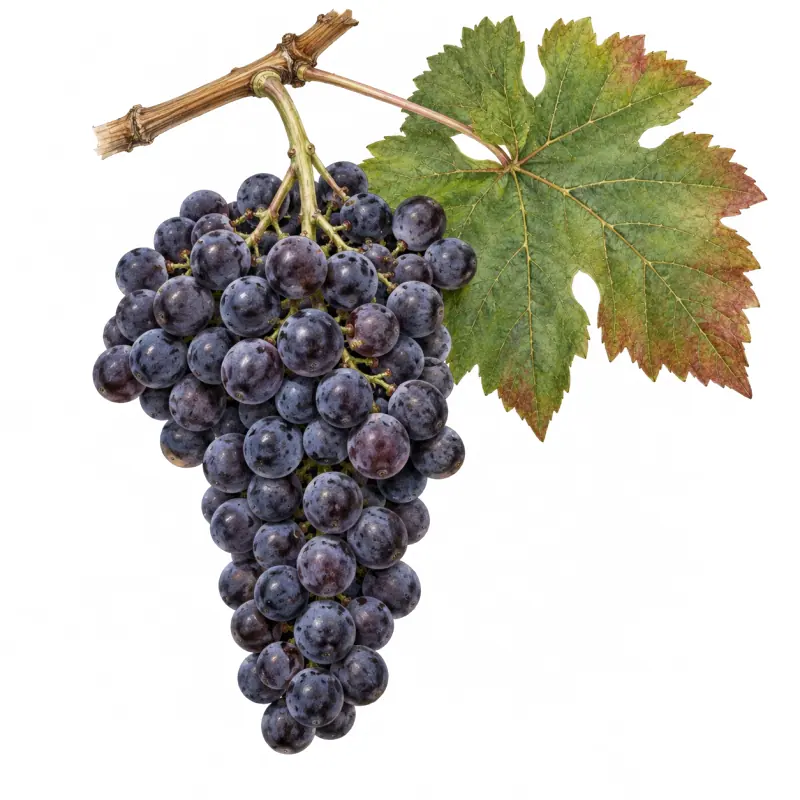
The Languedoc AOC covers still red, rosé and white wine. Reds and rosés have Grenache, Lledoner Pelut, Mourvèdre and Syrah as principal grapes, with Carignan, Cinsault, Counoise and others as accessories. Whites have Bourboulenc, Clairette, Grenache Blanc, Marsanne, Piquepoul Blanc, Roussanne, Tourbat and Vermentino as principal grapes. Vines are planted at a minimum of 4,000 per hectare. Base yields are 50 hl/ha for red, 54 for rosé and 60 for white. Nine geographical names may be added under stricter rules: Cabrières, La Méjanelle, Pézenas, Quatourze, Saint-Christol, Saint-Drézéry, Saint-Georges-d'Orques, Saint-Saturnin and Sommières. The delimited parcels cover less than a third of the region's vineyard. Separate appellations, such as Pic Saint Loup, have their own rules.
How it connects
Grape variety
- grows Syrah
- grows Cinsaut
- grows Clairette
- grows Marsanne
- grows Roussanne
- grows Garnacha Tinta
- grows Monastrell
- grows Vermentino
- grows Bourboulenc
- origin Alicante Bouschet
- grown in Aramon
Recipe
- pairs with Cassoulet
Wine region
Continue exploring
- CountryFrance162 entries in the atlas so far
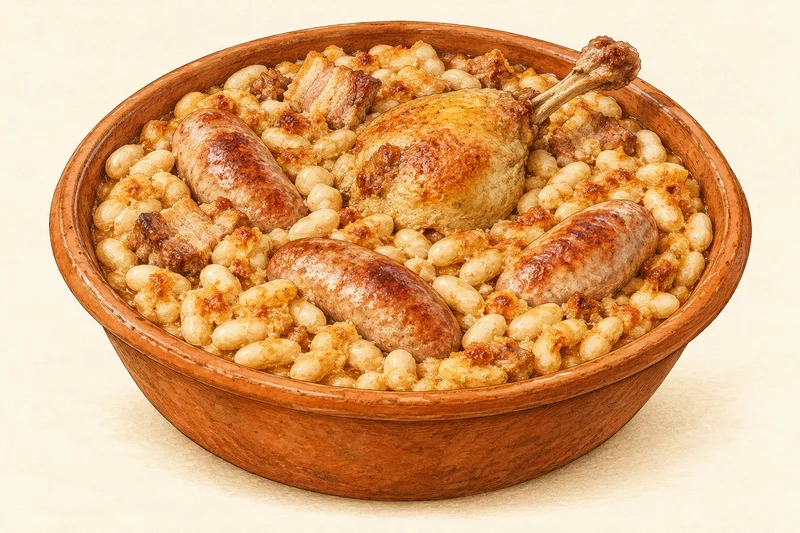 RecipeCassouletCastelnaudary, France
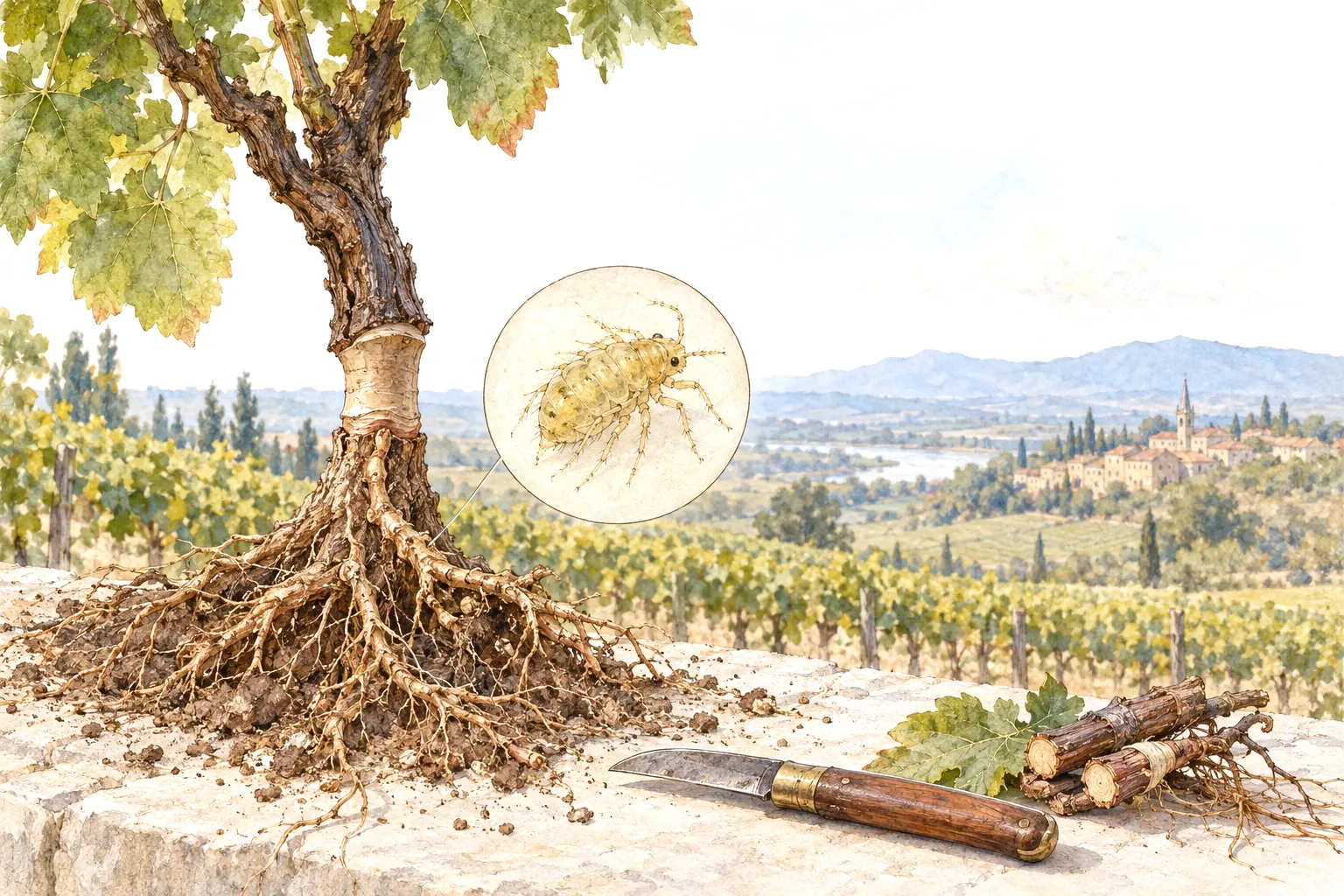 StoryPhylloxera: the insect that remade the vineyards of the worldFrance
- Grape varietyAlicante Bouschet
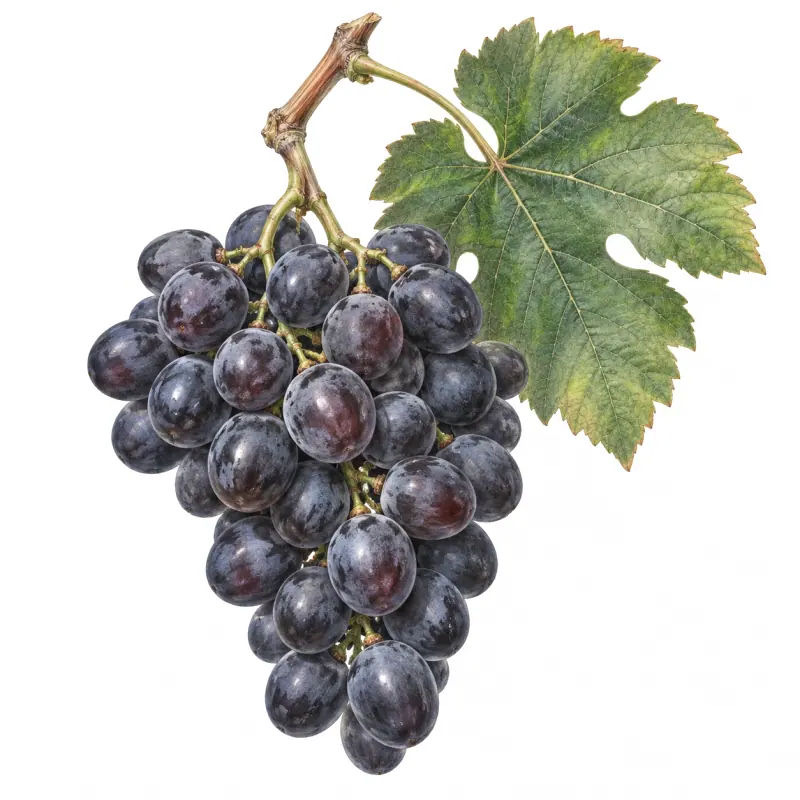 Grape varietyAramon
- Grape varietyBourboulencFrance
- Grape varietyCinsaut
- Grape varietyClairetteFrance
- Grape varietyGarnacha Tinta
- Grape varietyMarsanneFrance