
Wine · Wine region · Reference page
Piedmont
Piemonte
The hill country of north-west Italy, closed by the Alps to the north and west and the Ligurian Apennines to the south. It has more DOCG wines than any other region, almost all from native grapes such as Nebbiolo, Barbera, Dolcetto, Moscato and Cortese. About 90% of its vineyards lie in the hills south of the Po.

Phylloxera, research stations and the Alba school
According to the Piemonte DOC rules, vines have been grown in Piedmont since Roman times, and records are plentiful from the Middle Ages. At the turn of the nineteenth and twentieth centuries Piedmont was the first wine-producing region of Italy. The present shape of its vineyards owes most to the nineteenth century, when powdery mildew, downy mildew and then phylloxera arrived. Piedmont was among the first regions hit by phylloxera, from 1879, and it took more than a decade to adopt American rootstocks. Replanting kept the old varietal choices, although minor local grapes gave way to Barbera and other proven varieties.
Research followed: the Stazione Enologica of Asti (royal decree of 18 January 1872) and the experimental station of Gattinara (17 May 1872). In 1881 a school of viticulture and oenology opened at Alba with a hill farm of about six hectares; its first director, Domizio Cavazza, also spread new techniques among growers. In 2014 UNESCO inscribed the Vineyard Landscape of Piedmont: Langhe-Roero and Monferrato.
Hills between two mountain chains
Piedmont is bounded by the Alps to the north and west and by the Ligurian Apennines to the south, a short distance from the Mediterranean. To the east it has no natural border, apart from stretches of the Po. The Alps shelter it from north-westerly air, which makes it the least rainy region of the North. About 90% of the vineyards lie in the hills south of the Po, the rest in the pre-Alpine strip between mountain and plain, between about 100 and 600 m; the flat land is excluded from the Piemonte DOC.
In the Langhe, Roero and Monferrato the hills are marine sediments: marls, sands and sandstones. In the north the rock is mostly metamorphic. In both, erosion keeps renewing the soil, which stays young (Entisols and Inceptisols), drains well, holds enough water for summer and keeps slopes clear of cold valley air. Soils run from sandy loam to silty clay loam, are often calcareous and are poor in potassium and organic matter. Winters are cold, summers dry and often above 35 °C, with 700-900 mm of rain.
Poor hill soils, ripe tannins
The Piemonte DOC rules say the whole territory suits red wine: soils of varied origin but all of low fertility, on hills with limited rain, let the grapes ripen fully, including their phenolic compounds. The reds are bright red, from violet to garnet according to the grape, with red-fruit aromas and moderate to marked acidity; tannin ranges from light (Barbera) to strong (Albarossa, Freisa). The cool, temperate conditions give whites of straw colour with fresh aromas and pronounced acidity. In autumn the hills have wide day-night swings and an evening air circulation that keeps away the fog common on the Po plain, conditions the rules link to the drying of grapes for passito wines.
Native grapes and a dense hierarchy
Native varieties dominate. The best hill zones, the Langhe and Monferrato, grow almost only Barbera, Moscato, Dolcetto, Nebbiolo and Cortese; old grapes such as Avanà, Bequet and Avarengo survive in the Alpine valleys, and Chardonnay, Merlot and Cabernet Sauvignon are grown in suitable places. The Ministry's list counts 19 DOCG, among them Barolo, Barbaresco, Roero, Asti and Gavi.
The Piemonte DOC, approved in 1994, is the broad base. It allows whites (at least 10% alcohol), reds (at least 11%), rosés, spumante and frizzante made by refermentation in tank, and passito wines from grapes dried on the vine or in lofts.
Classification
- DOCG19 DOCG, among them Barolo, Barbaresco, Roero, Asti, Gavi, Barbera d'Asti, Nizza, Alta Langa, Gattinara, Ghemme and Dogliani.
- DOCAbout forty DOC, from the Piemonte DOC (1994), which covers all the region's vine-growing hills, to small ones such as Alba and Albugnano.
How it connects
Wine region
- subregion Barolo
- subregion Barbaresco
- subregion Roero
- subregion Asti and Moscato d'Asti
- subregion Gavi
Grape variety
- grows Nebbiolo
- grows Barbera
- grows Dolcetto
- grows Cortese
- grows Chardonnay
- grown in Grignolino
- grown in Freisa
- grown in Arneis
- grown in Erbaluce
Breed
- related Piemontese
Pasta shape
- related Tajarin
Recipe
- origin Panna cotta
Continue exploring
- CountryItaly107 entries in the atlas so far
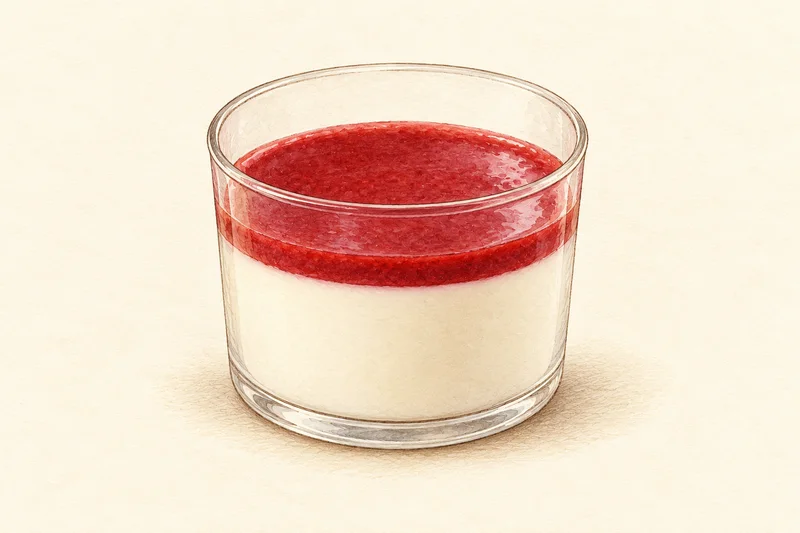 RecipePanna cottaPiedmont (Langhe), Italy
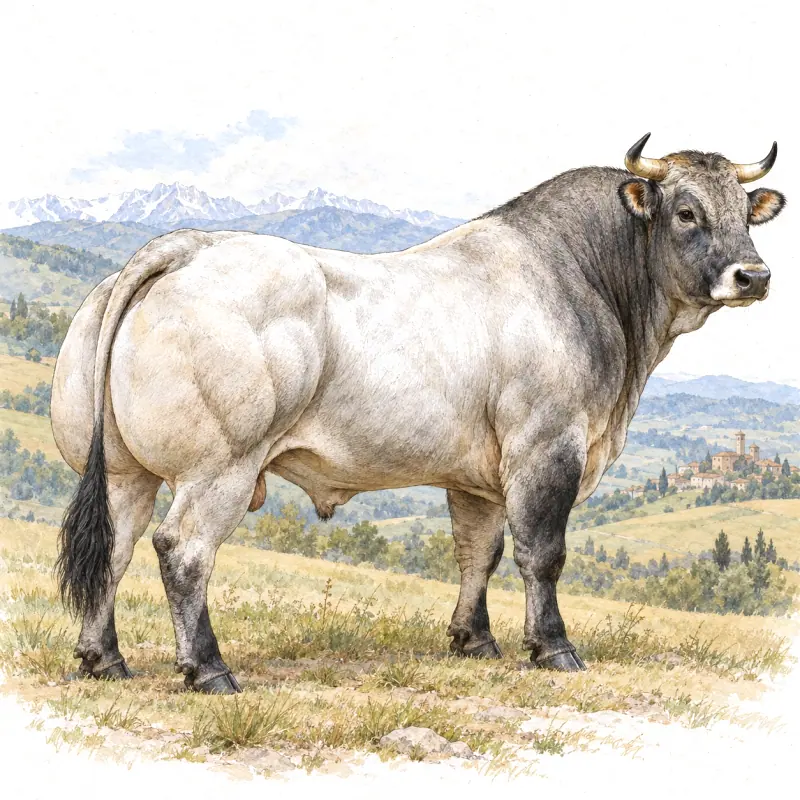 BreedPiemonteseCarrù (breed society seat), Italy
 Pasta shapeTajarinLanghe, Italy
- Wine regionBaroloBarolo, Italy
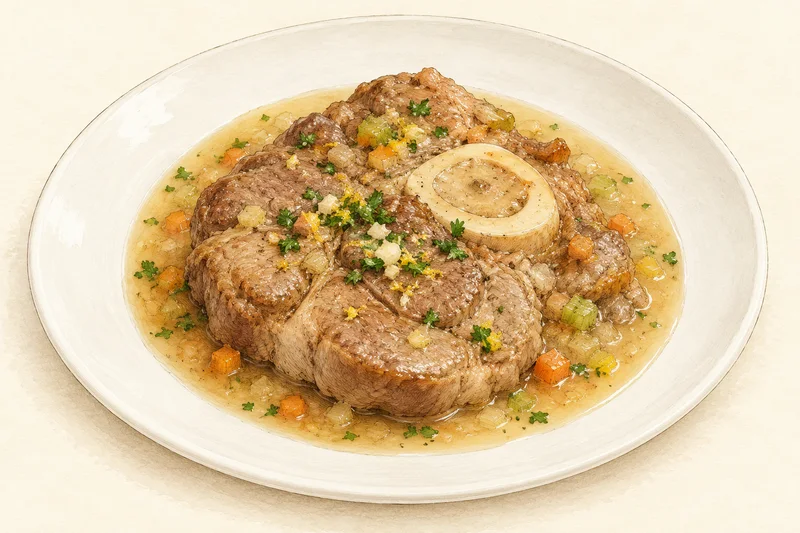 RecipeOssobuco alla milaneseMilan, Italy
- Grape varietyArneis
- Grape varietyBarbera
- Grape varietyChardonnay
- Grape varietyCortese