
Wine · Wine region · Short entry
Roero
A DOCG on the left bank of the Tanaro, opposite the Langhe, for red wine from Nebbiolo and white wine from Arneis. Its sandy soils and steep eroded cliffs, the rocche, set it apart from the marls across the river.
A difficult white and a hill called Renesio
The production rules record Arneis on the Roero hills since the 1400s. They give two explanations for its name. One says local growers likened the character of the wine to a dialect word for a surly, unreliable, irritable person. Other sources trace it to renexij, the fifteenth-century name of the grape, taken from the Bric Renesio, a hill behind the village of Canale.
The rules credit the growers' persistence on very steep, broken slopes that demand much work, and their later use of zoning studies to keep only well-oriented hill sites. Roero was approved as a DOC by presidential decree of 18 March 1985 and became a DOCG on 7 December 2004.
The rocche and the captured river
Roero lies on the left bank of the Tanaro in 19 communes of the province of Cuneo. Canale, Corneliano d'Alba, Piobesi d'Alba and Vezza d'Alba are wholly inside the zone; fifteen others, such as Guarene, Montà and Santo Stefano Roero, are partly inside.
The landscape is marked by the rocche, steep eroded cliffs. The rules link them to the "capture of the Tanaro", a change in the river's course caused by movement of the earth's crust. It exposed alternating layers of sand, clay and limestone, mixed differently from place to place, laid down long ago on the crystalline floor of an inland sea later called the Golfo Padano. Vineyards are on hills. Red vines face south and may not face north; white vines may also face north. The dry sandstones where Arneis grows are soft and permeable, with sandy layers broken by marl.
Sand for elegance, clay for colour
The rules tie style to the mix of soils: where sand dominates, the wines are fresh and elegant with delicate scents; clay adds colour and limestone aromatic finesse. Nebbiolo, planted mainly on the steeper, poorer, sandier south-facing slopes, gives bright ruby wine that turns garnet with age, with cherry, morello cherry, raspberry, blackberry and blackcurrant, and velvety tannins or spice in the Riserva. Arneis on the sandstones gives fine, elegant scents of white flowers, apple, peach or hazelnut. Its spumante is delicate, fruity and fresh, with acidity that the rules credit to day-night swings and cooler slopes.
Nebbiolo and Arneis
The red Roero is at least 95% Nebbiolo. It ages at least 20 months from 1 November of the harvest year, 6 of them in wood, and the Riserva 32 months, also with 6 in wood. Roero Arneis is at least 95% Arneis; the basic wine has no minimum ageing, a wine with a geographical mention needs 4 months and a Riserva 16 months. Arneis is also made as a quality sparkling wine, from brut nature to sweet. Whites range from straw yellow to golden.
Classification
- Roero (red)20 months' ageing from 1 November of the harvest year, at least 6 in wood; Riserva 32 months, at least 6 in wood. New red vineyards may not face due north.
- Roero ArneisNo minimum ageing for the basic wine; with a geographical mention 4 months; Riserva 16 months.
How it connects
Continue exploring
- CountryItaly107 entries in the atlas so far
- Wine regionPiedmontAlba, Italy
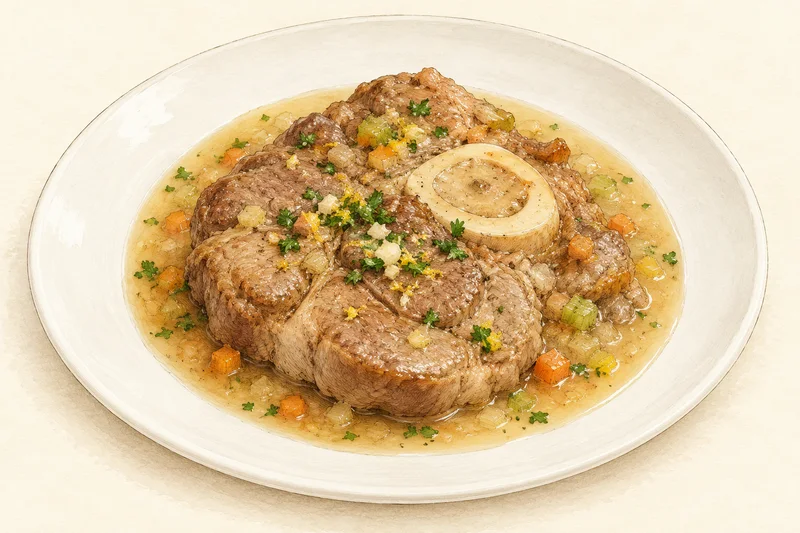 RecipeOssobuco alla milaneseMilan, Italy
- Grape varietyArneis
- Grape varietyNebbiolo
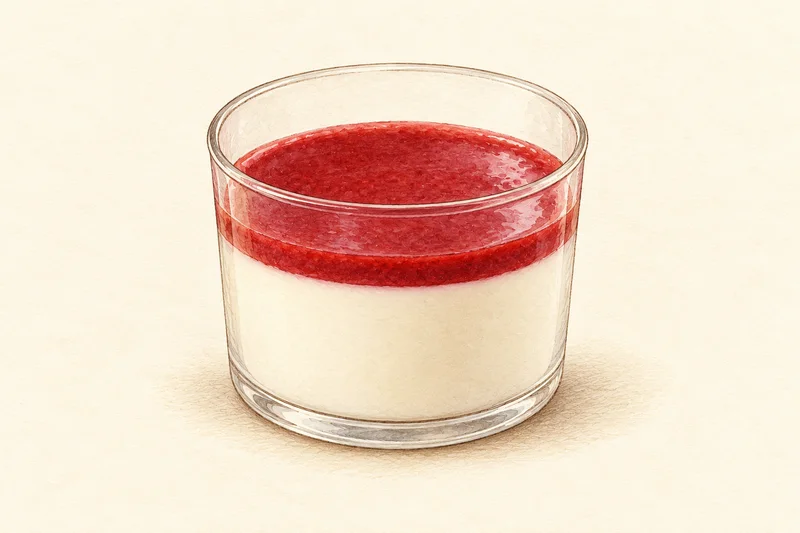 RecipePanna cottaPiedmont (Langhe), Italy
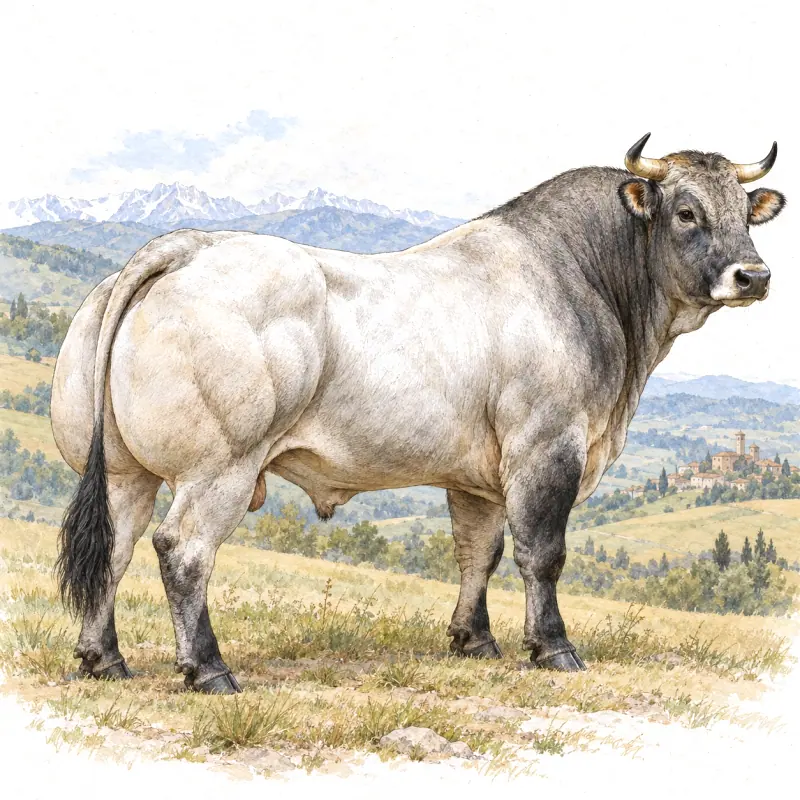 BreedPiemonteseCarrù (breed society seat), Italy
 Pasta shapeTajarinLanghe, Italy
- Wine regionBaroloBarolo, Italy
- Wine regionLombardyBrescia, Italy