
Wine · Wine region · Short entry
Itata Valley
Valle del Itata
The Itata Valley is a subregion of Chile's Sur viticultural region, made up of eleven communes of the Ñuble Region and Florida in the Biobío Region. INDAP describes small family vineyards, averaging 1.5 ha, of old dry-farmed, head-trained vines on granitic soils about 50 km from the Pacific. País, Moscatel de Alejandría and Cinsault are its traditional grapes.
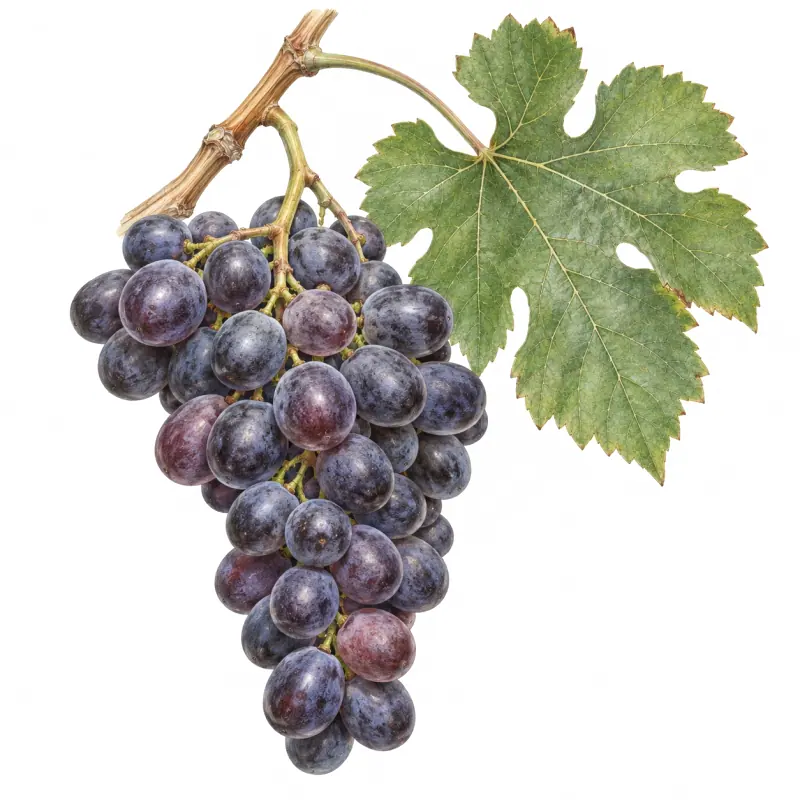
A colonial vineyard sidelined and revived
INDAP's 2025 guide says vines have been grown in Itata since the 16th century, when Jesuit monks arrived during the Spanish conquest, and that its wines were valued throughout the colony. Wines of Chile adds that the name means 'abundant grazing' in Mapudungun, from the Mapuche who lived there before the conquerors. In the 19th century the arrival of French 'noble' varieties displaced the colonial grapes and left Itata on the margin for more than a century. Cinsault, locally 'cargadora', is said to have been planted widely after the 1939 Chillán earthquake, although the researcher Álvaro Tello places it in the valley some years earlier. In 2002 the Secano Interior denomination gave País and Cinsault an official link to the area. In the 2000s the French winemaker Louis-Antoine Luyt drew attention to the old vineyards. The 2025 guide was made with 42 wines from small INDAP-supported growers.
Granite hills of the coastal range
Decree 464 defines the subregion as the communes of Chillán, Coelemu, Ránquil, Quillón, Portezuelo, Ninhue, Treguaco, Quirihue, San Nicolás, Bulnes and San Carlos in Ñuble, plus Florida in Concepción province. INDAP places the valley around the 36th parallel, on the rolling hills of the Coastal Range, with the Pacific about 50 km away. Old vineyards on the coastal dry land grow without technified irrigation on soils poor in organic matter but rich in minerals; the guide names the dry lands of Quirihue, Ninhue, Trehuaco, Coelemu, Portezuelo, Ránquil and Quillón, with granitic soils high in quartz and iron and of silty-sandy loam texture. Guarilihue in Coelemu lies only 20 km from the coast. Rainfall has dropped from about 1,000 mm to 600-700 mm a year, now mostly in winter and spring, and sea breezes help dry the vines. Wines of Chile describes a humid Mediterranean climate with lower temperatures than other valleys and sandy granitic soils.
Fresh, light and unadorned
INDAP attributes the character of Itata wines to old vines, a Mediterranean climate with coastal influence and granitic soils, and describes them as fresh, light and honest. It describes País as low in phenolics, with somewhat rustic tannins and good acidity, able to give fresh, light wines of strong fruit; Cinsault from the granitic soils of Guarilihue as medium-bodied and juicy, with light tannins and notes of cherry, raspberry and dried herbs; and Moscatel de Alejandría as a grape of good natural acidity, pleasant sweetness and aromatic richness.
País, Moscatel and Cinsault
The decree names four areas within the subregion: Chillán, Quillón, Portezuelo and Coelemu. Portezuelo and Coelemu may add 'Costa' and Chillán and Quillón 'Entre Cordilleras'. Under the Secano Interior denomination, País or Cinsault from the dry-farmed parts of these areas, or of communes such as Ninhue, Quirihue, Ránquil, Treguaco, San Nicolás and Bulnes, may carry that name. Wines of Chile lists País (3,877 ha), Moscatel de Alejandría (3,675 ha), Cinsault (831 ha), Cabernet Sauvignon (754 ha), Chasselas (250 ha) and Chardonnay (211 ha). INDAP, citing the SAG's 2023 census, gives 3,640 ha of País in the valley, 3,519 ha of wine Moscatel de Alejandría in the Ñuble Region and 857 ha of Cinsault there.
Classification
- Subregion Valle del Itata (DO)Areas Chillán, Quillón, Portezuelo and Coelemu; Costa for Portezuelo and Coelemu, Entre Cordilleras for Chillán and Quillón.
- Secano InteriorFor País or Cinsault from the dry-farmed parts of Chillán, Quillón, Portezuelo, Coelemu and listed communes.
How it connects
Continue exploring
- CountryChile6 entries in the atlas so far
- Grape varietyCinsaut
- Wine regionChileChile (national overview), Chile
- Grape varietyCabernet Sauvignon
 Grape varietyCarmenère
- Wine regionBandolBandol, France
- Wine regionCasablanca ValleyCasablanca, Chile
- Wine regionColchagua ValleySanta Cruz, Chile
- Wine regionLanguedocNîmes, France
- Wine regionMaipo ValleyBuin, Chile