
Wine · Grape variety · Short entry
Carmenère
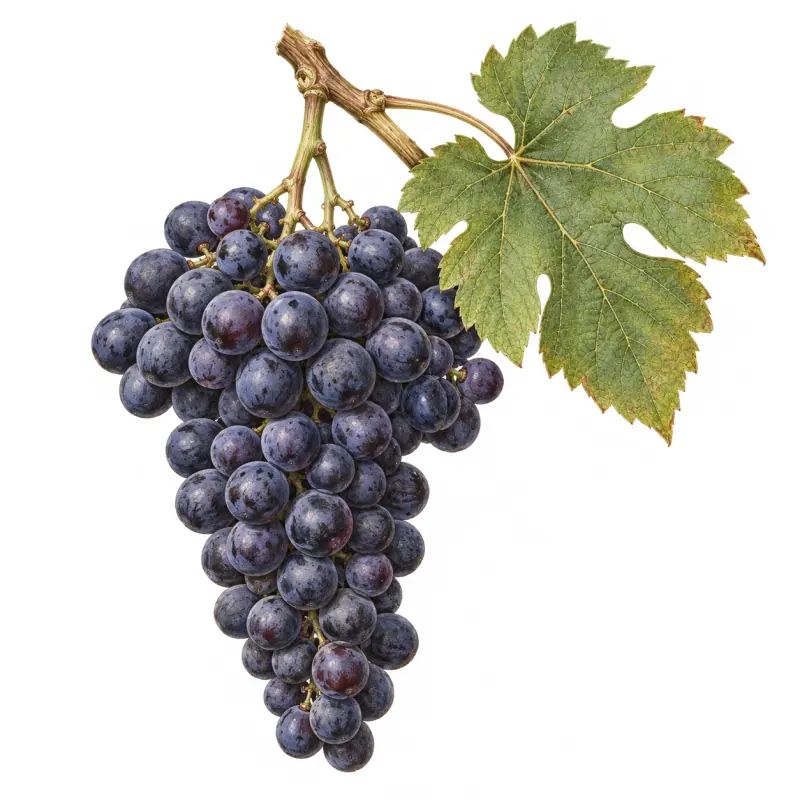
An old Bordeaux black grape, related to Cabernet Franc, that fell out of use in Bordeaux from the late 19th century. It survived in Chile, mixed into vineyards sold as Merlot, until an ampelographer identified it there in 1994. It gives rich, deeply coloured wines that taste herbaceous unless fully ripe.
Family and decline
Pl@ntGrape calls Carmenère a descendant of Cabernet Franc. Boursiquot and colleagues (2009) proposed Gros Cabernet × Cabernet Franc; VIVC notes that different pedigrees have been proposed. In the Médoc it was among the small-berried varieties planted after the Great Winter of 1709, but fell out of use from the late 19th century. French plantings stayed tiny: 15 ha in 1958, 7 ha in 2000 and 78 ha in 2018.
Found again in Chile
On 24 November 1994, during a visit to the Maipo Valley, the French ampelographer Jean-Michel Boursiquot identified vines at Viña Carmen in Alto Jahuel, known locally as Merlot, as Carmenère. French experts had doubted the Chilean "Merlot" before, in 1979 and 1991. The wine from that block was bottled as Grande Vidure. OIV counted 11,000 ha in Chile in 2015, 5.1% of the vineyard, among the fastest-growing varieties there.
How it connects
Grape variety
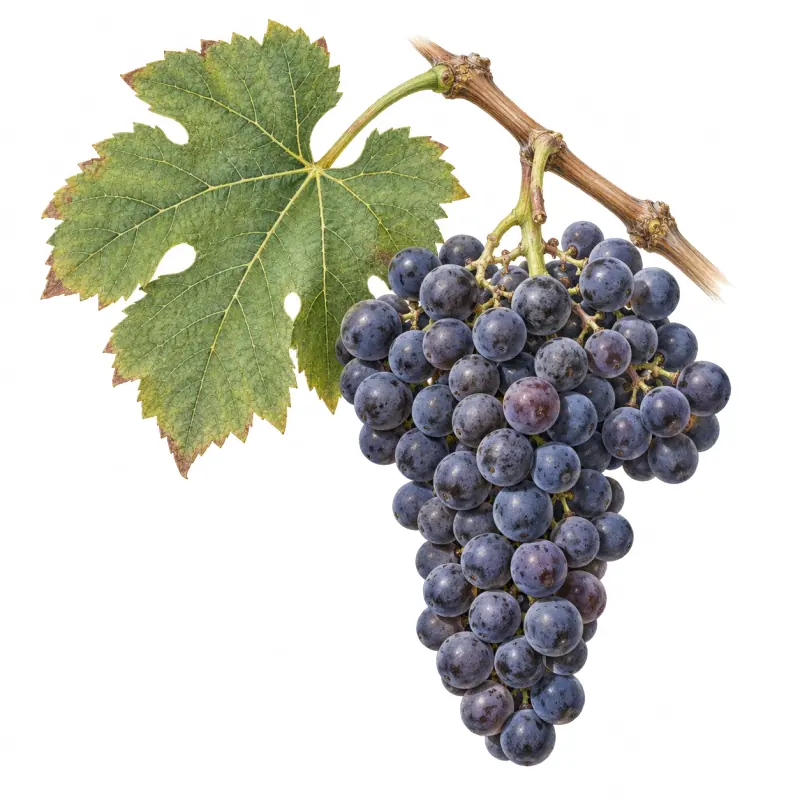
- offspring of Cabernet Franc
Wine region
- grown in Bordeaux
- grows Chile
- grows Maipo Valley
- grows Colchagua Valley
- grows Maule Valley
- grows Ningxia
Continue exploring
- Wine regionBordeauxBordeaux, France
 Grape varietyCabernet Franc
- Wine regionChileChile (national overview), Chile
- Wine regionColchagua ValleySanta Cruz, Chile
- Wine regionMaipo ValleyBuin, Chile
- Wine regionMaule ValleyTalca, Chile
- Wine regionNingxiaYinchuan, People's Republic of China
 RecipeCèpes à la bordelaiseBordeaux, France
 StoryThe 1855 Bordeaux classificationBordeaux, France
 StoryThe Judgment of Paris, 1976Paris, France