Wine · Wine region · Short entry
Moulin-à-Vent
Moulin-à-Vent
Moulin-à-Vent is a Beaujolais cru for red Gamay, spanning Romanèche-Thorins and Chénas on pink granite sand laced with manganese. Its name comes from the historic windmill overlooking the vineyard, rather than from a commune. It is known for structured wines that can keep for many years.
From "Thorins" to Moulin-à-Vent
The specification cites Suzanne Blanchet on vines between the Mâconnais and the Lyonnais from the first century, and wine in amphorae going down the Saône to Lyon in the third. The vineyard grew from the late fifteenth century with money from the silk and banking families of Lyon. The national archives of 1722 name Romanèche as one of the four places in the Mâconnais that shipped the most barrels to Paris, and Jullien placed Moulin-à-Vent in his first class in 1816.
The windmill on the hill of Romanèche-Thorins, which the specification dates to 1550, ground grain until the mid-nineteenth century and is a listed historic monument. Until 1924 the wines were sold as "vins des Thorins". A judgment of the Mâcon court on 17 April 1924 fixed the limits for wines named "Thorins or Moulin-à-Vent", and the AOC was recognised by the decree of 11 September 1936, after which the name Thorins was dropped.
Granite, manganese and wind
The area lies on the eastern flank of the Monts du Beaujolais, mainly on the Montagne de Rémont (510 m) and the terraces facing the Saône plain, 15 km south-west of Mâcon. It covers Chénas, in the Rhône, and Romanèche-Thorins, in Saône-et-Loire. Steep slopes above Chénas give way to gentler slopes and terraces toward Romanèche, from 190 to 420 m. About 80% of the soils are pink, crumbly sand weathered from granite, locally called "grès" or "gore". In the south and east they form on colluvium mixed with gravel. Veins in the granite spread iron and manganese oxides through the soil; France's largest manganese deposit was found at Romanèche around 1750 and mined until the nineteenth century. Inter Beaujolais adds small areas of limestone, marl and sandstone and counts 71 lieux-dits.
The climate is oceanic with continental and southern influences and a mean of about 11 °C. Inter Beaujolais notes strong, regular winds, recalled by the windmill.
What the place gives the wine
The specification describes deep ruby to garnet wines with floral notes and ripe red fruit, moving with age to spice, truffle and even venison. They are generous and structured, and gain finesse and power after several years. It credits the low fertility of the granite with moderate yields and fruity aromas; it presents the old belief that manganese gives the wine its character as a story, not as a finding. Inter Beaujolais adds that poor granite and strong winds stress the vines, so Gamay gives small berries and concentrated wines. Some cuvées keep for more than fifteen years.
Grapes and classification
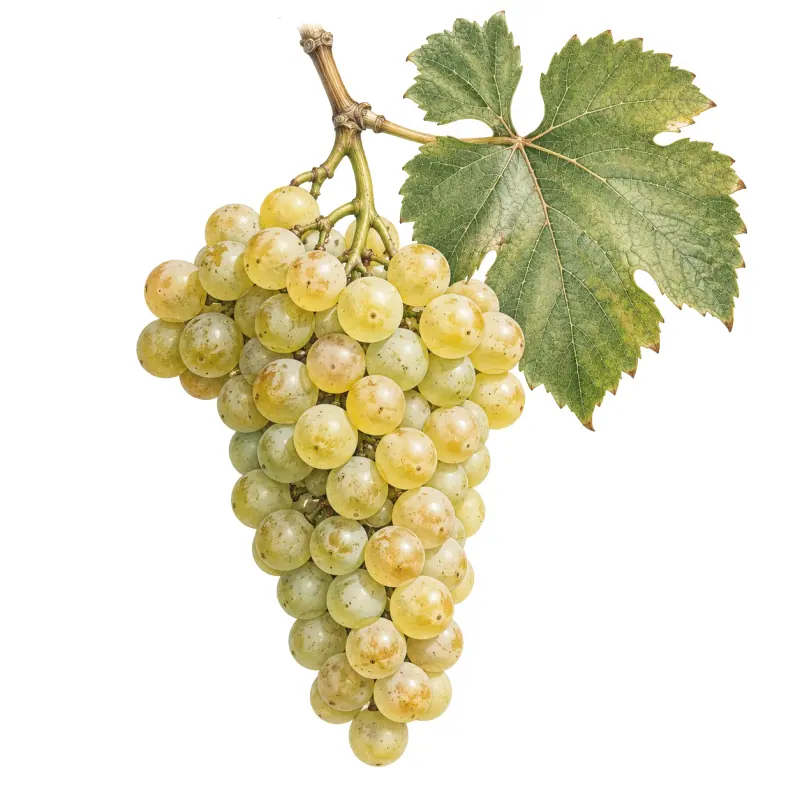
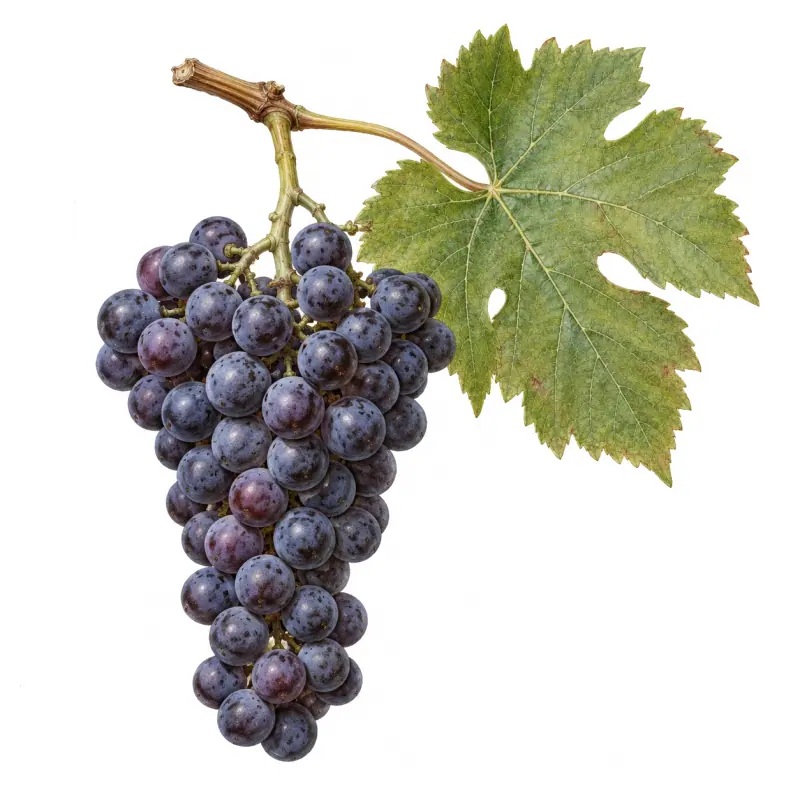
Moulin-à-Vent is reserved for still red wines. Gamay is the main grape; Aligoté, Chardonnay and Melon are allowed as accessory varieties, only interplanted and limited to 15% of each plot. Growers combine traditional fermentation with semi-carbonic maceration. The specification gives about 650 ha in 2010; Inter Beaujolais gives 620 ha harvested over 71 lieux-dits, including Les Thorins, Rochegrès and La Rochelle. Site, producer and vintage create variation, and the most famous lieux-dits often appear on labels.
How it connects
Wine region
- in Beaujolais
Grape variety
- grows Gamay
Continue exploring
- CountryFrance162 entries in the atlas so far
 RecipePommes de terre à la lyonnaiseLyon, France
- Grape varietyGamay
- Wine regionBeaujolaisBeaujeu, France
 StoryThe Cistercians and the Clos de VougeotVougeot, France
 Grape varietyPinot Noir
- Wine regionBurgundyBeaune, France
- Wine regionAnjouAngers, France
- Wine regionMâconnaisMâcon, France
- Wine regionMorgonVillié-Morgon, France