Wine · Wine region · Short entry
Rioja
Rioja
Rioja is a qualified designation of origin (DOCa) on both banks of the upper Ebro in northern Spain, spread over La Rioja, Álava and Navarra. Its rules divide it into Rioja Alta, Rioja Alavesa and Rioja Oriental, where Atlantic and Mediterranean climates meet. In 1991 it became the first Spanish designation to be granted the 'Calificada' rank.
From the 1102 charter to the first DOCa
The Rioja specification traces legal recognition of the region's wines to 1102, when King Sancho of Navarre acknowledged them, and the first document on protecting their quality to 1650. In 1787 the Real Sociedad Económica de Cosecheros de Rioja was founded to promote vine growing, winemaking and trade. A Royal Order of 1902 defined the "origin" of Rioja wines, and in 1925 their certification as coming from the region began, which the rules say makes Rioja, with Jerez, the oldest designation of origin in Spain. A Consejo Regulador was decreed in 1926 but only took legal shape in 1945 and was constituted in 1953. The Reglamento of 1970 gave it defined powers. On 3 April 1991 a ministerial order made Rioja the first "Calificada" designation in Spain. Sparkling wine also has a past: wines "made by the Champagne method" were shown at Madrid in 1857, and in 1890 a Haro firm hired a cellar master from Reims.
Three zones on the upper Ebro
The production zone lies on both banks of the Ebro in the north of Spain. About 100 km separate Haro, the westernmost town, from Alfaro, the easternmost, and the valley planted with vines is up to about 40 km wide, rising in stepped terraces to about 700 m. The 63,593 ha of protected vineyard lie in 144 municipalities of La Rioja, Álava and Navarra. The council describes a west-to-east sequence of valleys and tributaries.
Atlantic and Mediterranean climates meet here, giving mild temperatures and a little over 400 mm of rain a year. Rioja Alavesa has mostly Atlantic influence and clay-limestone soils on terraces and small plots. Rioja Alta is also mainly Atlantic, on clay-limestone, ferrous clay and alluvial soils. Rioja Oriental is drier and warmer under Mediterranean influence, mostly on alluvial and ferrous clay. The typical soil has a balanced texture, is slightly alkaline, poor in organic matter and holds moderate water in summer. The Sierra de Cantabria shelters the north.
Acidity in the west, warmth in the east
The specification names medium to high alcohol and acidity, full body and good colour as the qualities most shaped by the place. It ties them to zone. Rioja Alta, with fewer hours of light, more rain and the shelter of the Sierra de Cantabria, gives wines of medium alcohol with high body and acidity, suited to barrel ageing. Rioja Alavesa gives a little more alcohol and less acidity, wines for drinking young or for ageing. Rioja Oriental, drier and sunnier, gives higher alcohol and extract, useful in blends for barrel ageing. Clay-limestone soils are called the main source of wines for ageing, while alluvial and ferrous clay soils give lighter-bodied wines. The cool position on the Winkler scale is said to give the freshness and acidity needed for sparkling base wine.
Grapes and ageing terms
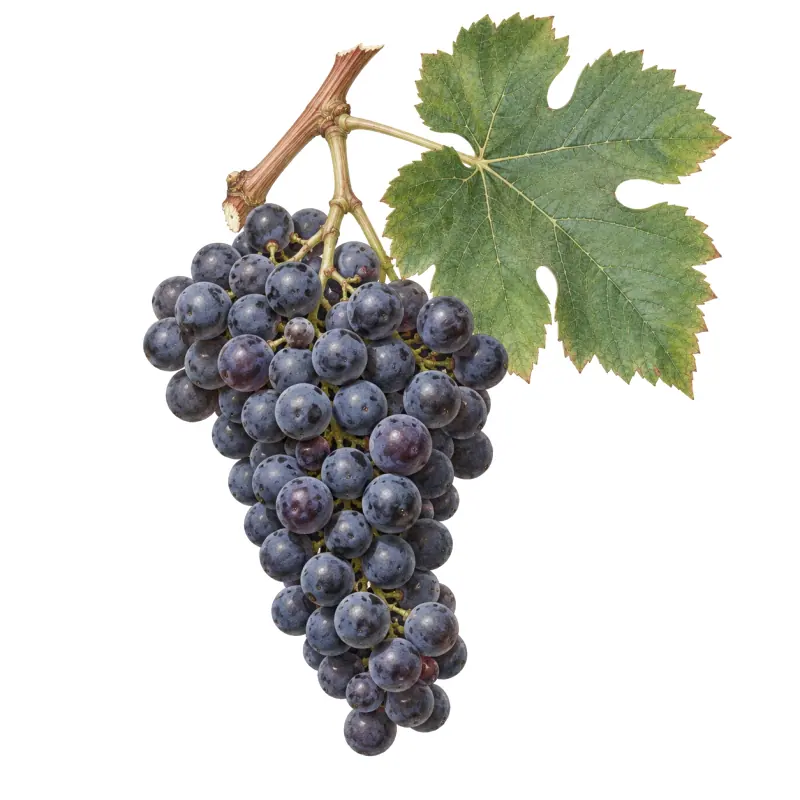
Red grapes are Tempranillo, Garnacha Tinta, Graciano, Mazuelo and Maturana Tinta. White grapes are Viura, Malvasía, Garnacha Blanca, Maturana Blanca, Tempranillo Blanco, Turruntés, Chardonnay, Sauvignon Blanc and Verdejo. Reds made from destemmed grapes must contain at least 95% of the red varieties, rosés at least 25%. Whites use only the white varieties. Vines planted before 1 January 1956 with other varieties may still be used while they survive.
The ageing terms follow a "mixed system" of oak barrels of about 225 litres and bottle. Crianza reds spend two years in the winery, at least one in oak. Reserva reds need 36 months with at least 12 in oak and six in bottle. Gran Reserva reds need 60 months with at least 24 in oak and 24 in bottle. Whites and rosés have shorter minimums. Quality sparkling wines need 15 months on the lees, 24 for Reserva and 36 for Gran Añada.
Classification
- CrianzaReds: at least two years, one of them in oak. Whites and rosés: 18 months, six of them in oak.
- ReservaReds: at least 36 months, of which 12 in oak and six in bottle. Whites and rosés: 24 months, six in oak.
- Gran ReservaReds: at least 60 months, of which 24 in oak and 24 in bottle. Whites and rosés: 48 months, six in oak.
- Zone, municipality and singular vineyardThe rules allow the names of the three zones, of municipalities and of recognised 'viñedos singulares' on labels.
How it connects
Grape variety
- grows Tempranillo
- grows Garnacha Tinta
- grown in Macabeo
Recipe
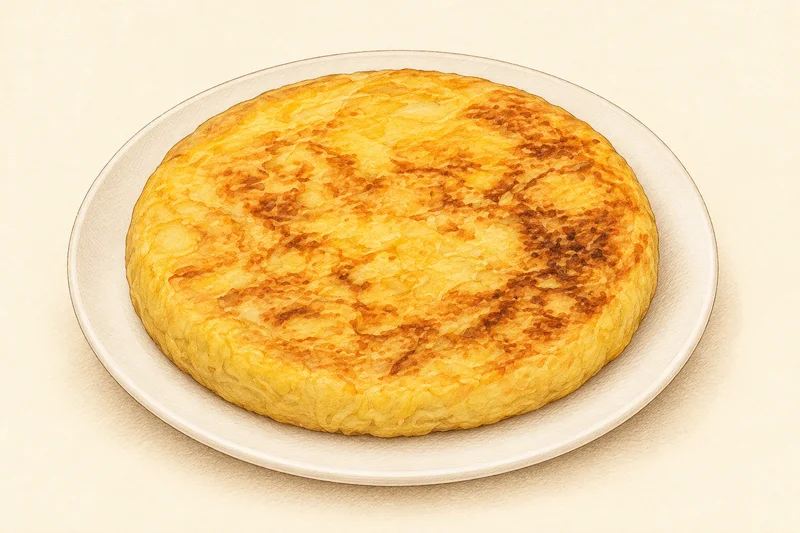
- pairs with Tortilla de patatas
Continue exploring
- CountrySpain32 entries in the atlas so far
 RecipeTortilla de patatasSpain
 RecipePatatas bravasMadrid, Spain
- Grape varietyGarnacha Tinta
- Grape varietyMacabeo
- Grape varietyTempranillo
 PotatoAgria
- Wine regionBandolBandol, France
- Wine regionBarossa ValleyTanunda, Australia
- Wine regionCannonau di SardegnaSardinia, Italy