
Wine · Wine region · Short entry
Soave
A white-wine zone east of Verona, on the volcanic and limestone foothills of the Lessini mountains. Soave is based on Garganega; the hills also make the DOCG Soave Superiore and the sweet Recioto di Soave from dried grapes. Its first delimited zone dates from 1931.
One of the first protected zones
The production rules record that Soave was a wine district (pagus) in Roman times. Letters of the Gothic king Theodoric's time (AD 503) asked Verona's growers for acinatico, a wine from dried grapes, and praised a white one that "shines like a milky drink". Evidence for the pergola veronese goes back to 680, and a plaque dated 1375 on the Palazzo di Giustizia in Soave records the importance of wine. The consortium adds that a vineyard map of the Napoleonic land register of 1816 is the first certain record of the production area, and that phylloxera and downy mildew later forced replanting of almost all vineyards.
In 1924 a first measure protected typical wines and a consortium to defend Soave was founded. In October 1931 the Ministry recognised the first delimited zone for "Vino Tipico Soave", published by royal decree in December 1931. On that basis the Soave Classico zone was drawn when the DOC was approved in 1968. Recioto di Soave became a DOCG in 1998 and Soave Superiore in 2001.
Volcanic hills and limestone
The zone covers all or part of 13 communes in the province of Verona, from San Martino Buon Albergo to Monteforte d'Alpone and San Giovanni Ilarione, where the central-western Lessini meet the Po plain. The rules call it one of Italy's densest vine-growing areas. Early twentieth-century researchers already separated it from Valpolicella and Bardolino by its mostly volcanic soils with basalt outcrops. Decomposed basalt gives dark clay loams, weakly alkaline or neutral, rich in minerals, well drained yet able to store water and release it slowly. Vines grow from 35 to 380 m, facing mostly east, south and west, under a mild, temperate-humid climate with 700-1000 mm of rain.
The consortium describes four soil types: volcanic soils on the eastern hills, with slopes from 10° to 80°; shallow stratified limestone on the western hills; deep clay with volcanic debris in the Monteforte valley at 30-100 m; and fine alluvium along the Alpone and on the plain.
Almond, cinnamon and salt
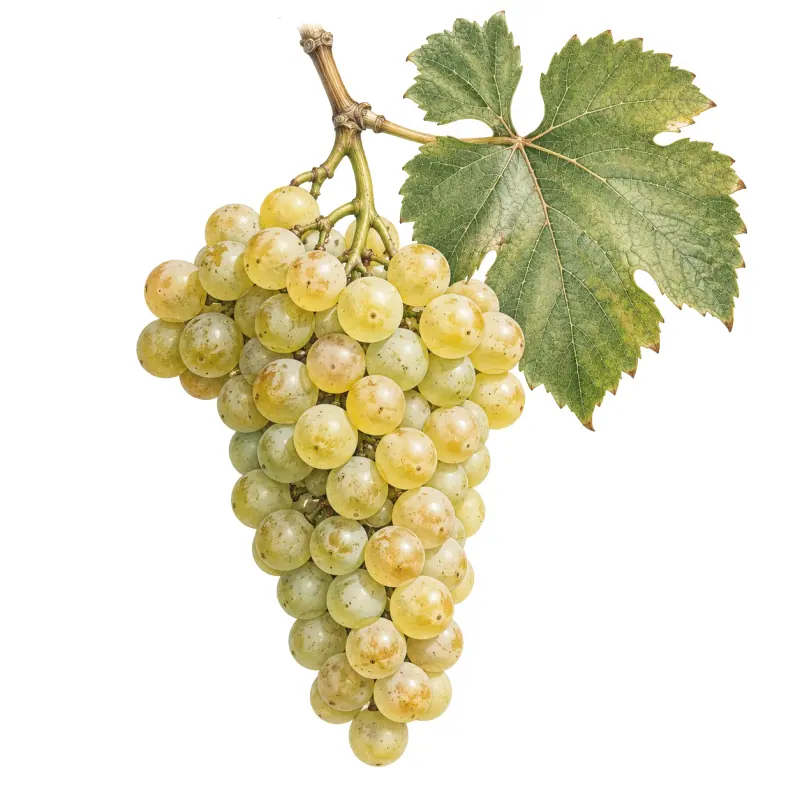
The rules describe Garganega as not strongly aromatic, with almond and white flowers, a long cycle that ends in October and a hard, yellow skin. Trebbiano di Soave adds sapidity and liveliness. The wines show fruit, flowers and spice (cinnamon) from high levels of benzenoids, with cherry and almond. The rules credit the minerals of the volcanic soils with a sapid character that grows with age, and the pergola with protecting aroma precursors from heat and the bunches from hail. Shallow limestone areas, with roots often under 50 cm, give lower yields and great aromatic complexity. The consortium links volcanic soils to cinnamon, cherry and almond, and limestone to ripe and exotic fruit from norisoprenoids.
Soave, Superiore and Recioto
Soave DOC must be at least 70% Garganega, with up to 30% Trebbiano di Soave and Chardonnay, of which 5% may be other non-aromatic white grapes. It may be labelled Classico, carry the subzone Colli Scaligeri, or name one of 33 additional geographical units such as Foscarino or Monte Grande; a spumante is allowed. Soave Superiore DOCG uses the same grapes and may not be sold before 1 April after the harvest, or 1 November of the following year for the Riserva. Recioto di Soave DOCG is a sweet wine from hand-picked, dried grapes that must reach 14% potential alcohol after drying, made still or sparkling. Pergolas are now planted 3-4 m by 0.6-1 m.
Classification
- Soave DOCAt least 70% Garganega; Trebbiano di Soave and Chardonnay up to 30%. DOC 1968.
- Soave ClassicoThe historic zone, based on the area first delimited in 1931.
- Unità geografiche aggiuntive33 named areas, among them Foscarino, Castelcerino, Monte Grande and Rugate; subzone Colli Scaligeri.
How it connects
Wine region
- in Veneto
- related Valpolicella
Grape variety
- grows Garganega
- grows Chardonnay
Recipe
- pairs with Risi e bisi
Continue exploring
- CountryItaly107 entries in the atlas so far
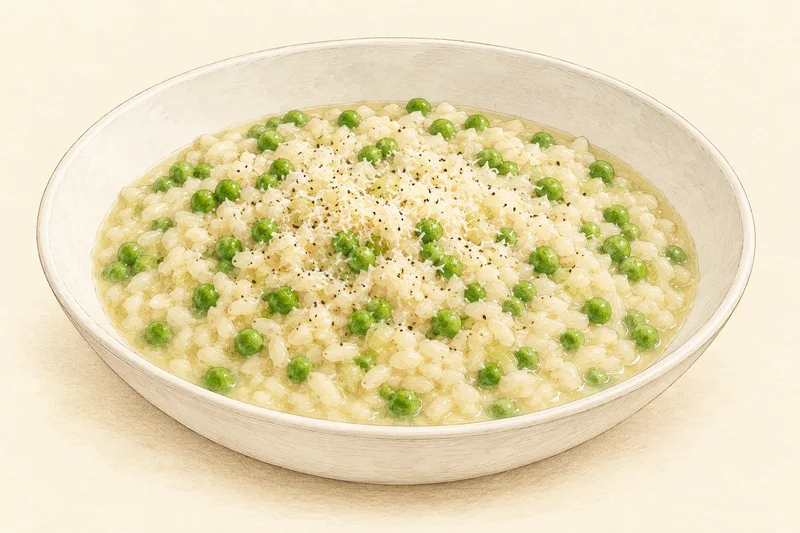 RecipeRisi e bisiVenice, Italy
- Wine regionValpolicellaSan Pietro in Cariano, Italy
- Wine regionVenetoVerona, Italy
 RecipeRisotto alla milaneseMilan, Italy
- Grape varietyChardonnay
- Grape varietyGarganega
 RecipeCiabattaAdria, Veneto, Italy
 RecipeEscargots à la bourguignonneBurgundy, France
 RecipeFondue au ComtéJura massif, Franche-Comté, France