Wine · Wine region · Short entry
Sicilia DOC
Sicilia DOC
A DOC covering the whole administrative territory of the region of Sicily. It was first an IGT (1995) and became a DOC by decree of 22 November 2011. Its rules allow white, red, rosé and sparkling wines and more than thirty single-variety wines, from Grillo and Nero d'Avola to Syrah and Zibibbo.
Phoenicians, Marsala and Nero d'Avola
The rules call Sicily one of the oldest wine regions, citing fossil vine remains, wine amphorae and coins with Dionysian images. Phoenicians traded wine and oil from the ninth to the fourth century BC; Greek colonists introduced varieties such as Grecanico. Under Rome, Sicilian wine reached Gaul, and Pliny named Mamertino of Messina, which Caesar drank at his third consulship. Mosaics at the villa of Casale near Piazza Armerina show the vintage. Under Muslim rule (827-1061) the 'Zebib' grape, today Zibibbo, was brought to Pantelleria. In the 1500s Tommaso Fazello named Aci, Messina, the foot of Etna, the Val di Mazara and the plain of Palermo as heavily planted.
John Woodhouse, Benjamin Ingham and Vincenzo Florio built the Marsala trade. After phylloxera in the late 1800s and a trade war with France, strong blending wines for France gave way to lighter table wines. The rules date modern Sicilian wine to the late 1980s and early 1990s, with Nero d'Avola at its centre. The IGT of 1995 became a DOC in 2011.
Nine rock complexes, four climates
The zone is the whole region. The north is mainly mountainous, the centre-south and south-west hilly, the south-east a plateau and the east volcanic; plains lie mostly along the coasts. The rules group the rocks into nine complexes, among them continental clastic deposits, the volcanic rocks of Etna and the old Iblei, Plio-Pleistocene sands and calcarenites, clays and marls, the gypsum-sulphur evaporites of the Upper Miocene, the carbonates of the Peloritani and Iblei, and the phyllites and crystalline schists of the Peloritani.
They distinguish four climates. The coast is mild, about 18 °C a year, with 400-500 mm of rain in the provinces of Trapani, Palermo and Agrigento but 800-900 mm between Cefalù and Messina and on the upper Ionian. The Etna area is humid, with 600-800 mm low down and over 1,200 mm high up. The mountain chains (Peloritani, Nebrodi, Madonie, Sicani) get 1,000 mm or more. The interior and the Iblei plateau average above 15 °C, with summer highs of 29 °C and as little as 400 mm of rain in the low interior hills.
A frame for many grapes
The rules describe balanced wines with pleasant, harmonious, characteristic and elegant aromas, carrying the fruit, floral and vegetal notes of the grapes used. They credit mostly hilly land, good exposure, ventilation and light, a favourable climate and Sicily's long winemaking history, but give no detailed account for single areas. Because the denomination spans the island, the consortium advises reading the grape and any more specific place name on each bottle.
Blends, varietals and mentions
A blended Sicilia bianco needs at least 50% of Insolia, Catarratto, Grillo, Grecanico, Chardonnay, Viognier and Sauvignon; the rosso at least 50% of Nero d'Avola, Frappato, Nerello Mascalese, Perricone, Syrah, Merlot, Cabernet Sauvignon and Nerello Cappuccio; the rosato the same red grapes plus Nocera, with up to 15% white grapes. A wine named after one variety needs at least 85% of it, and two varieties of the same colour may be named together. The mentions vendemmia tardiva, passito, superiore and riserva are allowed for some types; the rules' link article describes the riserva as aged at least two years. Sparkling wines may be made by the classic or tank method. Winemaking and bottling take place in Sicily, and more specific DOCs such as Etna may also show 'Sicilia' on their labels.
Classification
- Sicilia DOCBlends need at least 50% of named grapes; a single-variety wine at least 85% of its grape. Winemaking and bottling in Sicily.
How it connects
Wine region
- related Etna
- related Cerasuolo di Vittoria
Recipe
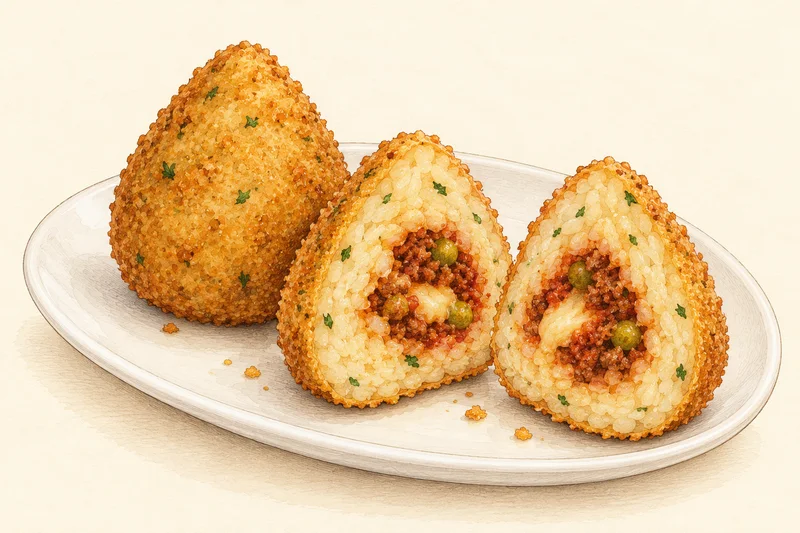
- related Arancini
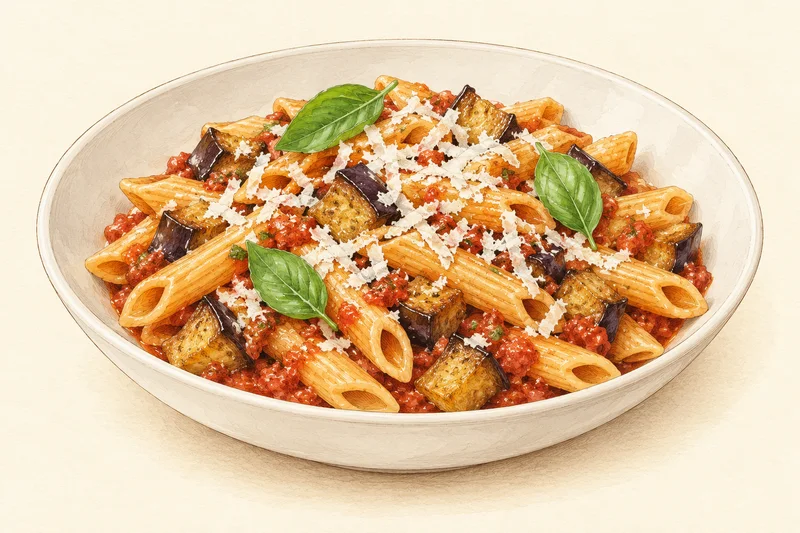
- related Pasta alla Norma
Grape variety
- grown in Catarratto
- grown in Grillo