Wine · Wine region · Short entry
Etna
Etna
A DOC on the slopes of Mount Etna in the province of Catania, covering the middle band of twenty communes in a half-circle open to the west. Its reds and rosés are based on Nerello Mascalese and its whites on Carricante. Approved in 1968, it was Sicily's first DOC, and its rules list named contrade that may appear on labels.
Sicily's first DOC
The rules place the first farming communities around Etna in the Neolithic. Eastern Sicily was the first part of the island colonised by the Greeks, in 729 BC, and knew wine by the eighth century BC; coins of the fifth century BC show the area heavily planted, and in the third century BC Theocritus wrote of vines at the foot of Etna. After a decline, viticulture recovered from the thirteenth century. In the 1500s Fazello praised the wines of Etna, and in the 1700s Arnolfini wrote of Mascali wine shipped to Malta.
Nearly 26,000 ha were planted in 1848, and in 1880-1885 the province of Catania, with over 90,000 ha, was the most planted in Sicily, before phylloxera cut it to about 40,000 ha. At the end of the 1800s Baron Spitaleri was making classic-method sparkling wine. Etna became Sicily's first DOC by decree of 11 August 1968; spumante and rosso riserva were added in 2011.
An island within the island
Etna, which the rules call the highest active volcano in Europe (about 3,300 m), rises from the sea north of Catania with a base perimeter of about 180 km. The zone takes the middle band of twenty communes whose territories run like triangles toward the central crater, forming a half-circle open on the west. Soils formed from the build-up and weathering of ash, sand, lapilli and pumice: 80% of the vineyards are on volcanic andic and leached brown soils, loose, stony and permeable, rich in microelements and potassium; the rest are on alluvial soils and vertisols. Vines grow mainly at 300-900 m, up to 1,100 m.
Rain is well above the island average: about 600 mm on the south-west slope, up to 1,200 mm on the north and north-east. The east slope (Giarre, Santa Venerina) ripens earliest under the coastal breeze; the south has wider day-night swings and ripens later; the north (Randazzo, Castiglione, Linguaglossa) is wettest. Steep vineyards stand on terraces held by dry-stone walls of lava, which the consortium describes as shaped by eruptions.
Ash, height and a late harvest
The rules say the volcanic soils give the wines a pleasant minerality that improves the longevity of the whites in particular, and recall that Andrea Bacci, in 1596, attributed the quality of wines from the hills around Catania to Etna's ashes. Summer maxima never reach extremes and day-night swings are strong, which helps regular ripening and the build-up of aromas. Etna is the latest-ripening zone of Sicily: picking starts in September for sparkling bases and runs to the end of October, sometimes November at the highest sites; Carricante is picked from late September to mid-October, the Nerellos from early October. The consortium stresses that the contrade are local place names, not one uniform terroir.
Nerello, Carricante and the contrade
Etna bianco needs at least 60% Carricante, with Catarratto up to 40% and other non-aromatic white grapes up to 15%; the bianco superiore, only from the commune of Milo, needs 80% Carricante. Rosso and rosato need at least 80% Nerello Mascalese with up to 20% Nerello Mantellato (Nerello Cappuccio), and may include up to 10% white grapes. Spumante, white or rosé, needs 80% Nerello Mascalese and is made by refermentation in bottle with at least 18 months on the lees. The rosso riserva ages at least four years in the zone, 12 months in wood, from 1 November of the harvest year.
Labels may name contrade listed in an annex for nine communes, among them Castiglione di Sicilia, Randazzo, Linguaglossa and Milo, and may also show the wider unit 'Sicilia'.
Classification
- Etna DOCLabels may name a contrada listed in Annex 1 of the rules.
- Rosso riservaAt least 4 years' ageing in the zone from 1 November of the harvest year, 12 months in wood.
- SpumanteBottle refermentation with at least 18 months on the lees.
How it connects
Grape variety
- grows Nerello Mascalese
- grows Carricante
Wine region
- related Sicilia DOC
Recipe
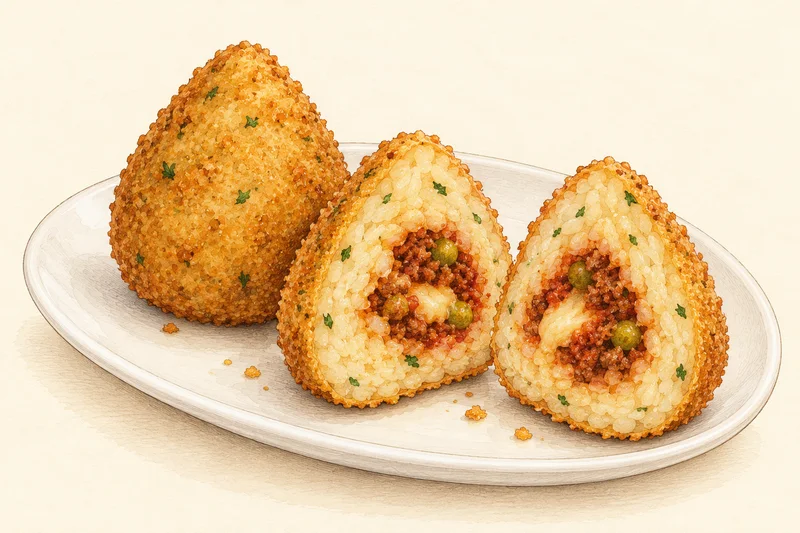
- pairs with Arancini
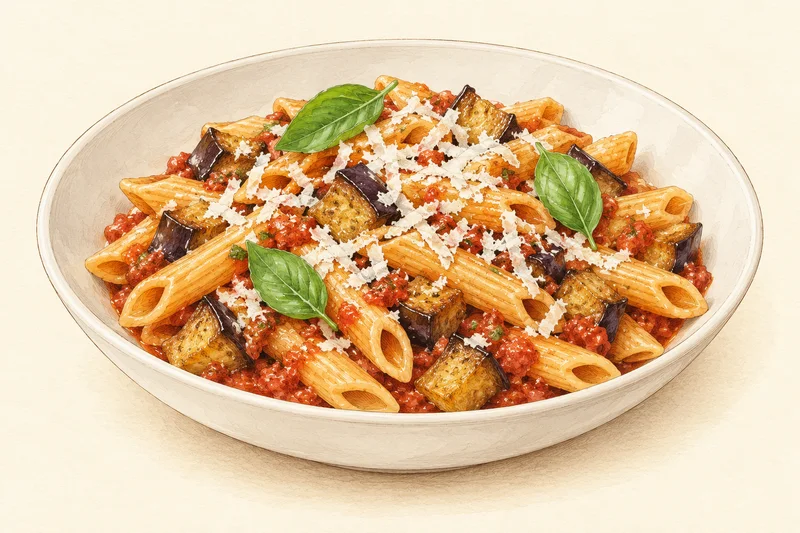
- pairs with Pasta alla Norma