
Wine · Wine region · Short entry
Chianti Classico
Chianti Classico
A DOCG for red wine from the hills between Florence and Siena, made from at least 80% Sangiovese. Its zone of 71,800 ha takes in all of Greve, Castellina, Radda and Gaiole in Chianti and parts of four other communes, and has had its own rules, separate from the broader Chianti DOCG, since 1996. Above the basic wine the rules set a Riserva and a Gran Selezione, which may name one of eleven additional geographical units.
From the 1716 proclamation to the Black Rooster
The production rules record Etruscan and Roman evidence of wine in the area. In the Middle Ages the Chianti was fought over by Florence and Siena, and villages, abbeys and castles grew up that later became villas. Wine from the area is mentioned in documents from the 1200s, and a notarial deed of 1398 is the first to use the name Chianti for it. By the 1600s exports to England were regular.
In 1716 a proclamation (bando) of Cosimo III, Grand Duke of Tuscany, fixed the boundaries within which Chianti could be made, which the rules call the first legal delimitation of a wine zone, and set up a body to oversee production and trade. Between 1834 and 1837 Baron Bettino Ricasoli promoted a blend of 70% Sangioveto (Sangiovese), 15% Canaiolo and 15% Malvasia. Thirty-three producers founded the consortium on 14 May 1924, and a decree of 1932 reserved the word Classico for the historic zone. DOC followed in 1967, DOCG in 1984 and separate rules from Chianti in 1996.
Galestro, alberese and sandstone
The zone covers 71,800 ha in the centre of Tuscany, 30,400 in the province of Florence and 41,400 in Siena. It is a roughly rectangular block closed to the east by the Monti del Chianti and bounded by the Greve, Pesa and Elsa rivers and the sources of the Ombrone and Arbia. The rules call it an upland: hills based at about 200 m that seldom rise above 600 m, with short, sometimes steep slopes. The consortium links its local subzones to these changes of soil, exposure and height.
The body of the region is a shield of clay schists (galestro) with scaly clays, alberese and fine calcareous sandstones. Soils are generally shallow, recent and brown, from clay-sand to stony, low in organic matter and available phosphorus. Vineyards must be on hillsides no higher than 700 m; damp land, valley floors and soils dominated by Pliocene clay are excluded. Winters can fall below 4-5 °C, summers are dry and often pass 35 °C, and 800-900 mm of rain falls mainly in late autumn and spring.
Iris from the sandstone, berries from the lime
The rules describe Sangiovese as a grape very sensitive to its surroundings, which changes its scents with the soil it grows in. In Chianti Classico they credit the sandstone with the floral bouquet of iris and violet that marks the wine, and the calcareous component with aromas of wild berries. Hot July and August, sun that lasts into September and October and wide night-day swings let the grapes ripen slowly and fully, fixing colour, bouquet and alcohol, which low yields keep generally at 12% or more. At release the basic wine must be ruby red, with an intense, floral nose and a dry, fresh, sapid, slightly tannic taste that softens with time. The Riserva is described as intensely fruity and the Gran Selezione as spicy and persistent.
Sangiovese in three tiers
Sangiovese must make up 80-100% of the vineyard, and other red varieties suited to Tuscany may fill up to 20%; the consortium notes that only red grapes have been allowed since 2006. The Gran Selezione needs 90-100% Sangiovese, completed only by native grapes such as Colorino, Canaiolo, Ciliegiolo, Mammolo and Pugnitello. New vineyards need 4,400 vines/ha, and the yield is limited to 7.5 t/ha and 2 kg per vine.
The basic wine may be sold from 1 October of the year after the harvest. The Riserva needs 24 months' ageing and the Gran Selezione 30, each with at least 3 months in bottle, counted from 1 January after the vintage. Only the Gran Selezione may name one of eleven additional geographical units, from Castellina and Castelnuovo Berardenga to Panzano, Radda and Vagliagli. Every bottle carries the Black Rooster (Gallo Nero) mark, and the Tuscan fiasco may not be used for Riserva or Gran Selezione.
Classification
- Chianti Classico DOCGReleased from 1 October of the year after the harvest. Minimum alcohol 12%. Maximum yield 7.5 t/ha.
- RiservaAt least 24 months' ageing, 3 of them in bottle, counted from 1 January after the harvest. Minimum alcohol 12.5%.
- Gran SelezioneAt least 30 months' ageing, 3 in bottle. Minimum alcohol 13%. May carry one of 11 additional geographical units (UGA).
How it connects
Place
- related Tuscany In preparation
Grape variety
- grows Sangiovese
Recipe
- pairs with Pappardelle al cinghiale
Continue exploring
- CountryItaly107 entries in the atlas so far
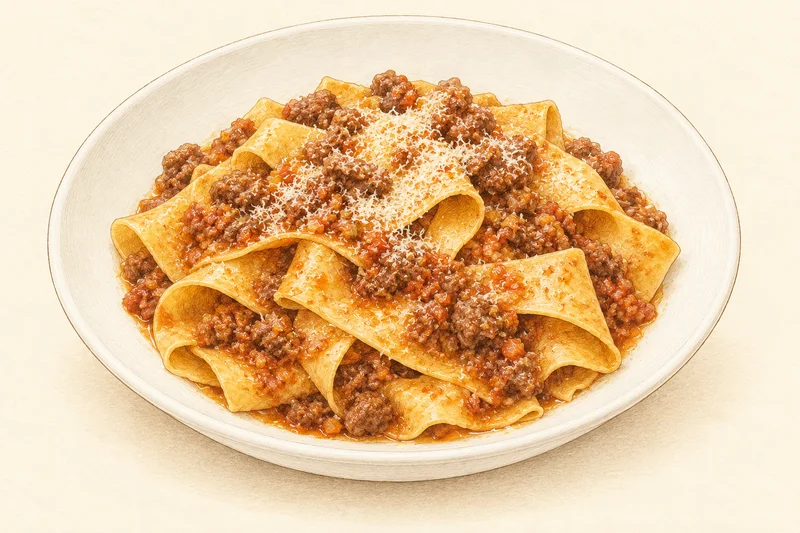 RecipePappardelle al cinghialeMaremma, Italy
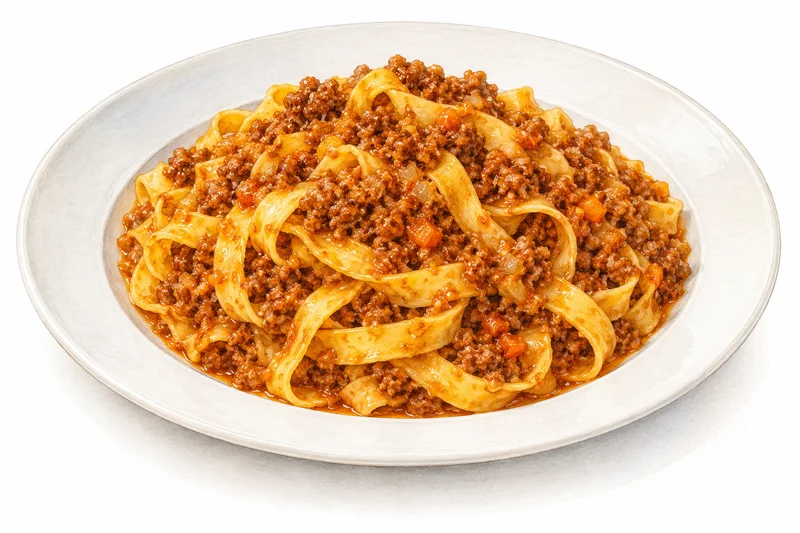 RecipeRagù alla bologneseBologna, Italy
- Grape varietySangiovese
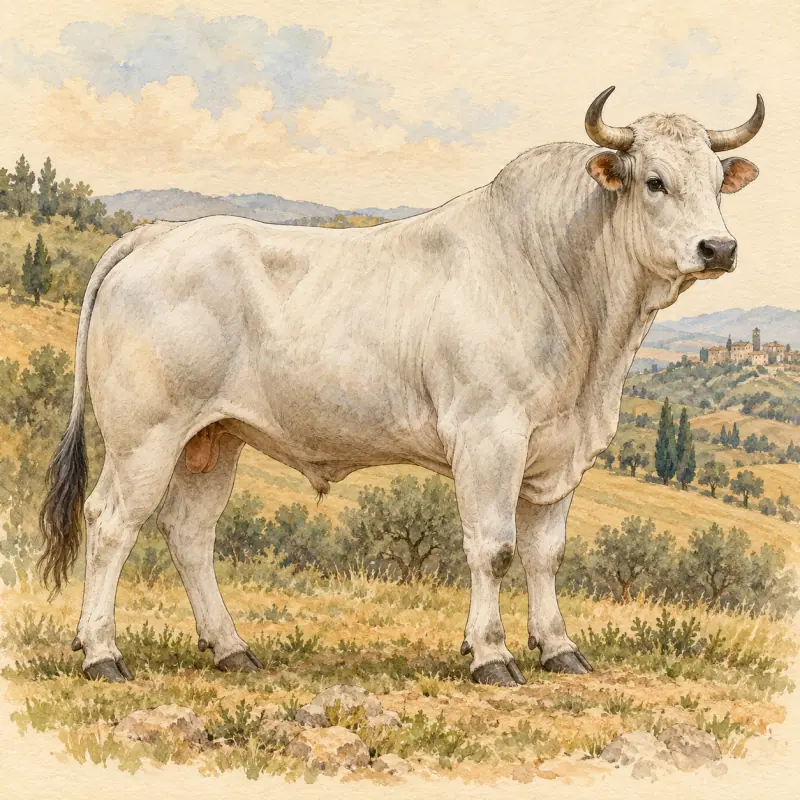 BreedChianina
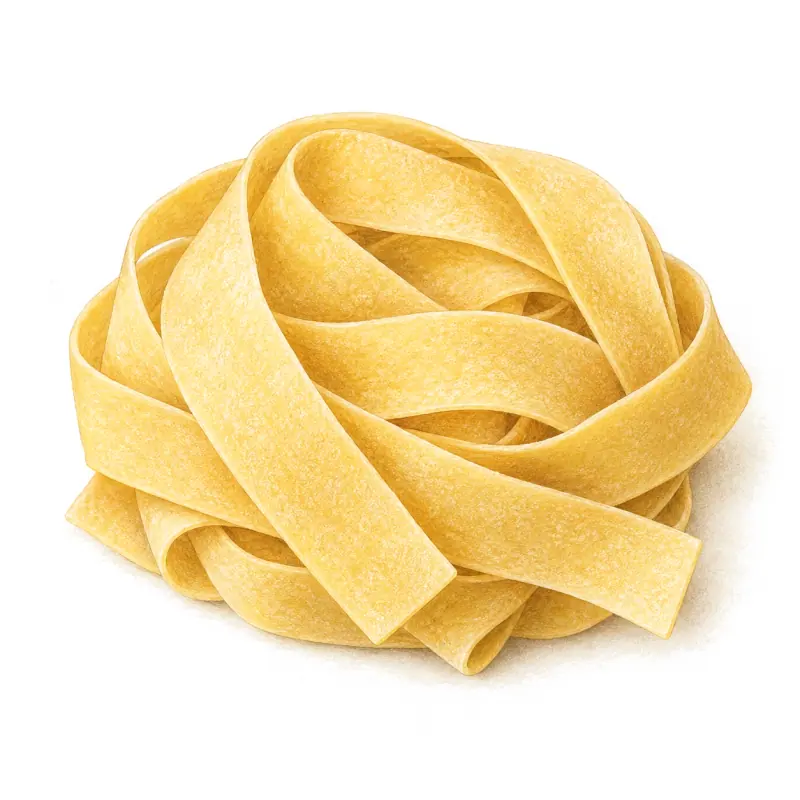 Pasta shapePappardelle
- Grape varietyMontepulciano
- Wine regionBolgheriCastagneto Carducci, Italy
- Wine regionBrunello di MontalcinoMontalcino, Italy
- Wine regionCarmignanoCarmignano, Italy