
Wine · Wine region · Short entry
Südsteiermark
Südsteiermark
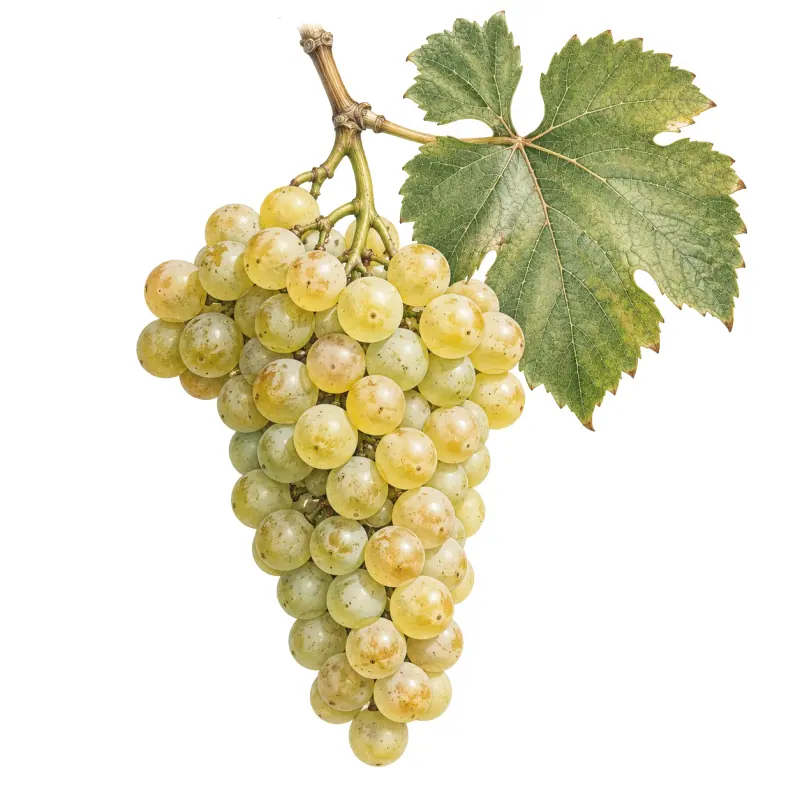
Südsteiermark is a Styrian Weinbaugebiet covering the Leibnitz district south and west of the Mur, on the southern edge of the Graz basin along the border with Slovenia. Wein Steiermark gives 2,785 ha, mostly on steep slopes of slate, sand, marl (Opok) and limestone. Sauvignon Blanc is the most planted grape, and Südsteiermark DAC, in force since the 2018 vintage, allows eight white varieties as regional, village and single-vineyard wines.
Archduke Johann's vines and the 2018 DAC
Wein Steiermark traces Styrian wine-growing to the Romans, about 100 BC to AD 300, and to a revival around 800 under Charlemagne and the Church; plague, war and the Little Ice Age later cut it back. Recovery came from about 1770 under Maria Theresa and Joseph II, who issued the Buschenschank patent in 1784. Archduke Johann gave an estate where, in 1854, 425 grape varieties were planted on trial; Sauvignon Blanc and Morillon stayed. After 1918 Styria lost more than 30,000 ha of vineyards to the new Kingdom of Yugoslavia. A Schutzring founded in 1977 committed Styrian growers to using only Styrian grapes.
The EU register gives 15 November 1996 as the date of protection of the name Südsteiermark. The DAC ordinance BGBl. II No. 299/2018 applies from the 2018 vintage, and Wein Steiermark says the first Styrian DAC wines reached the market in early 2019. By February 2023 about 580 Rieden had been defined by law across Styria.
Steep hills at the edge of the Graz basin
The Weinbaugebiet covers all communes of the Leibnitz district except those left of the Mur. The specification places it on the southern edge of the Graz basin, bounded to the west by the Glein-, Stub- and Koralpe and to the south by the Poßruck, and open to the south-east. Wein Steiermark gives 2,785 ha, most of it on steep slopes that can be worked almost only by hand.
The specification names slate, sand, marl and limestone soils. Wein Steiermark places slate mainly in Kitzeck-Sausal, reddish to bluish-black with quartz, and fine greenschist; dry calcareous soils on Leitha limestone, a marine sediment of coral and red algae with fossil mussels, sea urchins and shark teeth, in some communes; and Opok, a dense calcareous marl, mostly in Südsteiermark. Gravel, at times cemented into conglomerate, and sand also occur. The climate is shaped by southern European and Pannonian influences and is described as humid-warm and Mediterranean. Wein Steiermark reports sunshine rising from an average 1,874 to 2,126 hours in recent years, and harvest moving from mid-October to mid or late September.
From young wine to extract-rich Ried wines
The specification says Südsteiermark mainly produces white wine, ranging from fresh young wines to powerful, extract-rich single-site wines. It ties this range to the layered soils, from sand and slate to marl and shell limestone, to a humid-warm Mediterranean climate that gives a long growing season, and to cool nights that build rich aromas. Wein Steiermark describes three registers of Sauvignon Blanc: elder, nettle and bell pepper in the early-picked, fresh wines; grapefruit and passion fruit in the middle; gooseberry, currant and herbs in the top wines.
Südsteiermark DAC
Südsteiermark DAC must be hand-picked in the area and made and bottled in Styria. Only Welschriesling, Weißburgunder, Morillon (Chardonnay), Grauburgunder, Riesling, Muskateller, Sauvignon Blanc and Traminer, or blends of them, are allowed, with at most 4.0 g/l of sugar. Gebietswein may be submitted for testing from 15 January after the harvest (Welschriesling from 1 December) and sold from 1 March. Ortswein comes from Kitzeck-Sausal, Eichberg, Leutschach, Gamlitz or Ehrenhausen, and Riedenwein from a registered Ried; both are sold from 1 May. Reserve is sold 18 months later than the base date. The tasting for the state test number takes place at Silberberg.
Wein Steiermark gives the plantings as Sauvignon Blanc 21%, Welschriesling 16.5%, Weißburgunder 11.4%, Muskateller almost 10% and Morillon 8.6%, with red varieties at 13%.
Classification
- Südsteiermark DAC (Gebietswein)Eight white varieties, hand-harvested; at most 4.0 g/l sugar; sold from 1 March after the harvest (Welschriesling earlier).
- Südsteiermark DAC with a village (Ortswein)From Kitzeck-Sausal, Eichberg, Leutschach, Gamlitz or Ehrenhausen; approved lead varieties; sold from 1 May.
- Südsteiermark DAC with a Ried (Riedenwein)From a registered Ried; sold from 1 May after the harvest. Reserve is sold 18 months later.
How it connects
Wine region
- in Austria
Grape variety
- grows Sauvignon Blanc
- grows Chardonnay
Continue exploring
- CountryAustria8 entries in the atlas so far
 RecipeWiener SchnitzelVienna, Austria
- Grape varietyChardonnay
- Grape varietySauvignon BlancFrance
- Wine regionAustriaAustria
 RecipeWiener ApfelstrudelVienna, Austria
 RecipeEscargots à la bourguignonneBurgundy, France
 RecipeFondue au ComtéJura massif, Franche-Comté, France
 RecipeGougèresBurgundy, France
 StoryDid Dom Pérignon invent Champagne?Hautvillers, France