
Wine · Wine region · Short entry
Austria
Österreich
Austria's wine law divides the country into three wine-growing regions, Weinland, Steirerland and Bergland, and within them into Weinbaugebiete such as the Wachau, Kamptal, Burgenland and Südsteiermark. Most vineyards lie in Lower Austria, Burgenland, Vienna and Styria. Quality wine is graded by must weight in degrees KMW, from Qualitätswein and Kabinett to the Prädikat levels, and DAC ordinances set regional rules on top.
From Roman vines to the DAC system
Wein Steiermark dates wine-growing in Styria to the Romans, about 100 BC to AD 300, and a revival around 800 under Charlemagne and the Church. UNESCO records that Bavarian and Salzburg monasteries began terracing the slopes of the Wachau around the same time. In Rust, Queen Mary of Hungary allowed the burghers in 1524 to brand their casks with an "R", which the Austrian ministry calls an early mark of origin.
Modern rules followed a crisis. According to Wein Steiermark, the 1985 wine scandal, in which some producers added glycol to supposed Prädikat wines, led to a strict wine law in 1985 and to the founding of the Austrian Wine Marketing Board (ÖWM) in 1986. The first DAC wine, Weinviertel DAC, a dry Grüner Veltliner, came on the market in 2003. The law now in force is the Weingesetz 2009 (BGBl. I No. 111/2009), which lets the minister fix regional DAC rules by ordinance.
Three wine regions, many soils
The Weingesetz 2009 groups the federal states into three Weinbauregionen. Burgenland, Lower Austria and Vienna form Weinland; Styria forms Steirerland; Carinthia, Upper Austria, Salzburg, Tyrol and Vorarlberg form Bergland. Within them it defines Weinbaugebiete, from the Thermenregion, Kremstal, Kamptal, Wagram, Traisental, Carnuntum, Wachau and Weinviertel to Südsteiermark, Weststeiermark and Vulkanland Steiermark.
The 2011 specifications describe each landscape. In Lower Austria, the steep primary-rock sites of the Wachau give way to loess terraces in the Kremstal, Traisental, Kamptal and on the Wagram, with volcanic soils in the Kamptal; hot Pannonian air from the east meets cool currents from the Waldviertel. Burgenland has loess and black earth by Lake Neusiedl, whose 300 km² of water and reed act as a climate regulator. Styria lies partly under the Illyrian Adriatic climate, with volcanic and basalt soils in the south-east, slate, sand, marl and limestone in the south, and gneiss and schist in the wetter west. Wein Steiermark gives rainfall of about 1,200 mm in the west and 800 mm in Vulkanland.
What the specifications claim
The Lower Austria specification says almost 80% of its wine is white, from fresh, typically peppery Grüner Veltliner to full wines aged in cask or barrique, with fruity Zweigelt and spicy Blaufränkisch in the Pannonian south and east of Vienna. It links mineral, spicy wines to weathered primary rock and volcanic soils, rounder and fuller wines to loess, and a marked acidity to the gap between hot days and cool Waldviertel nights. The Burgenland file reports roughly equal white and red output and an important share of noble-sweet wines. The Styria file says almost 70% is white, from the fresh Steirischer Junker to powerful single-site wines, and credits day-night swings with aroma and acidity.
Quality levels in the wine law
Wine with Austrian origin may name a smaller unit only through a Weinbauregion, a Weinbaugebiet, a Großlage, a commune or a Ried. Landwein comes from a single Weinbauregion. Qualitätswein must come from one Weinbaugebiet and from approved quality varieties, reach 15° KMW, 9.0% vol and 4 g/l acidity, and carry a state test number. Kabinett is a Qualitätswein of at least 17° KMW, at most 12.9% vol and dry.
The Prädikat levels are Spätlese (19° KMW), Auslese (21°), Beerenauslese (25°), Eiswein (25°, frozen at picking and pressing), Strohwein or Schilfwein (25°, dried at least three months) and Trockenbeerenauslese (30°). Kabinett and Prädikat wines may not be enriched or sweetened. Spätlese and Auslese may be submitted for testing from 1 January after the harvest, the others from 1 April. Yields are capped at 9,000 kg of grapes or 6,750 l of wine per hectare. DAC wines, such as Wachau, Kamptal and Südsteiermark DAC, add regional rules.
Classification
- LandweinGrapes from one Weinbauregion only, quality varieties, at least 14° KMW and 8.5% vol.
- QualitätsweinGrapes from one Weinbaugebiet, at least 15° KMW, 9.0% vol and 4 g/l acidity; sold only with a state test number after analysis and sensory testing.
- KabinettA Qualitätswein of at least 17° KMW, at most 12.9% vol, dry, without enrichment or sweetening.
- PrädikatsweinSpätlese 19°, Auslese 21°, Beerenauslese, Eiswein and Strohwein/Schilfwein 25°, Trockenbeerenauslese 30° KMW; no enrichment or sweetening. "Ausbruch" is reserved for Ruster Ausbruch.
- DACDistrictus Austriae Controllatus, a regionally typical Qualitätswein whose rules are set by ordinance for each area under § 34 of the Weingesetz 2009.
How it connects
Recipe
- pairs with Wiener Schnitzel
- origin Wiener Apfelstrudel
Wine region
- in Wachau
- in Kamptal
- in Burgenland
- in Südsteiermark
Continue exploring
- CountryAustria8 entries in the atlas so far
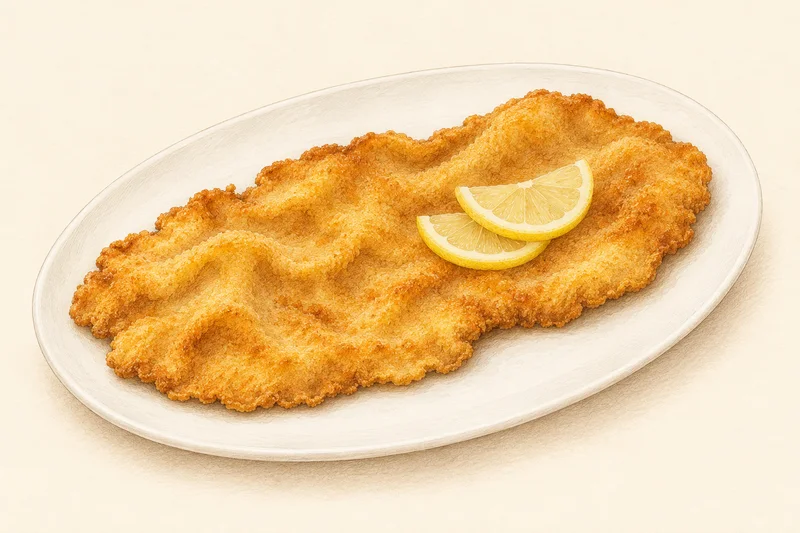 RecipeWiener SchnitzelVienna, Austria
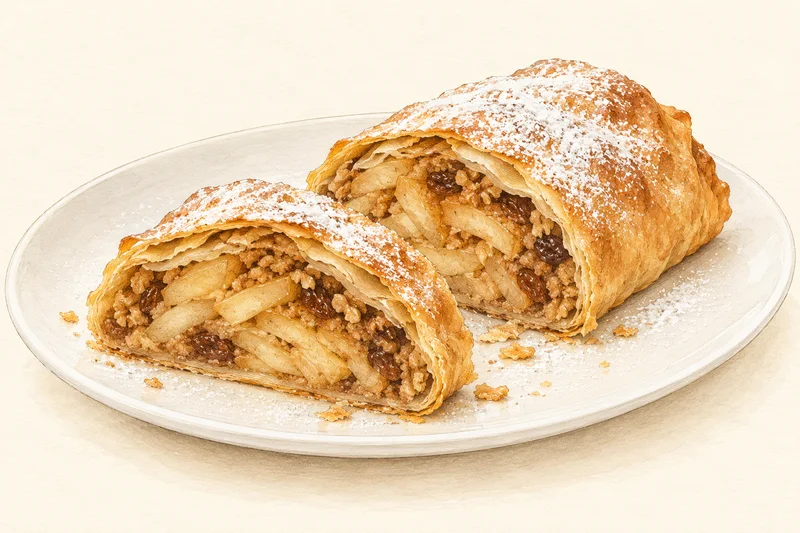 RecipeWiener ApfelstrudelVienna, Austria
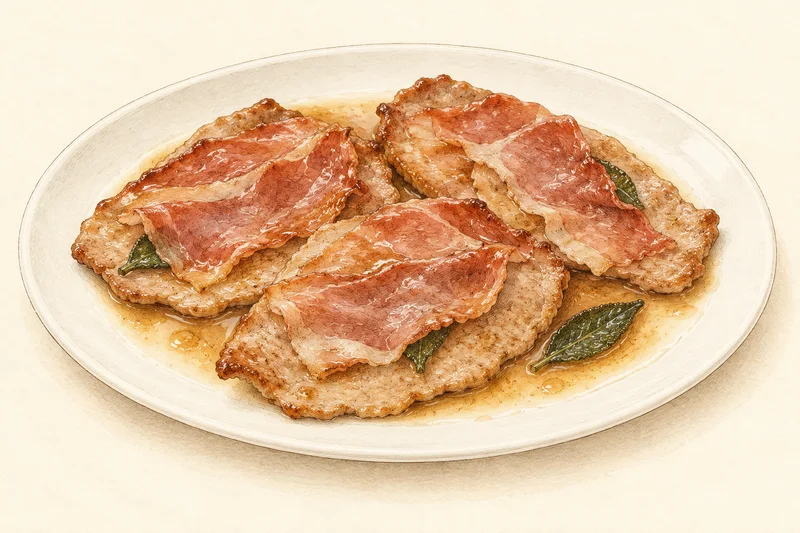 RecipeSaltimbocca alla romanaRome, Italy
- Wine regionBurgenlandEisenstadt, Austria
- Wine regionKamptalLangenlois, Austria
- Wine regionSüdsteiermarkLeibnitz, Austria
- Wine regionWachauWeißenkirchen in der Wachau, Austria
- StoryFruit: from the apple forests of the Tian Shan to the banana boatKazakhstan
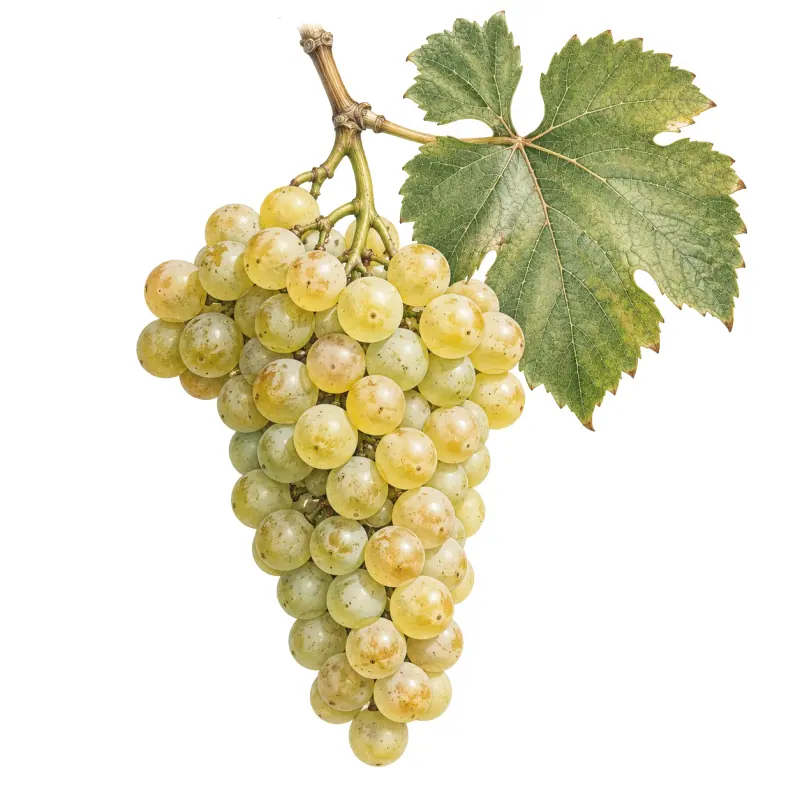 Grape varietyChardonnay