
Wine · Wine region · Short entry
Pouilly-Fuissé
Pouilly-Fuissé
Pouilly-Fuissé is a white-wine village appellation in the Mâconnais, made entirely from Chardonnay. Its vineyards occupy the slopes around Solutré, Fuissé, Vergisson and Chaintré, below the limestone rocks of Solutré and Vergisson. Since 2020 it has had 22 Premier Cru climats.
From Gamay to Chardonnay
The rock of Solutré is a famous prehistoric site; the BIVB notes that one of the most advanced prehistoric cultures flourished here some 20,000 years ago. The specification quotes A. Pelletier (2002) on boatmen carrying Burgundy wine down the Saône to Lugdunum (Lyon), from vineyards present since the first century. The abbey of Cluny owned vines in the south Mâconnais.
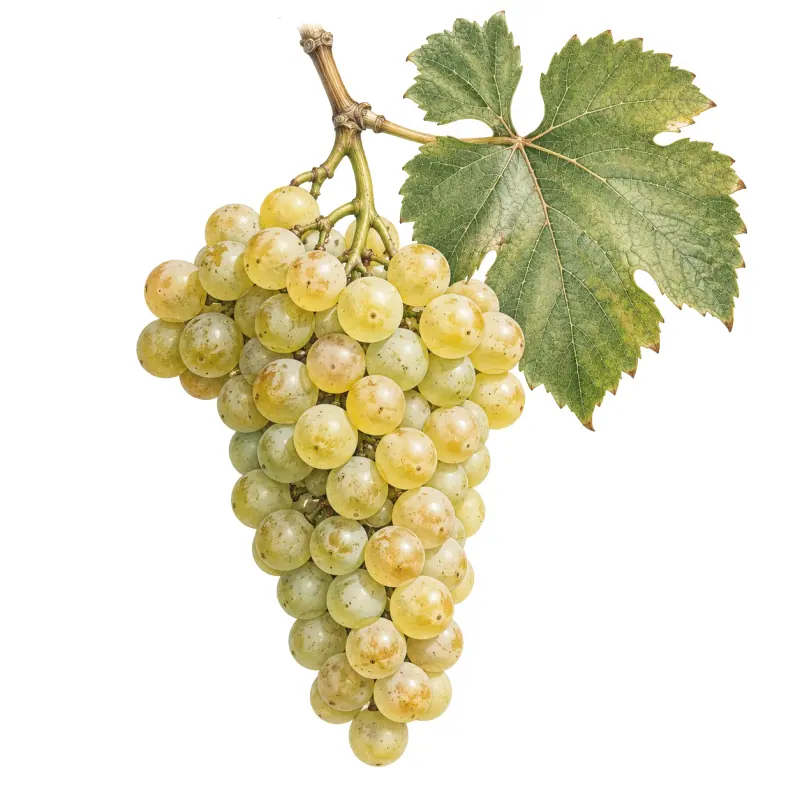
Until the eighteenth century the vineyard, like the rest of the Mâconnais, was mostly Gamay. Deeds of 1820 name Chardonnay as the main grape, and replanting after phylloxera completed the change. After disputes over the name, the Mâcon court fixed the area's limits on 7 December 1922. The Union des Producteurs de Pouilly-Fuissé, founded on 13 January 1929 by the mayors of the four communes, led the case for the AOC, recognised by the decree of 11 September 1936. In 1995 a bequest gave the Hospices de Beaune 4 ha at Chaintré.
Soil, slope and climate
The vineyard forms a diagonal band across the southern ridges of the Mâconnais, about 10 km west of Mâcon. The rocks of Vergisson and Solutré dominate a hilly, broken landscape. East-facing slopes are moderate and west-facing ones much steeper, and side valleys create small cirques facing north and south. The rock is mostly Jurassic limestone and marl, with Palaeozoic rhyolite (an acid volcanic rock) in places. The BIVB explains that the Bajocian escarpments owe their profile to hard fossil corals resistant to erosion, and its geology page names the Solutré rock as crinoidal limestone. Soils are mostly thin, stony and free-draining on limestone, clayier at the foot of slopes, and acid and stony on rhyolite. Plots lie at 220–420 m.
The climate is oceanic with clear southern influences: no more than 800 mm of rain a year, a mean of 11 °C, and warm, sunny summers. The Monts du Charollais shelter the vines from the west.
What the place gives the wine
The specification describes a dry wine, usually green-gold when young, often with white flowers and citrus, developing hazelnut, toasted almond, vanilla or flint with age. The palate is full and rich, balancing power and elegance. It attributes a fleshy, fruity character to the mild climate of the south Mâconnais, and differences between wines to the mosaic of slopes, exposures and mostly limestone soils. Premier Cru wines show more intensity and can be fruitier, more powerful or more mineral depending on their origin; they need a few years to reach their best.
Grapes and classification
Pouilly-Fuissé is made only from Chardonnay, in the communes of Fuissé, Solutré-Pouilly, Vergisson and Chaintré. Since 2020 it has 22 Premier Cru climats, whose names may follow the appellation name on labels. All wines are aged at least until 1 February after the harvest, and Premier Cru wines until 1 July. In 2022 the BIVB recorded 756.71 ha, including 158.22 ha of Premier Cru. Pouilly-Fuissé is in Burgundy's Mâconnais and is not Pouilly-Fumé, the Loire appellation.
How it connects
Wine region
- in Mâconnais
Grape variety
- grows Chardonnay
Continue exploring
- CountryFrance162 entries in the atlas so far
 RecipeBlanquette de veauFrance
- Grape varietyChardonnay
- Wine regionMâconnaisMâcon, France
 RecipeEscargots à la bourguignonneBurgundy, France
 RecipeFondue au ComtéJura massif, Franche-Comté, France
 RecipeGougèresBurgundy, France
 StoryDid Dom Pérignon invent Champagne?Hautvillers, France
 StoryThe Judgment of Paris, 1976Paris, France
 Grape varietyPinot Noir