
Wine · Wine region · Short entry
Entre-deux-Mers
The broad plateau between the Garonne and the Dordogne, and the name of an appellation for dry white wine that was extended to red wine in 2023. Both colours are blends, and cooperatives make most of the white. The plateau is also the main production area of the generic Bordeaux appellation.
Monks, phylloxera and a court ruling
Gallo-Roman settlers first made the plateau a wine region. From the eleventh century monks, above all the Benedictines of La Sauve-Majeure, extended the vineyards and improved their methods. In the eighteenth century Montesquieu, who held the seigneurie of Raymond at Baron, defended the province's viticulture. In 1850 the area had about 42,000 ha of vines, half red and half white, and by 1870 more than 70,000 ha, before phylloxera reached the whole plateau in 1876.
A court in Libourne reserved the name Entre-deux-Mers on 28 October 1924 for white and red wines from between the two rivers. The decree of 31 July 1937 recognised it for white wine only, and from 1953, at the growers' request, for dry white only; the name Haut-Benauge was allowed for nine communes in 1955. Meanwhile red plantings spread and became the majority in the 2000s. According to the Bordeaux wine council, the red appellation was created in 2023.
Between two tides
The name means "between two seas". The two "seas" are the Garonne and the Dordogne, tidal rivers on which a bore, the mascaret, runs inland at high spring tides. Between them rises a Tertiary limestone plateau, mostly 60–100 m high, cut by many streams into slopes with varied exposures. Wind-blown silts called boulbènes cover much of it. The rivers left sand, gravel and clay on its edges: Pyrenean material from the Garonne, which dominates, and Massif Central material from the Dordogne in stepped terraces on the north-west margin. Erosion exposes molasse beneath the limestone on slopes facing the Dordogne. Vines take the south- and west-facing slopes, and woods and meadows the north-facing and wet ground.
The climate is oceanic with moderate rain. Drier south-easterly winds reach the area more than elsewhere in the Gironde, and the tidal rivers even out seasonal swings.
What the plateau gives the wine
The specification says vines are planted only on the least fertile land: deep, rich soils with a large water reserve, valley bottoms where cold air collects and waterlogged slopes are excluded. The mainly clay soils suit white grapes. Sauvignon Blanc, which adapts well, leads most whites, with Sémillon for roundness and Muscadelle for aromatic complexity. The whites are straw-yellow with green glints, lively at first and then round, with white flowers such as acacia, citrus and exotic fruit; ageing on the lees adds richness. The reds, from Merlot and the Cabernets, are purple when young, with red fruit and later undergrowth, truffle or mint, and a fresh, supple palate over firm tannin.
A white appellation that turned red too
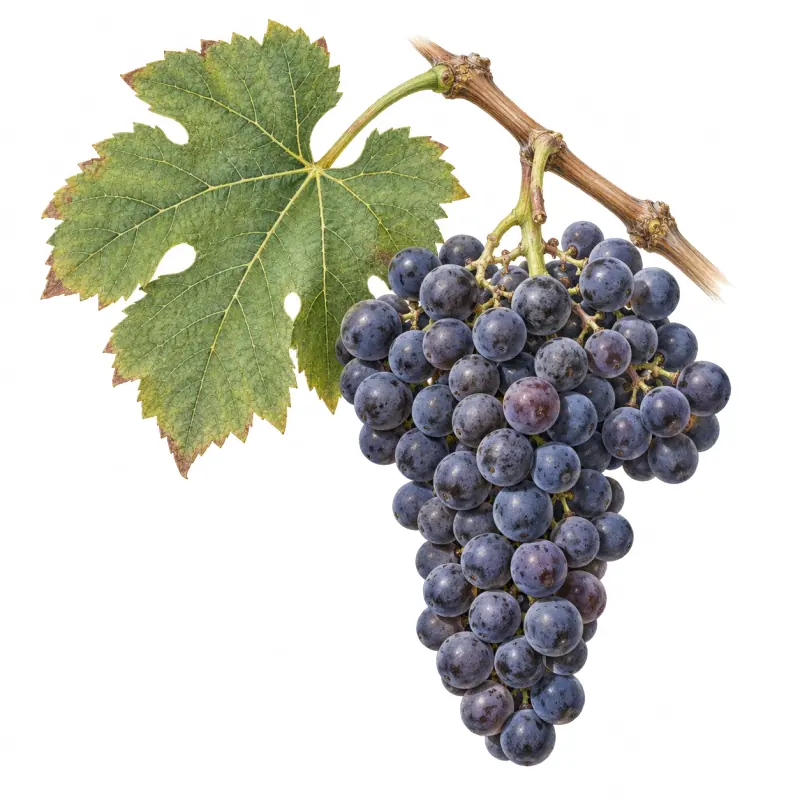
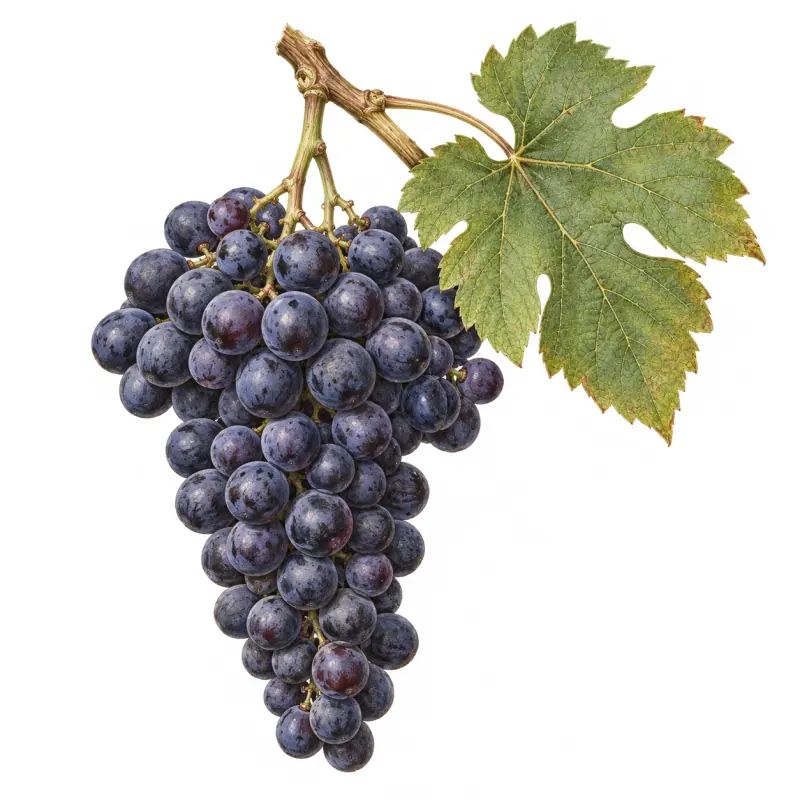
The appellation covers red and dry white still wines from 133 communes. Both colours must be blends, and the principal varieties must make up at least 70 % of the estate's planting. Whites come from Sauvignon Blanc, Sauvignon Gris, Sémillon and Muscadelle, with Colombard and Ugni Blanc as accessory grapes; reds from Merlot, Cabernet Sauvignon, Cabernet Franc, Malbec and Petit Verdot, with Carménère as an accessory grape. Base yields are 65 hl/ha for white and 55 hl/ha for red, and reds may be released only from 1 January of the second year after the harvest.
The Bordeaux wine council gives only 1,783 ha of Entre-deux-Mers vineyard and names the plateau as the main production zone of the Bordeaux appellation. Cooperatives have been strong since the 1930s; the rules count 18 of them, with 1,700 members, vinifying 85 % of the white wine.
Classification
- Entre-deux-Mers AOCRed and dry white still wines from 133 communes. Principal varieties must make up at least 70 % of the estate's planting. Base yields: 65 hl/ha for white, 55 hl/ha for red.
- Entre-deux-Mers Haut-BenaugeA geographic name allowed since 1955 for nine communes.
How it connects
Wine region
- in Bordeaux
- related Côtes de Bordeaux
Continue exploring
- CountryFrance162 entries in the atlas so far
- Wine regionBordeauxBordeaux, France
- Wine regionCôtes de BordeauxBlaye, France
 RecipeCèpes à la bordelaiseBordeaux, France
 StoryThe 1855 Bordeaux classificationBordeaux, France
 StoryThe Judgment of Paris, 1976Paris, France
 StoryPhylloxera: the insect that remade the vineyards of the worldFrance
 Grape varietyCabernet Franc
- Grape varietyCabernet Sauvignon
 Grape varietyCarmenère