
Wine · Wine region · Reference page
Emilia-Romagna
The region between the Po and the northern Apennines. In Emilia it makes sparkling red Lambrusco on the plain around Modena; in Romagna it grows Albana on the hills; around Bologna it grows Pignoletto. It has two DOCG, Romagna Albana and Colli Bolognesi Pignoletto.
Married vines and a road for wine
The rules of the Emilia-Romagna DOC recall that the Romans, about two centuries before Christ, subdued the lands of the Gaulish Boii, where vines were "married" to living trees, an Etruscan practice developed by the Gauls and known as arbustum gallicum. The monk Donizone wrote that at the wedding of Marquis Bonifacio, father of Matilda of Canossa, wine was drawn from two wells for three months. Vines are recorded on the hills south of Bologna from the late eighth century.
In 1250 Bologna ordered a "road of wines" to bring wine safely from the southern hills to the city. Around 1300 Pier de' Crescenzi named some thirty wines of the region, among them Trebbiano, "Pignuolo" (Pignoletto) and the Lambrusche. In 1567 Agostino Gallo urged planting the uve pignole, and in 1644 Vincenzo Tanara noted that Bolognese nobles drank Albana and Trebbiano beside Tuscan and French wine. Frizzante wines were refermented in bottle until the 1970s, then in pressure tanks.
Plain and Apennine
The Emilia-Romagna DOC covers the central part of the region, in the provinces of Bologna, Modena and Ravenna, split almost equally between plain and Apennine. The plain, at 2-70 m and up to 150 m in the wide valley floors, runs from the Secchia to the Sillaro and is built of sediment carried by Apennine rivers. The hills rise from 100 m to the main ridge at 2,200 m, but vineyards stay mostly below 700 m, on a mosaic of sandstones, clays, limestones, gypsum, sands and conglomerates.
The climate is temperate sub-continental, more continental on the plain, with annual means of 14-16 °C. Rain is 600-800 mm, mostly in autumn and spring, and the water balance falls to about -400 mm on the inner plain; rain rises to over 2000 mm on the high Apennines. Heat summation reaches 2400 Winkler degree-days on the plain. Since the early 1990s mean temperatures have risen by about 1.1 °C and summer extremes by about 2 °C.
Fresh plain, structured hill
The rules say the wines mirror the two zones. About 60% of Pignoletto grows on the plain and 38% on the hills (ISTAT, 2000). The plain gives fresher, easier wines; the hills, with their slopes, exposures, night breezes and lower yields, give more structured, elegant wines with persistent aroma and taste. Day-night swings at ripening on mostly sub-alkaline, fine-textured soils give perfumed wines rich in polyphenols. For the frizzante and spumante, the rules credit a continental, well-ventilated climate and well-drained soils with keeping the grapes' aroma and acidity, and modern tank fermentation with cleaner, fresher, more floral wines.
Lambrusco, Albana and Pignoletto
Emilia is the home of Lambrusco, made as sparkling and semi-sparkling wine on the plain around Modena. The Ministry lists separate DOC for Lambrusco di Sorbara, Lambrusco Grasparossa di Castelvetro and Lambrusco Salamino di Santa Croce. Romagna has Romagna Albana, a DOCG white from Albana that ranges from dry to passito. On the hills near Bologna, Colli Bolognesi Pignoletto is the region's second DOCG. The Emilia-Romagna DOC, approved by an EU implementing regulation of 11 December 2023, requires at least 85% Pignoletto, with up to 15% other grapes of the same colour, including Pinot Nero or Pinot Grigio vinified white; it allows still, frizzante, spumante and quality spumante wines.
Classification
- DOCG2 DOCG: Romagna Albana and Colli Bolognesi Pignoletto.
- DOC18 DOC, among them Lambrusco di Sorbara, Lambrusco Grasparossa di Castelvetro, Lambrusco Salamino di Santa Croce, Romagna, Colli Bolognesi and the Pignoletto-based Emilia-Romagna DOC.
How it connects
Wine region
- subregion Lambrusco di Sorbara
- subregion Romagna Albana
Grape variety
- grows Albana
- grown in Trebbiano Romagnolo
Recipe
- related Lasagne verdi alla bolognese
Continue exploring
- CountryItaly107 entries in the atlas so far
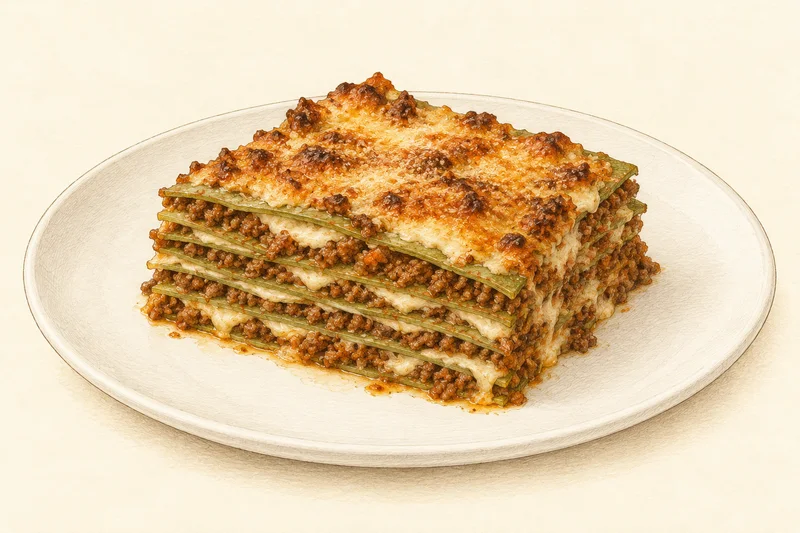 RecipeLasagne verdi alla bologneseBologna, Italy
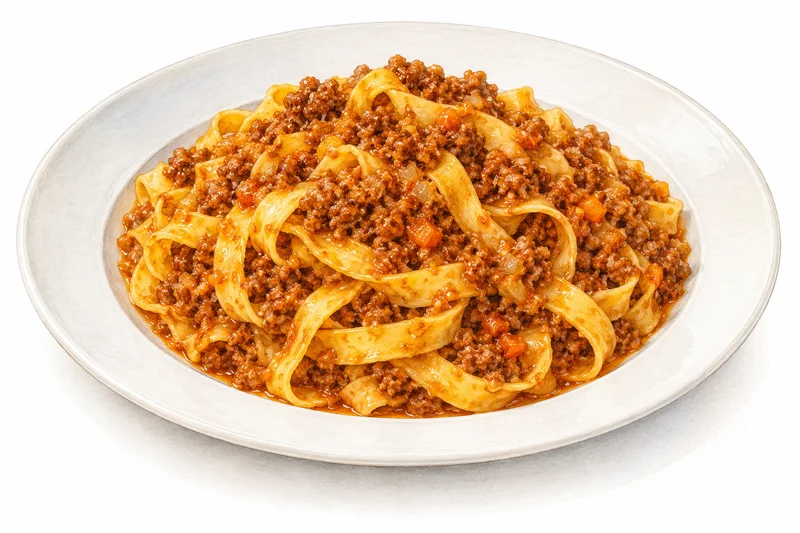 RecipeRagù alla bologneseBologna, Italy
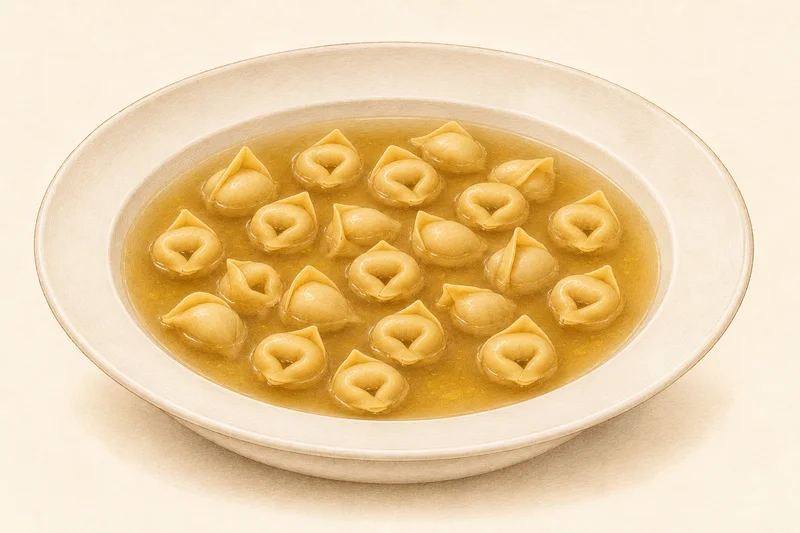 RecipeTortellini in brodoBologna, Italy
- Grape varietyAlbana
- Grape varietyTrebbiano Romagnolo
- Wine regionLambrusco di SorbaraSorbara, Italy
- Wine regionRomagna AlbanaBertinoro, Italy
 Pasta shapeLasagne