
Wine · Wine region · Short entry
Eger
Egri borvidék
Eger is a Hungarian PDO on the southern slopes of the Bükk Mountains, covering classed vineyard land in 19 settlements around the city of Eger. Egri Bikavér, a Kékfrankos-based red blend, and Egri Csillag, a white blend, are wine types within the Eger PDO, not separate designations. The rules set three quality levels: classicus, superior and grand superior.

Walloons, Ottomans and the making of Bikavér
The national wine agency dates Hungarian settlement around Eger to the early 10th century from Arab coins found nearby. King Stephen gave vineyards in the valley to the bishopric he founded, and after the Tatar invasion of the 13th century Béla IV invited Walloons, who, the agency says, brought barrels, French methods and varieties. Vineyards are documented from the 14th century. Eger withstood the Ottoman siege of 1552 but surrendered in 1596 and stayed in Ottoman hands until 1687; in that period Kadarka and fermentation on the skins spread, and in the 18th and 19th centuries the district made mainly red wine. The present varietal mix was set when vineyards were replanted after phylloxera (1880–1910). The agency credits Jenő Grőber (1869–1941) with formulating Bikavér as it is known today. The vineyard area roughly doubled from about 3,000 ha in 1996 by 2006, and producers set up their first origin protection in the 1990s.
Tuff in the south, limestone on Nagy-Eged
The PDO covers class I and II vineyard land in 19 settlements, from Aldebrő and Andornaktálya to Verpelét, on the southern edge of the Bükk. The agency describes two geological halves. The north rests on the oldest marine rocks of the Bükk, Triassic and Jurassic, overlain by Eocene limestone and more widespread Oligocene clay marls and sandstones. The south is formed by Miocene volcanic rocks from eruptions about 19 and 16 million years ago: rhyolite tuff up to 400 m thick and rarer rhyolite-dacite lava, under many of the best vineyards. Towards the plain, Pannonian clay-sand sediments and thin loess cover them. Eged Hill (537 m) is an exception, with grey Triassic limestone and Eocene nummulite limestone; its vineyards reach about 500 m, average about 10 °C a year (over 17 °C in the growing season), get about 2,100 hours of sun and about 550 mm of rain, and drain quickly on steep, shallow soils. The district averages 10–11 °C and about 600 mm.
Fresh acidity from cool nights
The single document's link chapter says the Bükk protects the vineyards from winter frost and that after warm summer and autumn days the "mountain wind" brings cool nights, preserving fine, elegant acidity and primary fruit; Eger wines are described as having lively acidity and long flavours. Good water supply in the soil means the vines grow without stress, so no unripe acidity from drought develops. This climatic variety, with tradition, is given as the reason for the many grape varieties and wine types. Bikavér classicus is described as garnet to deep ruby, spicy and fruity without tannic emphasis; Csillag as fresh, fruity or floral dry white. For both, the rules say no single variety may dominate the wine's character.
Bikavér, Csillag and three levels
Eger (PDO-HU-A1328) covers red, white, rosé, Siller, late-harvest and blended wines at three levels, classicus, superior and grand superior, the last two shown on the label after the origin name. "Bikavér" is a traditional term that may be used only for wine from a narrower area (class I and II land of 14 settlements plus listed parcels in Verpelét) and only directly after "Egri", in the same line and type. Images or words referring to a bull are reserved for Egri Bikavér at its three levels, and stars for Egri Csillag. The vintage must be stated; a variety may be named on a blend only if each named variety makes up at least 5%. The single document lists Kékfrankos, Kadarka, Merlot, Cabernet Sauvignon, Cabernet Franc, Pinot Noir and Zweigelt among the main red varieties and Furmint, Hárslevelű, Olaszrizling, Chardonnay, Rajnai Rizling and Cserszegi Fűszeres among the main whites. Detailed blend shares for Bikavér and Csillag are in the national specification, not read here.
Classification
- ClassicusBasic PDO level, from class I and II land of the 19 settlements.
- Superior and Grand SuperiorHigher levels from class I and II/1 land, with higher minimum alcohol; the level must appear wherever a vineyard name is shown.
How it connects
Wine region
- in Hungary
Grape variety
- grows Merlot
- grows Cabernet Franc
- grows Chardonnay
Recipe
- pairs with Bogrács gulyás
Continue exploring
- CountryHungary6 entries in the atlas so far
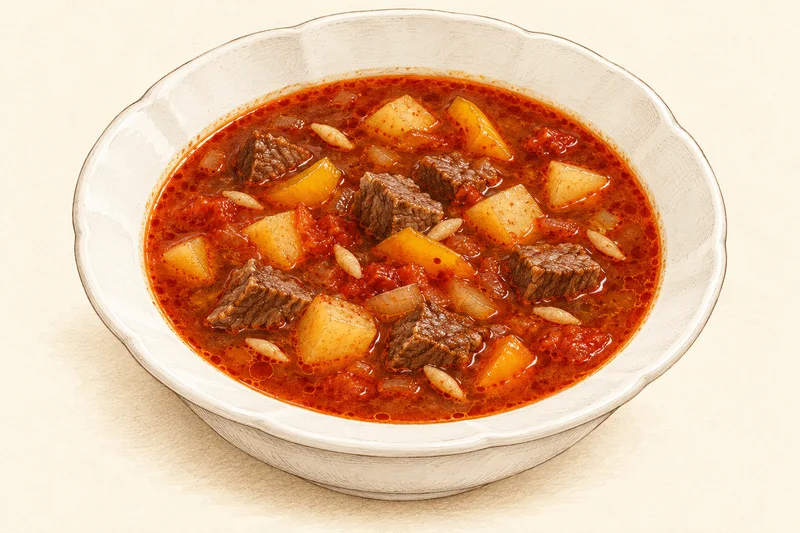 RecipeBogrács gulyásHungary
- Grape varietyCabernet Franc
- Grape varietyChardonnay
- Grape varietyMerlot
- Wine regionHungaryHungary (national overview), Hungary
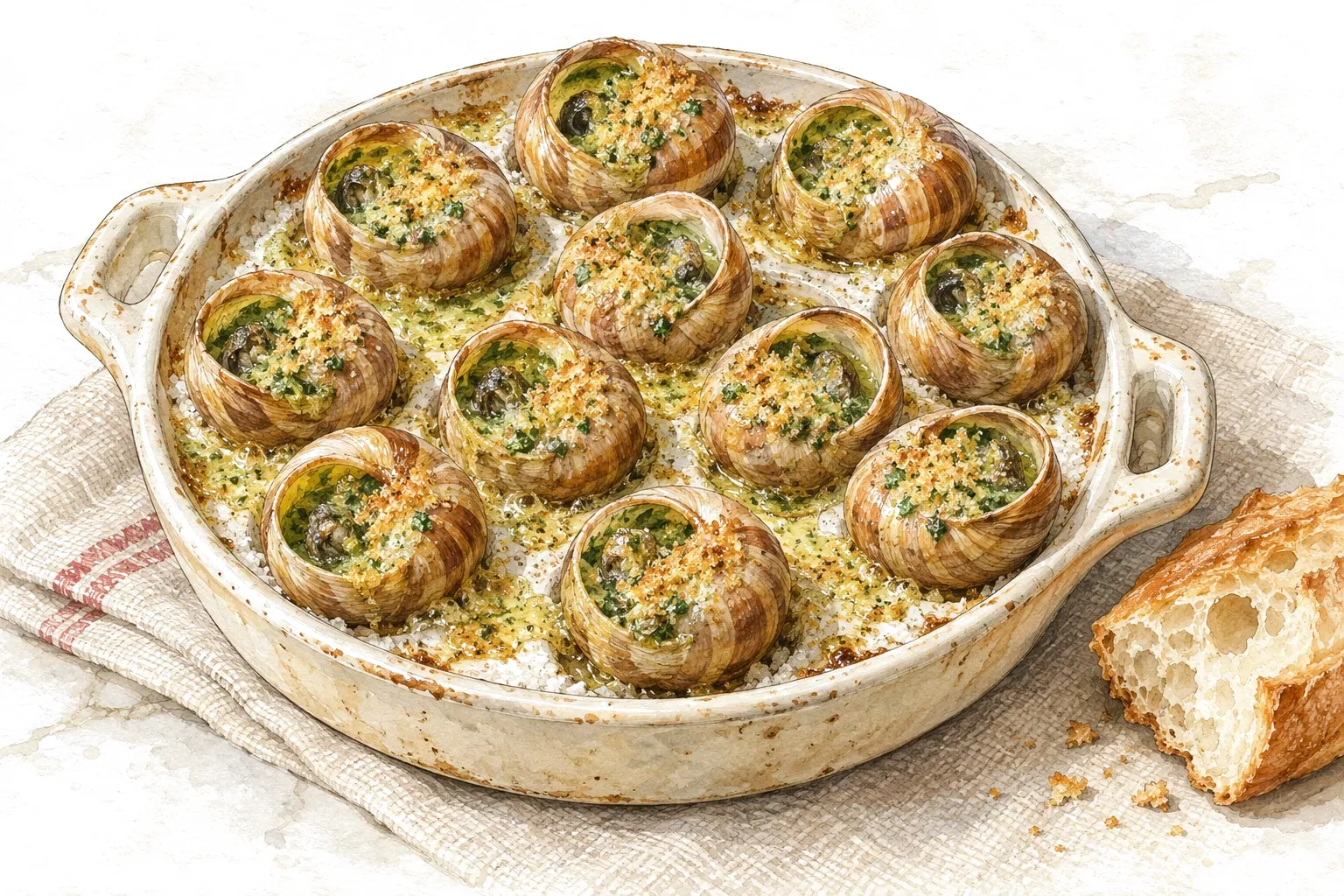 RecipeEscargots à la bourguignonneBurgundy, France
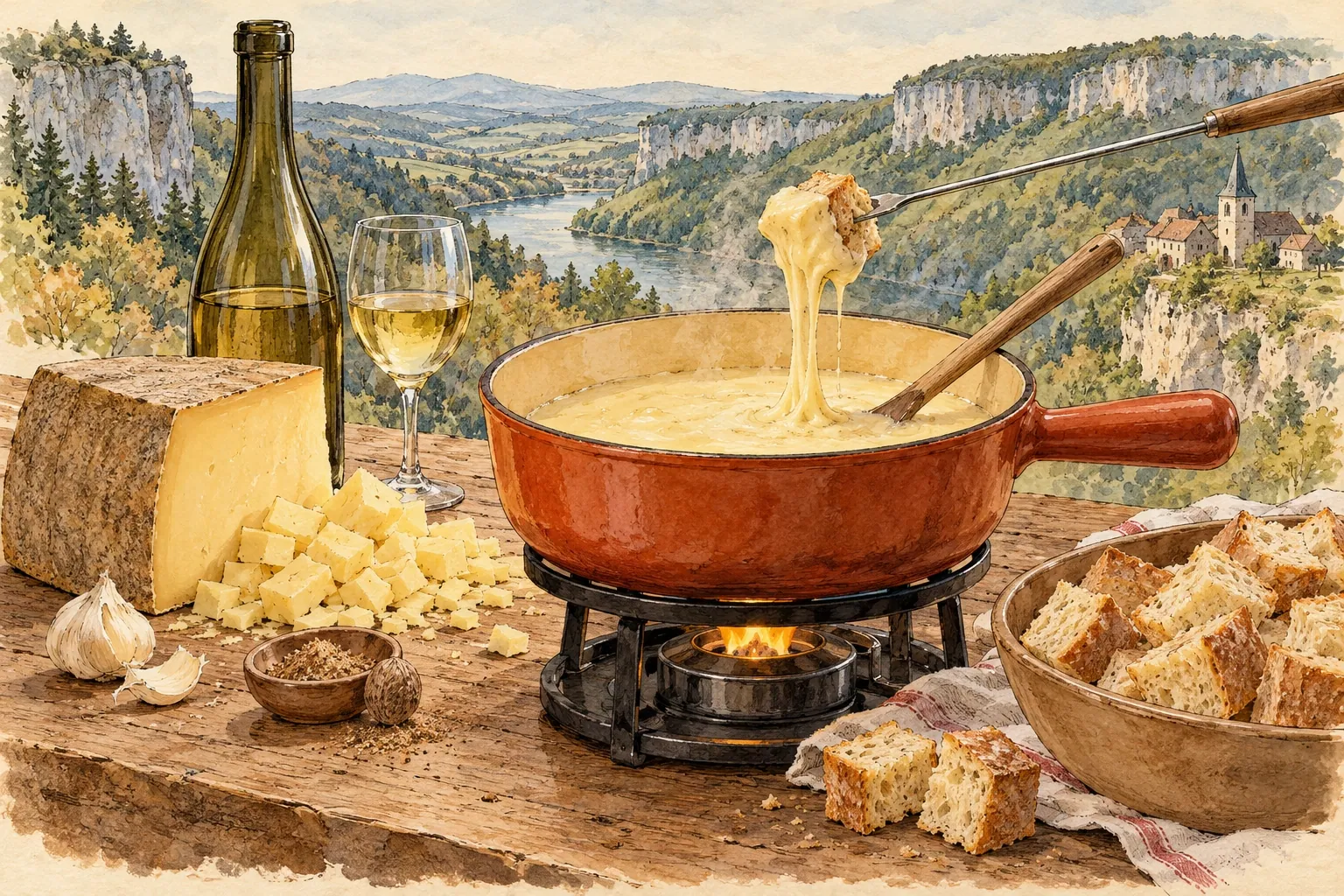 RecipeFondue au ComtéJura massif, Franche-Comté, France
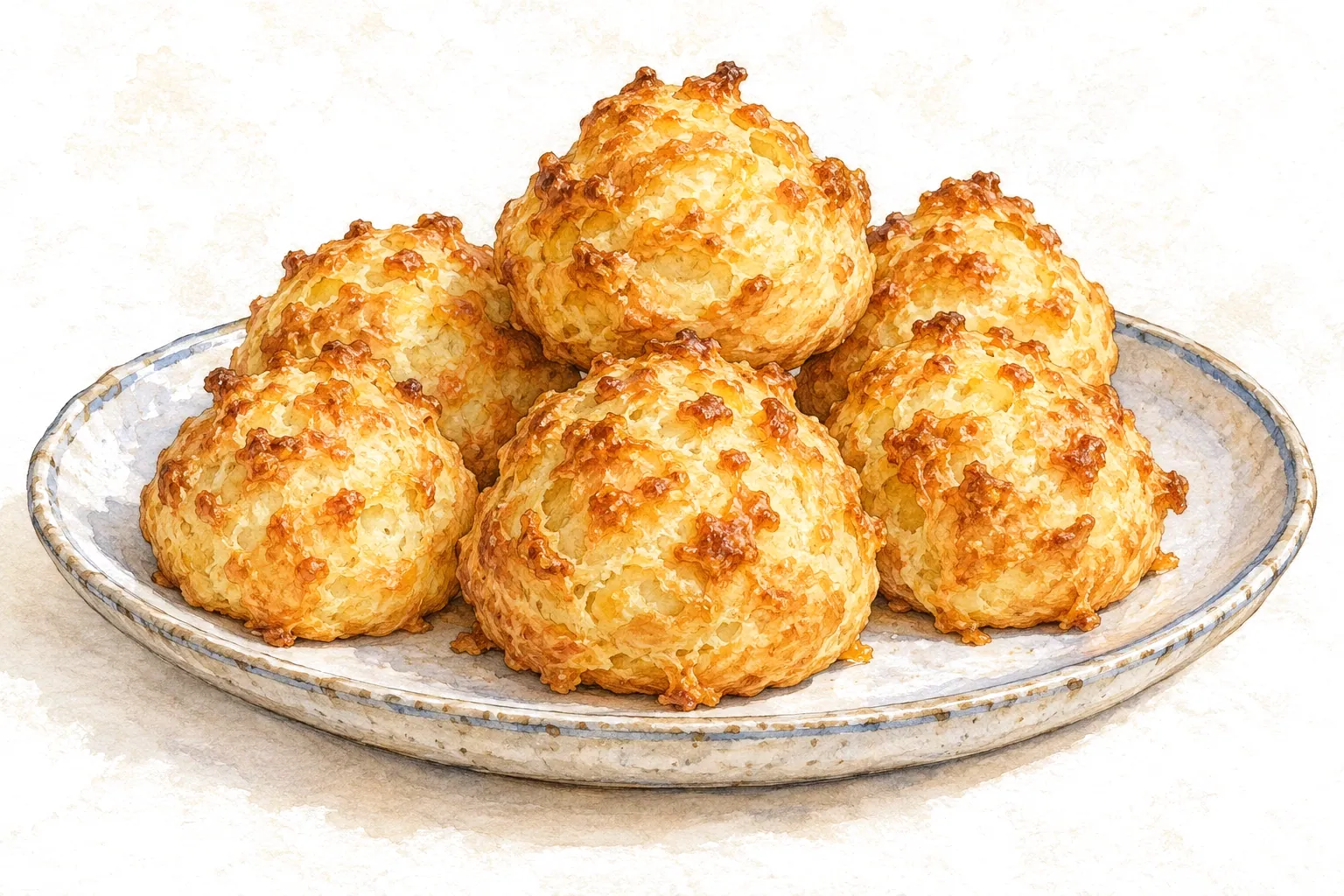 RecipeGougèresBurgundy, France
- RecipeTúrós csuszaHungary