
Wine · Wine region · Short entry
Left Bank (Bordeaux)
The vineyards west of the Garonne and the Gironde estuary, from the Médoc peninsula in the north through the Graves to Sauternes in the south. It is a geographic term, not an appellation. Its signature is deep Garonne gravel, and in the Médoc a red blend led by Cabernet Sauvignon.
Town wine, drained marsh, first growths
The left bank holds Bordeaux's oldest vineyard. Excavations in the Graves, at the gates of Bordeaux, date the first vines to around 40 AD, and in the Middle Ages the land around the city, known as Las Grabas de Bourdeus, was planted on stony ground fit for little else. Between 1531 and 1551 Jean de Pontac assembled Haut-Brion, which the Pessac-Léognan specification calls the model of the Bordeaux château. North of the city, the Médoc marshes were drained in the seventeenth century with Dutch help, and after the Great Winter of 1709 owners planted the gravel with small-berried varieties for the London market in "New French Clarets". The 1855 classification drew its red wines from the Médoc, plus Haut-Brion, and its sweet wines from Sauternes and Barsac.
Gravel from the Pyrenees
The Bordeaux specification treats "the left bank of the Garonne and of the estuary" as one of the region's three natural units. North of the city lies the Médoc peninsula, about 80 km long and barely more than 10 km wide between the estuary and the forest. South of the city the Graves runs in a band about 10 km wide along the Garonne, around the sweet-wine enclave of Sauternes and Barsac.
What unites them is gravel. During the Quaternary ice ages, Pyrenean glaciers ground down rock that the Garonne carried north and left in terraces over Tertiary limestones and marls. Erosion and small streams (jalles and esteys in the Médoc) cut these terraces into low rises, mostly 3–50 m high in the Médoc. The stony soils drain quickly. Pine forest to the west shelters the vines, the estuary and the river moderate frost and heat, and at Sauternes the cool Ciron adds autumn fog.
What the gravel gives the wine
The specifications link the gravel to Cabernet Sauvignon. The Médoc rules call it the grape of choice on gravel and credit it with spicy notes, with Merlot adding roundness and red fruit; the Pauillac rules call that commune's wines powerful and structured because Cabernet Sauvignon is "particularly dominant". The Graves rules say the warm, stony, infertile soils bring Cabernet Sauvignon and Merlot to full ripeness, while sandier or clay-matrix soils give the whites their finesse and floral, fruity freshness. In Sauternes and Barsac, noble rot gives golden wines with candied fruit and honey that keep for decades. On the clay-limestone of Listrac-Médoc and Moulis, Merlot leads instead.
Cabernet country, with exceptions
In the Médoc, Cabernet Sauvignon usually leads the blend; the Bordeaux wine council calls the peninsula a "stronghold of cabernet". The pattern is not universal. In the Graves appellation Merlot covers 59 % of the red vineyard, and in Listrac-Médoc and Moulis Merlot is the main grape.
The left bank also makes Bordeaux's best-known whites. The Graves and Pessac-Léognan produce dry whites from Sémillon and Sauvignon, and Sauternes and Barsac make sweet wines from grapes concentrated by noble rot. The appellations run from the broad Médoc, Haut-Médoc and Graves to six communal appellations in the Médoc and Pessac-Léognan in the Graves. Besides the 1855 classification, the Médoc has the Crus Bourgeois list, first published in 1932.
Classification
- AppellationsMédoc, Haut-Médoc, the six communal appellations (Saint-Estèphe, Pauillac, Saint-Julien, Listrac-Médoc, Moulis, Margaux), Graves, Graves Supérieures, Pessac-Léognan, Cérons, Sauternes and Barsac.
- ClassificationsThe 1855 classification drew its red wines mostly from the Médoc, plus Haut-Brion in Pessac-Léognan, and its sweet wines from Sauternes and Barsac. All sixteen Crus Classés de Graves (1959) lie in Pessac-Léognan.
How it connects
Wine region
- in Bordeaux
- subregion Médoc
- subregion Graves
- subregion Sauternes
- related Right Bank (Bordeaux)
Continue exploring
- CountryFrance162 entries in the atlas so far
- Wine regionBordeauxBordeaux, France
- Wine regionRight Bank (Bordeaux)Libourne, France
- Wine regionGravesPortets, France
- Wine regionMédocLesparre-Médoc, France
- Wine regionSauternesSauternes, France
 RecipeCèpes à la bordelaiseBordeaux, France
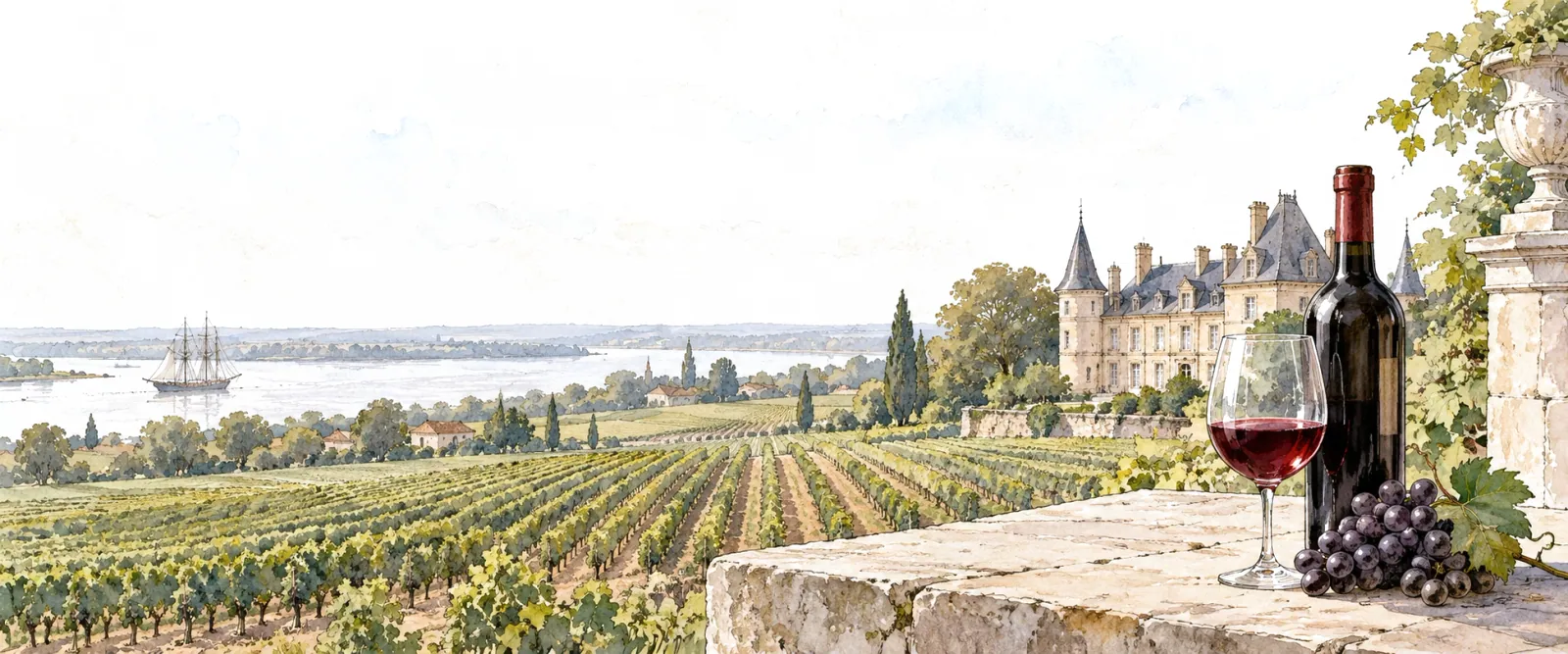 StoryThe 1855 Bordeaux classificationBordeaux, France
 StoryThe Judgment of Paris, 1976Paris, France
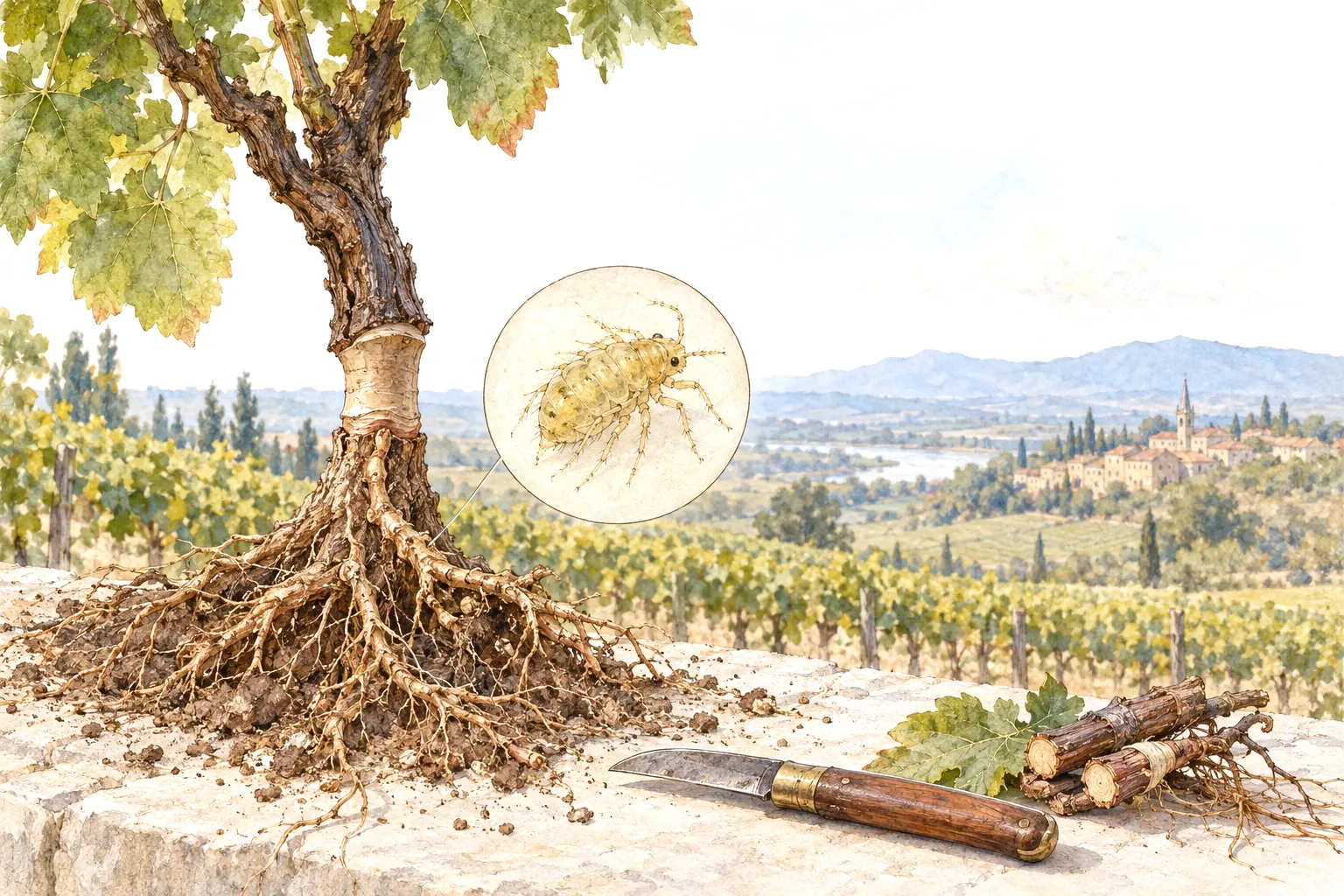 StoryPhylloxera: the insect that remade the vineyards of the worldFrance