
Explore the world · Ingredient history · Reference page
Legumes: lentils, beans and the plants that feed the soil
Lentils, peas and chickpeas were domesticated alongside wheat and barley in the Fertile Crescent; beans in Mesoamerica and the Andes; soybean in East Asia; and the peanut east of the Andes from a cross between two wild species. Their roots host bacteria that turn nitrogen from the air into fertiliser, a partnership science only explained in the 1880s.
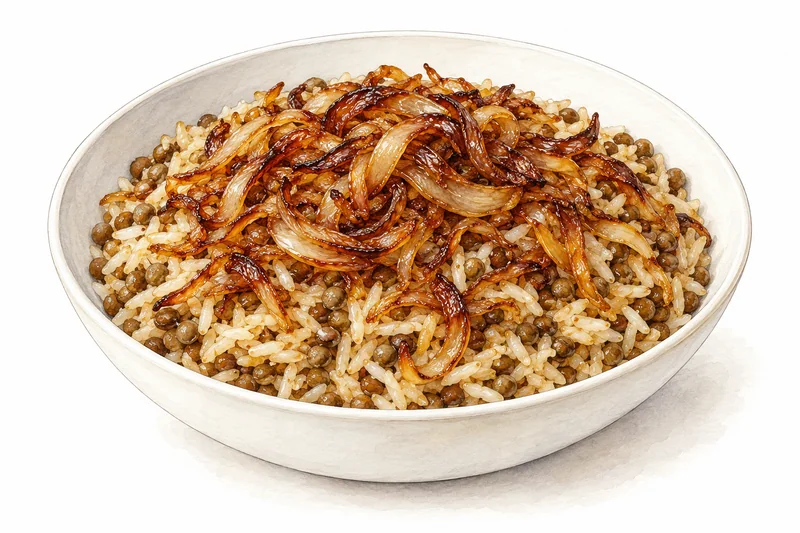
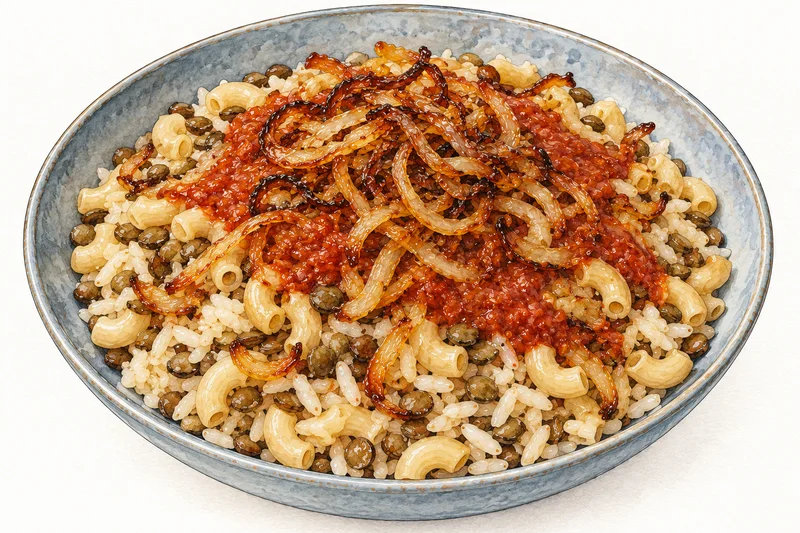
Legume or pulse?
The two words are not the same. Legumes are all members of the Leguminosae, the pea family, which FAO describes as the third-largest family of flowering plants. Pulses are a subgroup. In FAO's commodity definitions, pulses are annual leguminous crops "harvested solely for dry grain". That rule leaves out legumes picked green, such as fresh peas and green beans, which FAO counts as vegetables. It also leaves out crops grown mainly for oil, above all soybeans and groundnuts (peanuts), and clover and alfalfa grown only for seed. FAO's current guidance gives common beans, dried peas, chickpeas, lentils and mung beans as examples of pulses, and soybeans, groundnuts and alfalfa as legumes that are not.
The distinction matters for statistics and for diets. FAO's definitions give pulses 18-25 % protein, "much higher than cereals", and note their role in enriching the soil. This page follows the whole family, pulses and oil legumes alike.
Lentils, peas and chickpeas in the Fertile Crescent
Pulses were part of farming from the start. Lentil was one of the first plants domesticated in Southwest Asia, together with wheat and barley. People gathered wild lentils long before they grew them: seeds were found at Ohalo II in Israel, dated to about 23,000 years ago, and at Abu Hureyra and Mureybit in Syria. Cultivated lentil appears 8,000 to 10,000 years ago. Its wild ancestor is Lens culinaris subsp. orientalis, but Liber and colleagues (2021) found that how many times, and where, lentil was domesticated is still unclear. Lentils were among the crops in the Cyprus wells of 10,500 to 9,000 years ago, and genetic studies have ruled out a European origin for the region's pulses.
Chickpea was first domesticated in the Fertile Crescent about 10,000 years ago, according to the archaeological record summarised by Igolkina and colleagues (2023). How it then spread to South Asia, Ethiopia and the western Mediterranean is obscure, and the origins of its two market types, the small dark desi and the large pale kabuli, are debated. Pea was taken into cultivation in the same region. A genomic study of 494 pea samples (Hellwig et al. 2022) found evidence of two genetically independent domestications: the common pea and the Abyssinian pea (Pisum abyssinicum). Lentils still go into dishes such as mujaddara and kushari.
Beans and peanuts in the Americas
The common bean, Phaseolus vulgaris, grows wild from northern Mexico to north-western Argentina. It falls into two gene pools, Mesoamerican and Andean, each with its own domesticated forms, and most studies point to at least two independent domestications. Where the species itself began was long argued. In 2012 Bitocchi and colleagues sequenced five genes in wild beans from across the range and concluded that their data "clearly indicate a Mesoamerican origin", with the Andean wild beans passing through a population bottleneck before they were domesticated.
The peanut has an unusual origin. Nearly all wild Arachis species have two sets of chromosomes; the cultivated peanut has four. It arose from a single hybridisation between two wild species, A. duranensis and A. ipaënsis, less than 10,000 years ago, east of the Andes in south-eastern Bolivia and north-western Argentina. A. ipaënsis has only ever been found at one site near Villa Montes in Bolivia, far from its closest relatives, which suggests people carried it there. On the western slopes of the northern Peruvian Andes, Dillehay and colleagues dated peanut remains to between 9,240 and 5,500 radiocarbon years ago. A 2025 review attributes the oldest of these to the cultivation of wild peanut species; the earliest remains positively identified as the domesticated peanut date from about 5,000 years ago in Peru.
Soybean in East Asia
Soybean is often said to have been domesticated in ancient China, but Lee and colleagues (2011) call one widely repeated claim of this kind "archaeologically unsubstantiated". They measured 949 charred soybean seeds from 22 sites in China, Korea and Japan. Small-seeded soybean was already associated with people 9,000 to 8,600 years ago in northern China and 7,000 years ago in Japan. Larger seeds, a sign of selection, appear in Japan by 5,000 years ago and in Korea by 3,000 years ago. Written sources show soybean was an important crop in China by the Zhou dynasty, about 2,500 years ago. The authors leave the place of domestication open: both northern China and Korea have been proposed.
The modern soybean is a different kind of crop. FAO's definitions class it as "the most important oil crop" rather than a pulse, though it is also eaten as beans, soy milk, curd and sauces. Its centre of production has moved: in 2024 Brazil, the United States and Argentina grew 78 % of the world's soya beans.
Feeding the soil: the science of nitrogen fixation
Plants need nitrogen, but they can only take it up as ammonium or nitrate, not as the nitrogen gas that makes up most of the air. Legumes have help. Bacteria known as rhizobia live in nodules on their roots and carry an enzyme, nitrogenase, that turns nitrogen gas into ammonium the plant can use. The plant pays in energy: the reaction needs 16 molecules of ATP for each molecule of nitrogen. Root-nodule symbiosis can fix between 20 and 300 kg of nitrogen per hectare a year, which is why legumes leave a field richer than they found it.
The mechanism was discovered late. Hellriegel and Wilfarth reported in 1886 that some legumes could use nitrogen from the air through the nodules on their roots. Two years later, in 1888, Beijerinck isolated a nodule bacterium for the first time. By 1896 farmers in New South Wales were being shown how to inoculate legume seed with rhizobia. FAO's definitions still list the ability to "produce nitrogen and thereby enrich the soil" as one of the main reasons pulses matter in cropping systems.
That value has not always protected them. Pingali's study of the Green Revolution notes that in India, price supports and subsidies for staple cereals crowded out pulses, and that rising legume prices led to a decline in pulse consumption across all income groups.
Pulses today
The world grew 97 million tonnes of pulses on 91 million hectares in 2024, according to FAO. Pulses had the second-fastest growth of any crop group after 2010, mainly because more land was planted. Beans, cowpeas, chickpeas, dry peas and lentils are the main crops. Beans, a category that covers several species, reached 30 million tonnes, with India, Brazil, Myanmar, the United States and Tanzania the largest producers. Chickpeas came second at 17 million tonnes, and India alone grew 65 % of them. Compared with the 3.1 billion tonnes of cereals harvested the same year, pulses remain a small crop by weight.
How it connects
Story
Recipe
- related Mujaddara (rice and lentils)
- related Kushari
Continue exploring
- CountryTurkey8 entries in the atlas so far
- RecipeKushariEgypt
- RecipeMujaddara (rice and lentils)Lebanon
- StoryCereals: the grasses that fed the worldTurkey
- StoryVegetables: from wild cabbage to the Brussels chiconGreece
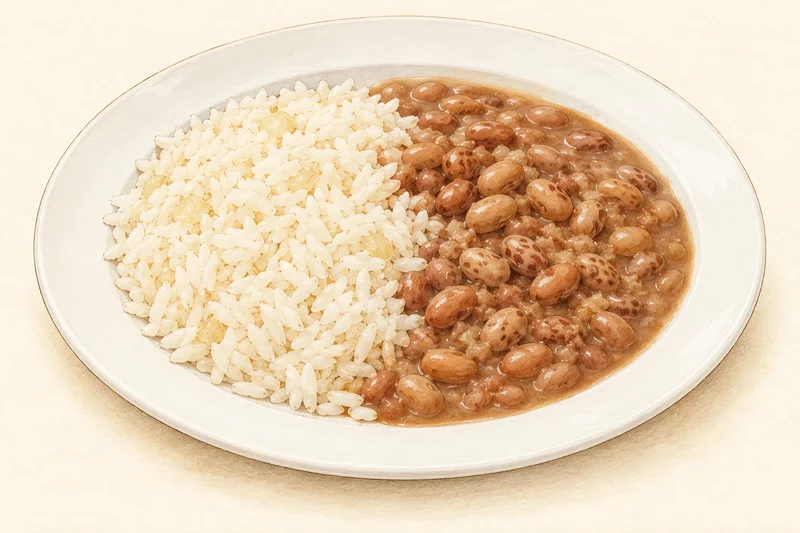 RecipeArroz e feijãoBrazil
 RecipeLebanese rice with vermicelliLebanon
 StoryFrom the Andes to EuropeLake Titicaca, Peru
 IngredientBarleyHordeum vulgare
- StyleBourbon whiskeyLegal category