Wine · Wine region · Short entry
Santorini
Σαντορίνη
Santorini is a Greek PDO covering the islands of Santorini (Thira) and Thirasia in the southern Cyclades. Its own-rooted vines grow in sandy volcanic soils, trained low in baskets against strong summer winds. Dry PDO Santorini contains at least 85% Assyrtiko, and the sweet Vinsanto is made from sun-dried grapes.
3,500 years and a volcanic eruption
Wines of Greece says archaeological finds show viticulture on Santorini without interruption for at least 3,500 years. The prehistoric vineyard was destroyed by the great eruption of the island's volcano in the 17th century BC, which wiped out human life and vegetation for almost three centuries. The vines are own-rooted: the sandy soil has very little clay and phylloxera never affected them, so many old, ungrafted, basket-trained vines stand on roots described as up to 300 years old. The PDO zone was established in 1971 and includes Santorini and Thirasia; the EU protection date of the name is 11 June 1981. Wines of Greece says PDO Santorini was the first Greek designation entered in the National Index of Intangible Cultural Heritage.
Ash, pumice and wind
Santorini is the southernmost island of the Cyclades. Vineyards cover much of the island, especially the centre and north, and a smaller area on Thirasia, rising from sea level to terraces at about 300 m. The technical file gives a typical Mediterranean climate with strong sunshine, hot dry summers, mild winters, a mean maximum of 23 °C and minimum of 14 °C, and 300–370 mm of rain a year. Almost the whole island is made of Theran earth, pumice and lava; the soil is sandy with very little clay, poor in organic matter and, apart from a small area around Profitis Ilias, without lime. Wines of Greece lists basalt, ash, sand, pumice and andesite among the volcanic materials. In the long drought, morning mists rising from the caldera and night humidity, absorbed by the pumice, supply water; strong northerly winds (meltemia) dry the grapes by day. Growers train vines as baskets (kouloura) or low goblets (koulouraki) for shelter.
Acid, alcohol and salt
Wines of Greece describes PDO Santorini as powerful and intense, with what it calls sea-salt minerality. Assyrtiko is not aromatic, but its steely structure, austere in youth, its citrus fruit and its high acidity and alcohol give the wines a distinct personality. Lees ageing and sometimes oak are used for a creamier, richer profile, and the best wines need time in bottle, developing aromas of honey, dried fruit, nuts, herbs and spices. Vinsanto is described as amber-brown and very sweet but balanced by high acidity, with dried fruit, honey, caramel, coffee, nuts and spice and a very long finish.
Dry Santorini, Nykteri and Vinsanto
Wines of Greece gives the blending rule for dry PDO Santorini as at least 85% Assyrtiko with up to 15% Athiri and Aidani; many wines are 100% Assyrtiko. Nykteri is dry PDO Santorini with at least 13.5% alcohol and at least three months in oak. Vinsanto is a dessert wine from overripe grapes left in the sun until they reach at least 370 g/l of sugar, with at least 24 months of oxidative maturation; labels may state 4, 8, 12 or more years of ageing. Sweet wines use at least 51% Assyrtiko with Aidani, Athiri and small amounts of Gaidouria, Katsano, Moschato Aspro, Monemvasia, Platani, Potamisi and Roditis; the technical file gives the same rule for the naturally sweet Liastos. The file also lists the terms Vinsanto and Nykteri.
Classification
- NykteriDry PDO Santorini with at least 13.5% alcohol and at least three months in oak barrels.
- VinsantoSweet wine from sun-dried grapes; at least 24 months of oxidative maturation; age statements of 4, 8, 12 or more years.
How it connects
Wine region
- in Greece
Recipe
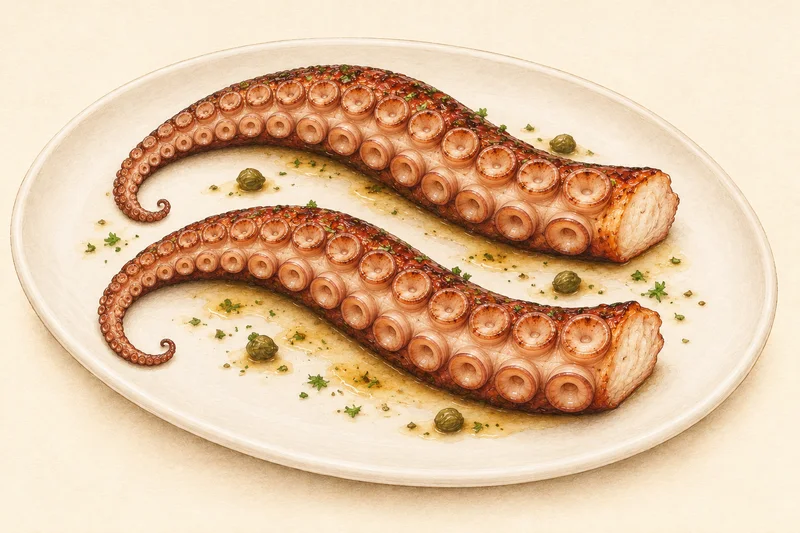
- pairs with Greek grilled octopus (ktapodi sti skara)