Wine · Wine region · Short entry
Lebanon
لبنان
Lebanon's wine sector is concentrated in the Bekaa, which the government investment authority calls the largest wine-producing region, with a third of producers around Zahle. Producers are grouped in the Union Vinicole du Liban, the official association. Law 216/2000 sets rules for wine production, sale and labelling and defines origin by province, but no national list of appellations was found.
A wine law in 2000
The sources read here cover the modern legal framework, not the earlier history of Lebanese wine. Law No. 216 of 2000 on the production, manufacture, sale and import of wine has 22 articles in four parts. It regulates production, sale and import; defines Lebanese wine and concentrated must; sets rules for fermenting dry, sparkling, sweet and semi-sweet wines, liqueur and fortified wines; governs the provenance and cultivation of the grapes; and sets labelling and origin rules. Much of its technical content follows the OIV and the Codex Alimentarius. It created a committee at the Ministry of Agriculture to study the sector, follow OIV developments and propose a National Institute of Vine and Wine. The investment authority describes the Union Vinicole du Liban as the official association of the country's wine producers.
The Bekaa cluster
The Investment Development Authority of Lebanon describes the Bekaa as an inland agricultural region growing cereals, pulses, vegetables and grapes, and as the country's largest wine-producing region, accounting for 44% of total grape production. It says more than seven wineries are in the Bekaa and 33% of wine producers are concentrated in Zahle. The authority's page describes economic clusters, not soils or climate, and no official source on Lebanese vineyard soils, altitudes or rainfall was opened. Under Law 216/2000 origin is the geographic region of production, involving the origin of the grapes, the place of winemaking and natural and human factors.
What the sources say
The investment authority says wine production in the Bekaa is a flourishing industry with an international reputation and a strong local network. It estimates local consumption at about 6 million bottles a year, of which 2 million are imported, and reports wine exports growing by 11% a year from 2015 to 2017. Neither it nor the summary of the wine law describes how Lebanese conditions shape the wines, so no character is attributed here.
Categories and origin under Law 216/2000
Law 216/2000 covers dry, sparkling, sweet, semi-sweet (demi-doux), liqueur and fortified wines and sets rules on the provenance of grapes, vine cultivation and winemaking, largely following OIV and Codex standards. Article 12 defines origin as the "geographic region of production" and the law adopts administrative divisions at the level of provinces for wine appellations. No register of Lebanese appellations or permitted grapes was found, and no Lebanese wine names appear in the EU register. The investment authority does not name grape varieties.
Classification
- Origin by provinceLaw 216/2000 defines origin as the geographic region of production and uses province-level administrative divisions for wine appellations.
How it connects
Recipe
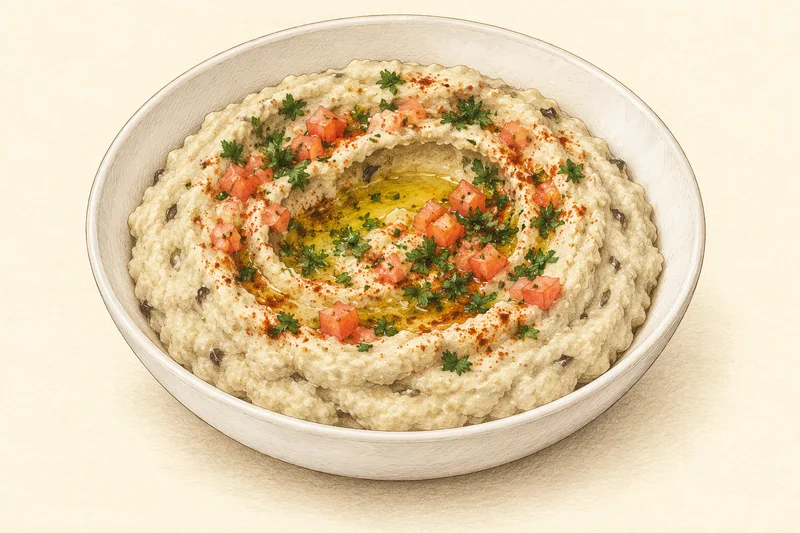
- origin Baba ghanouj